
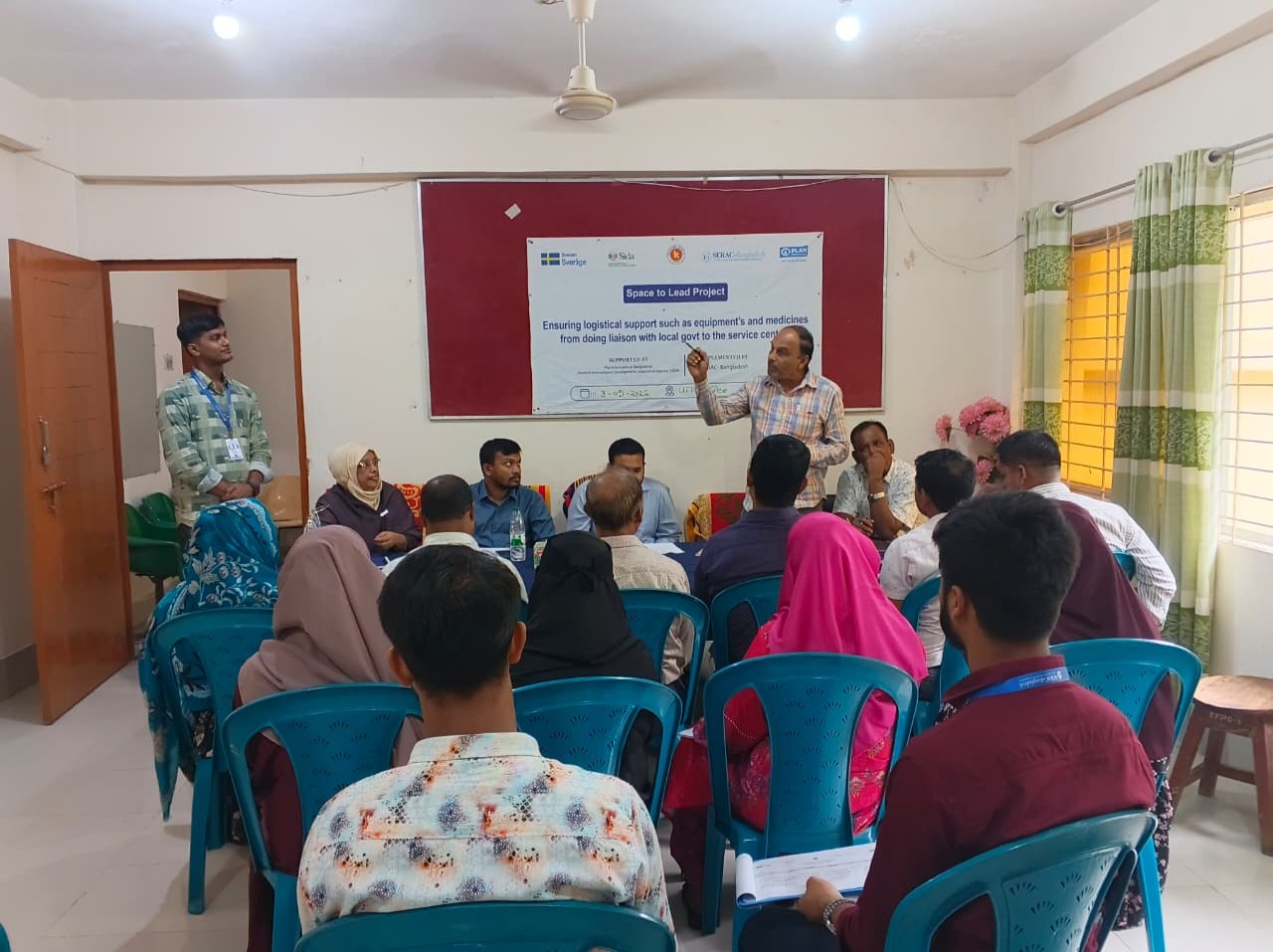
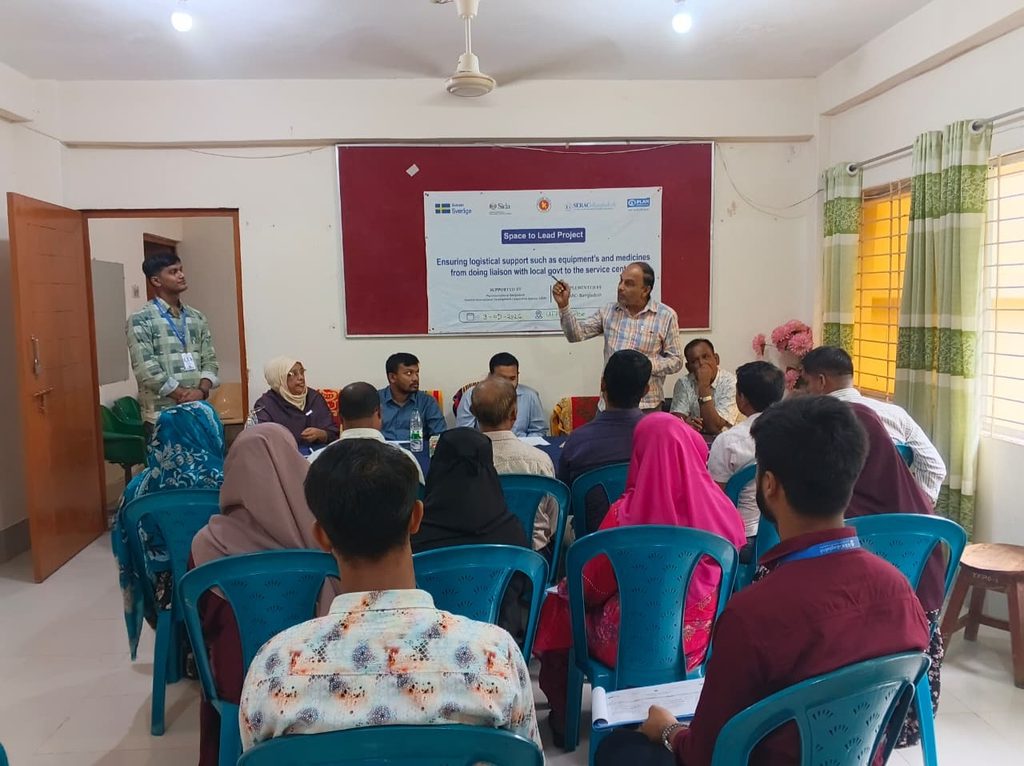
On 3rd September 2026, SERAC-Bangladesh organized a consultation meeting in the Upazila Family Planning Office, Patharghata, Barguna, to discuss the availability of necessary logistics, equipment, and medicines at Union Health and Family Welfare Centers (UH&FWCs) and identify ways to ensure more effective and quality health services for service recipients. The meeting was funded by the Swedish International Development Cooperation Agency (SIDA), with technical support from Plan International Bangladesh.
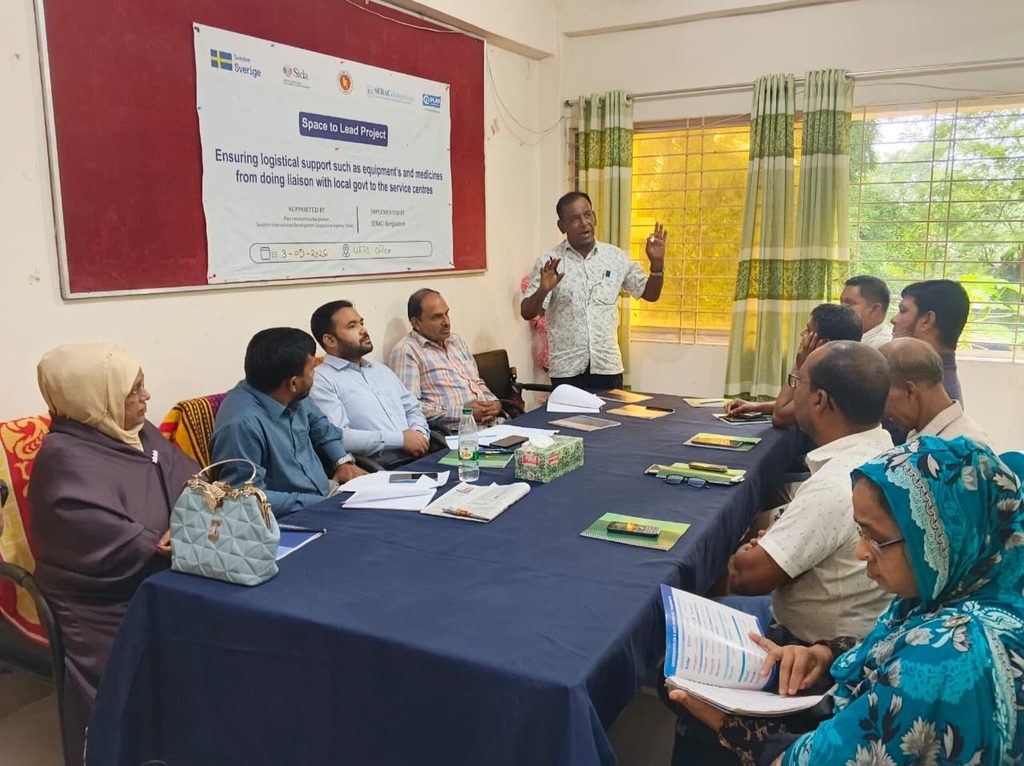
The meeting was attended by Dr. Mehedi Hasan, Upazila Health and Family Planning Officer, Patharghata, Barguna, as the chief guest and was chaired by Dr. Prince Kumar Roy, Upazila Family Planning Officer (Additional Charge), Patharghata, Barguna. Relevant healthcare workers, local representatives, Volunteer Peer Leaders (VPLs), Support Volunteers, and administrative representatives also participated in the meeting. The meeting was facilitated by Rabiul Islam, Advocacy and Capacity Development Officer, SERAC-Bangladesh. He welcomed all participants and extended warm congratulations and best wishes for all participants. Then he briefly introduced the stakeholders involved in the Space to Lead project and provided an overview of the project, including its objectives, key activities, and ongoing interventions in Patharghata Upazila. He also briefly explained the purpose and key discussion points of the meeting and encouraged all participants to actively engage in the discussion and share their views and experiences.
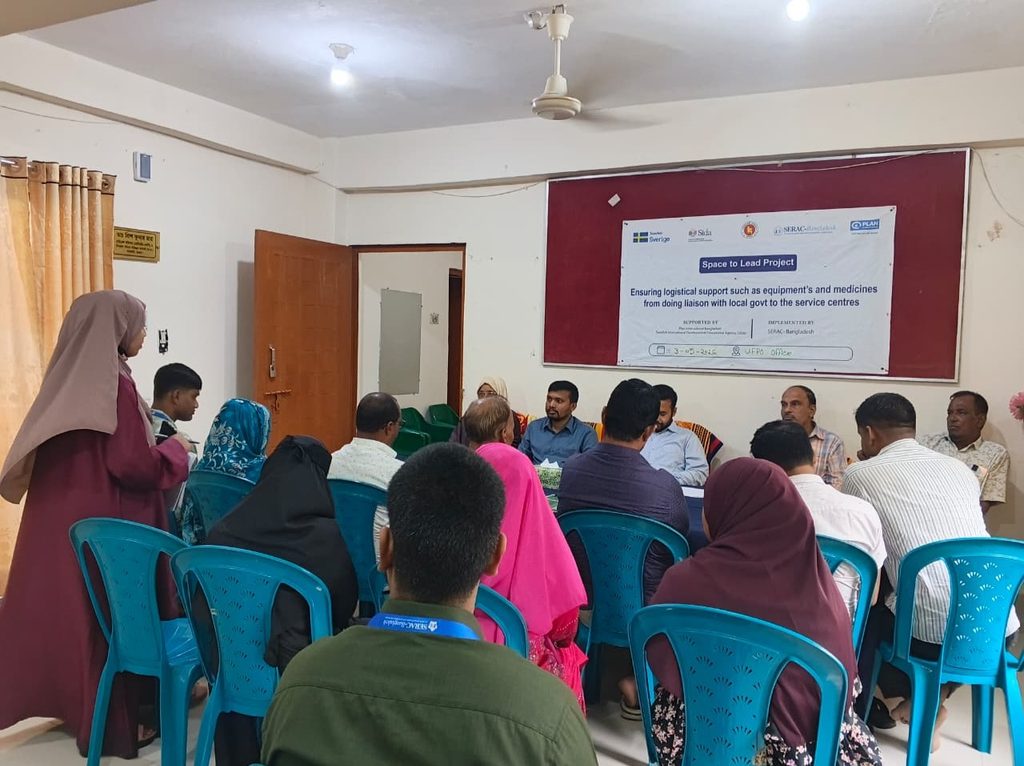
At the beginning of the meeting, volunteer peer leaders shared their field-level experiences and highlighted that many adolescents are still not fully aware of the health services available to them. They also noted that shortages of services, information, medicines, and other necessary logistics can sometimes prevent adolescents from receiving the care they need. The VPLs emphasized the importance of stronger communication and coordination to ensure that adolescents are well informed and can access appropriate, adolescent-friendly health services.
Service providers shared the current situation of their respective health facilities and the challenges they face in delivering services. They noted that shortages of essential medicines, healthcare supplies, equipment, and other logistics sometimes make it difficult to provide services according to the needs of service recipients. They emphasized that ensuring the availability of necessary logistics is essential for improving service quality and strengthening public confidence in health facilities.
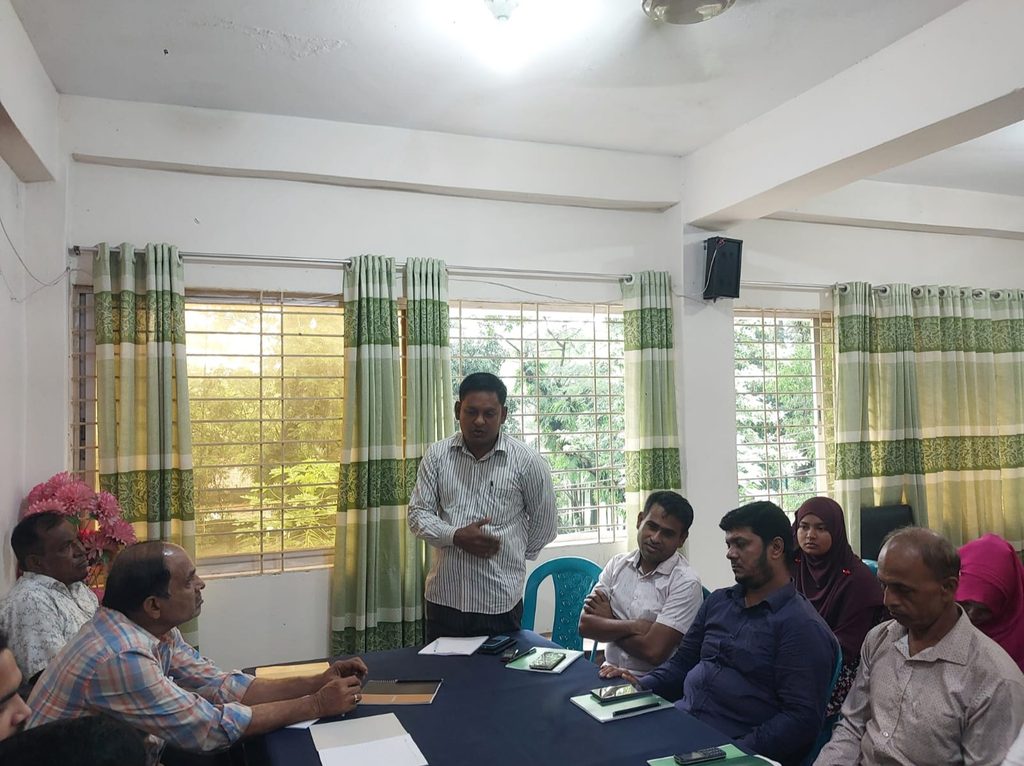
Local representatives and panel chairmen also shared their perspectives on the realities at the community level and discussed their roles in supporting health services. They emphasized the importance of increasing community awareness about the services available at health facilities, including what services are provided, when they are available, and where people can seek support for specific health concerns. They also highlighted the need for stronger coordination among local representatives, healthcare workers, and VPLs.
In his remarks, the Chief Guest emphasized the importance of ensuring necessary services and logistics at health facilities while also strengthening effective communication between healthcare workers and service recipients. He stressed that the government, local representatives, community leaders, and NGOs need to work together to address logistical challenges. He also sought support from local representatives in arranging necessary furniture and assured the participants that efforts would be made to discuss the need for medicines and equipment with the relevant authorities and facilitate their supply.
The Chair, Dr. Prince Kumar Roy, discussed the existing challenges faced by different health facilities and possible ways to address them. Referring to ongoing government initiatives and the efforts of relevant stakeholders, he informed the participants that steps are being taken to resolve issues related to the supply of necessary medicines. He noted that some infrastructural challenges may require more time to address, while regular communication with relevant stakeholders and efforts to resolve existing issues will continue.
The discussion emphasized that improving health service quality requires not only adequate logistics and supplies but also greater community awareness, understanding of service recipients’ needs, and stronger coordination among healthcare providers, local representatives, VPLs, and community members. Participants expressed their commitment to working together to address existing challenges and ensure more accessible, effective, and responsive health services. The meeting concluded with the active participation and cooperation of all stakeholders.