
An Exercise in Citizen-Driven Accountability: Commitments, Reforms and Impacts
The Project
“An Exercise in Citizen-Driven Accountability: Commitments, Reforms and Impacts” is a two-year initiative led by SERAC-Bangladesh in partnership with the Citizen’s Platform for SDGs, Bangladesh under the Nagorikata: Civic Engagement Fund (CEF). The project aims to strengthen citizen-driven accountability, transparency and inclusive participation in Bangladesh by enabling citizens and civil society to systematically monitor electoral commitments and reform agendas and engage with political leaders and decision-makers on implementation progress.
At a critical period of political and institutional transformation, the initiative seeks to bridge the gap between commitments and delivery. It will create practical mechanisms through which citizens, particularly youth, women, marginalised and climate-vulnerable communities can access information, share their experiences, track progress, identify implementation gaps and participate meaningfully in policy and governance processes.
The project will implement three interconnected streams of action:
1. Bangladesh Reform Tracker
The Bangladesh Reform Tracker is serveing as an independent digital platform for tracking electoral commitments and progress across key reform areas, including anti-corruption, electoral processes, labour, media, women’s rights, judiciary, data governance, public finance management, education and LDC graduation. The platform will make reform-related information more accessible to citizens and support evidence-based public discourse and accountability.
2. Youth-Led Divisional Reform and Electoral Commitment Tracking Hubs
Youth-led tracking hubs will be established in Mymensingh, Khulna, Rajshahi and Rangpur to connect national-level reform monitoring with citizens’ experiences at the grassroots. The hubs will facilitate citizen feedback, community consultations, social audits and evidence generation with particular attention to the voices and experiences of women, youth, marginalised communities and climate-vulnerable populations.
Findings from the divisional hubs will contribute to sub-national public hearings and national-level dialogues. Creating opportunities for citizens to engage directly with policymakers and duty-bearers.
3. Strengthening Citizen Oversight and Inclusive Engagement
The project will create diverse platforms for citizens and stakeholders to engage in reform monitoring and democratic accountability. Activities will include multi-stakeholder consultations, a Youth Conclave/Parliament, national conferences, digital communication initiatives and advocacy for establishing a Parliamentary Caucus.
Our Approach
The project adopts an evidence-based, participatory, rights-based, gender-responsive, and inclusive approach. It is grounded in the principles of human rights, gender equality, social inclusion, meaningful youth participation, and Leave No One Behind (LNOB).
By connecting evidence from national-level reform monitoring with citizens lived experiences at the local level, the project will promote informed public dialogue and strengthen the capacity of citizens and civil society to engage constructively with decision-makers.
Expected Impact
Through citizen-led monitoring, evidence generation, dialogue and advocacy the project seeks to:
* Strengthen transparency and accountability in the implementation of electoral commitments and reform agendas.
* Increase meaningful citizen and youth participation in governance and reform processes.
* Amplify the voices of women, marginalised and climate-vulnerable communities.
* Improve access to reliable information on reform progress and government commitments.
* Strengthen civil society oversight and evidence-based advocacy
* Create sustained platforms for dialogue between citizens, civil society, policymakers and other stakeholders.
* Contribute to a more transparent, participatory, inclusive and accountable governance system in Bangladesh.
Our Vision
The project envisions a Bangladesh where citizens are not merely observers of political and institutional reforms, but active participants in monitoring commitments, shaping public dialogue and holding decision-makers accountable.
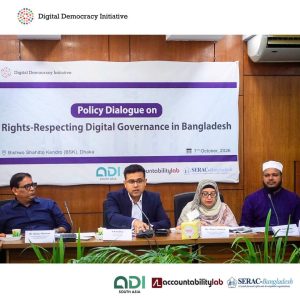
Policy Dialogue Calls for Rights-Respecting, Accountable and Inclusive Digital Governance in Bangladesh
As Bangladesh’s digital landscape continues to expand rapidly, ensuring that technology and digital governance advance citizens’ rights, safety, privacy, and access to services has become