
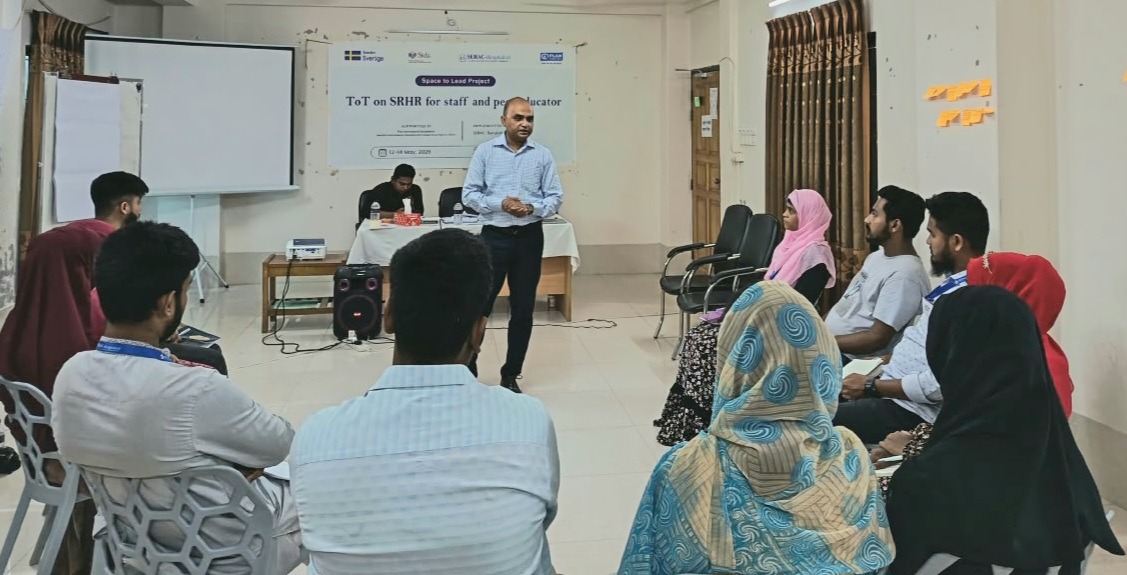
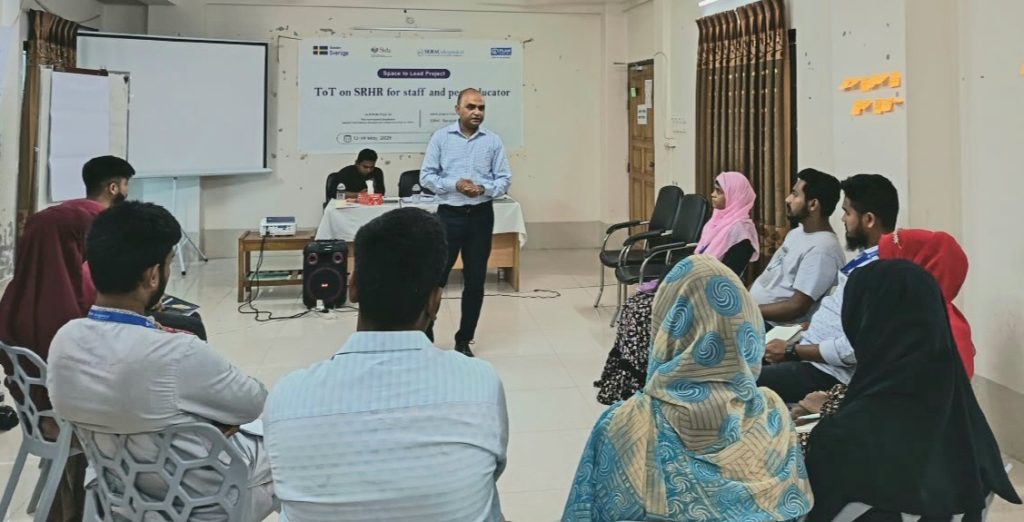
On May 12-14, 2026 to strengthen Adolescent-Friendly Health Services (AFHS), increase awareness on sexual and reproductive health and rights (SRHR), and enhance meaningful youth engagement at the community level, SERAC-Bangladesh organized a three-day residential Foundation Training for Volunteer Peer Leaders (VPLs) under the “Space to Lead” project. The project is funded by the Swedish International Development Cooperation Agency (SIDA) and technically supported by Plan International Bangladesh. The training was held at RDF Tower, Barguna Sadar.
A total of 12 selected volunteer peer leaders from Barguna Sadar and Patharghata upazilas participated in the training. Among them, six VPLs (three boys and three girls) represented Gourichanna, M. Baliyatoli, and Aylapatakata unions of Barguna Sadar, while six VPLs (three boys and three girls) represented Kakchira, Rayhanpur, and Nachanapara unions of Patharghata.
The main objective of the training was to enhance participants’ knowledge, skills, leadership capacity, strategic communication skills, community campaign facilitation skills, and confidence so that they can effectively contribute as community change-makers. The training also focused on strengthening their capacity to promote adolescent-friendly health services, SRHR, referral mechanisms, gender equality, safeguarding, and meaningful youth participation.
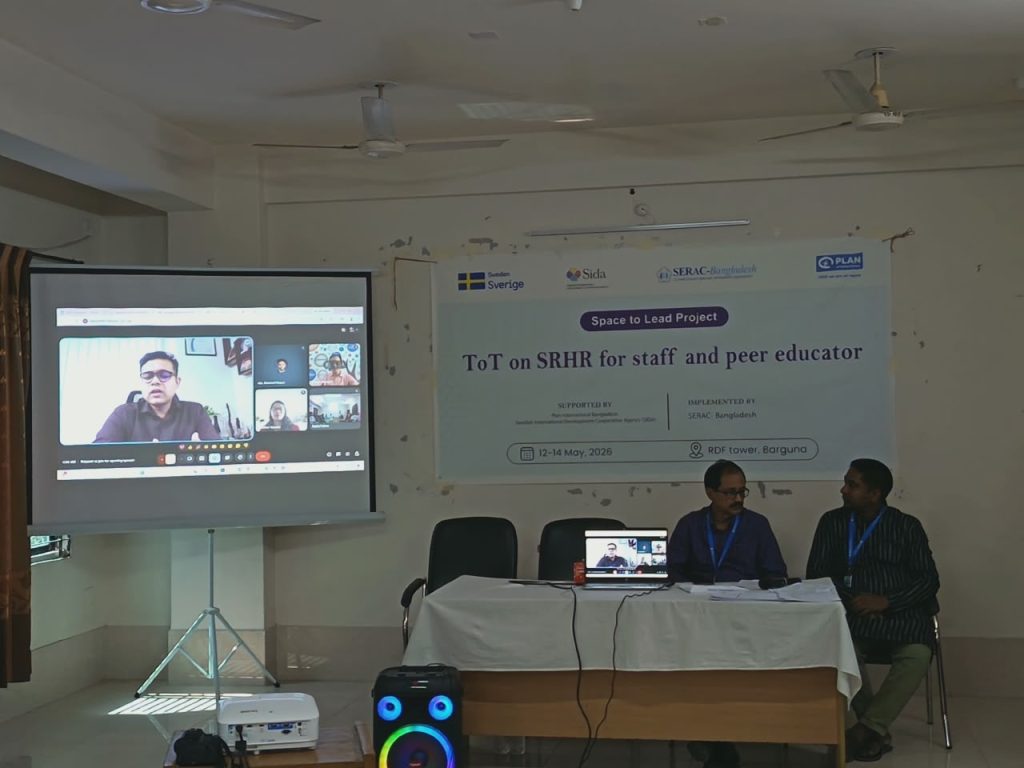
The inaugural session of the training was graced by SM Shaikat, Executive Director, SERAC-Bangladesh, who joined virtually as the Chief Guest. In his remarks, he highlighted that the Volunteer Peer Leader (VPL) model is an effective youth leadership initiative by SERAC- Bangladesh that empowers adolescents with knowledge, skills, leadership abilities and increases confidence to create positive changes within their communities.
He emphasized that a volunteer peer leader is not only a source of information but also a trusted person for adolescents who plays a crucial role in increasing awareness and establishing effective linkages between adolescents and health service providers. He expressed his expectation that the VPLs would utilize their learning and skills to promote adolescent-friendly health services, gender equality, protection, and rights at the community level and contribute to building a safe, inclusive, and adolescent-friendly society.
The first day of the training started with an introductory bingo game, which helped participants build familiarity, strengthen teamwork, and create a positive learning environment.
Following this, Md. Shafiullah Lemon, project coordinator, Space to Lead Project, provided an overview of the project’s goals, objectives, strategies, and expected outcomes.
Rabiul Islam, Advocacy and Capacity Development Officer, Space to Lead Project, facilitated an interactive session on Volunteer Peer Leaders (VPL), Adolescent Friendly Health Corner (AFHC), the importance of adolescent-friendly health services and the roles and responsibilities of VPLs at the community level.
The other key sessions of the first day were facilitated by:
- Mahmudul Haq Azad, Deputy Director, Family Planning, Barguna, conducted sessions on family planning, adolescent-friendly health services and services provided by Union Health and Family Welfare Centers (UH&FWCs).
- Md. Elias Khan Rana, Assistant Director, Family Planning, Barguna, conducted sessions on adolescence age, physical and mental changes, and adolescent health.
- Dr. Suman Debnath, Assistant Director (CC), Family Planning, Barguna, facilitated sessions on Sexual and Reproductive Health and Rights (SRHR) and prevention of sexually transmitted infections.
- Shahina Yasmin, Program Lead, SERAC-Bangladesh, conducted sessions on menstrual health management and hygiene during emergencies.
- Md. Salim Miah, Deputy Director (Program), SERAC-Bangladesh, facilitated sessions on effective communication, confidentiality, and building trust-based relationships with adolescents.
- Md. Emran Hossain, Deputy Director Finance and Admin & Project Focal “space to lead” project , SERAC-Bangladesh, conducted sessions on safeguarding and PSEA.
- Songita Sarker, Project Manager, SERAC-Bangladesh, conducted sessions on emotional management, life skills and decision-making.
The second day of the training started with a review of the previous day’s learning. The sessions focused on important topics, including gender, gender equality, prevention of gender-based violence, harmful effects of substance abuse and smoking, climate change, disaster management, and prevention of child marriage.
The sessions were facilitated by Khan Mohammad Salamat Ullah, District Health Supervisor, Barguna; Songita Sarkar, Project Manager, SERAC-Bangladesh; Md. Nazmul Hasan, Project Manager, SERAC-Bangladesh; and Shahina Yasmin, Program Lead, SERAC-Bangladesh.
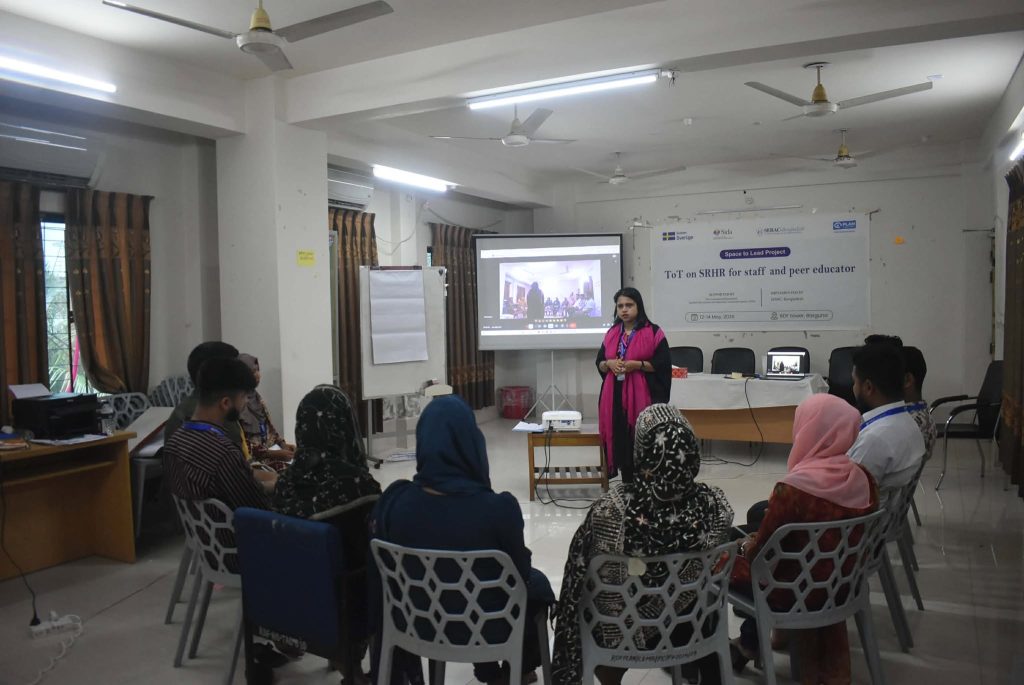
On the third and final day of the training, participants focused on the community-level activities and sessions that they will conduct under the project. They worked in groups to present, practice, and simulate the contents of 10 community sessions planned under the Space to Lead Project.
Through these practical exercises, participants strengthened their understanding of facilitation techniques, participatory approaches, and effective communication strategies for engaging adolescents. They also exchanged experiences on conducting community sessions and addressing adolescent health-related issues.
Following the practice sessions, Md. Salim Miah, Md. Shafiullah Lemon, and Rabiul Islam provided constructive feedback on participants’ presentations and shared necessary guidance on facilitating participatory sessions, ensuring effective communication, strengthening referral mechanisms, and developing trust-based relationships with adolescents.
The closing ceremony of the training was attended by Dr. Mohammad Abul Fattah, civil surgeon, Barguna, as the chief guest. In his remarks, he stated that trained volunteer peer leaders would play an important role in expanding adolescent-friendly health services, increasing health awareness, and encouraging adolescents to access healthcare services at the community level.
He appreciated SERAC-Bangladesh’s initiative and expressed expectations for continued collaboration between the health department and relevant stakeholders to strengthen similar initiatives in the future.
Through this foundation training, the volunteer peer leaders have become more skilled and confident to conduct the planned 10 community sessions, promote awareness of adolescent-friendly health services, strengthen referral linkages with health facilities, and ensure meaningful participation of adolescents in their communities.
Under the Space to Lead Project, SERAC-Bangladesh will continue working in coordination with government institutions and local stakeholders to strengthen youth leadership and improve access to quality adolescent-friendly health services for young people in Barguna.