
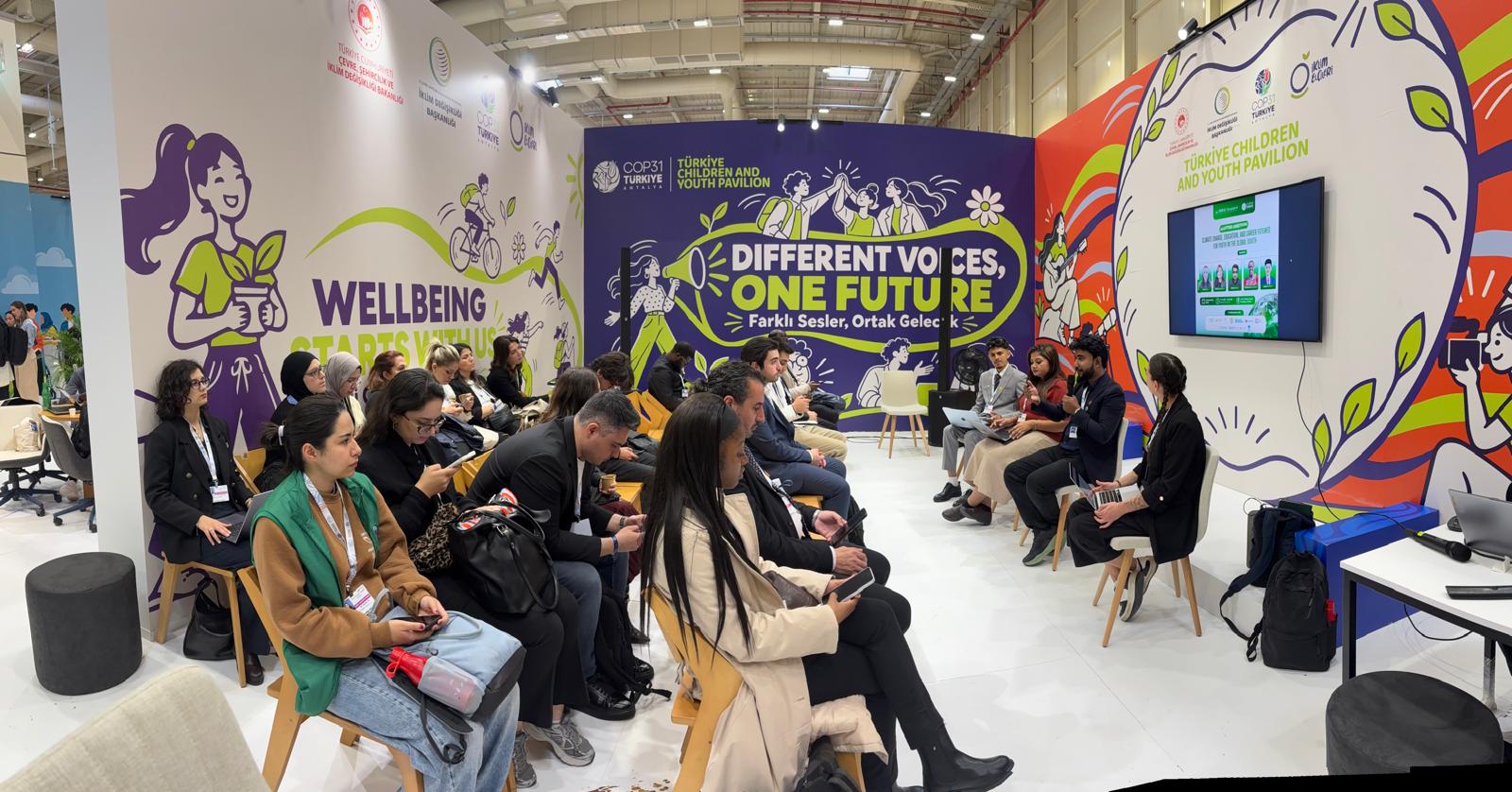
Antalya, Türkiye | 10 November 2026
Young people across the Global South are increasingly experiencing the impacts of climate change, including extreme heat, flooding, environmental degradation, and growing uncertainty around education and employment. At the same time, they have significant potential to drive more sustainable, resilient, and inclusive economies.
This was the focus of the COP31 session “Adapting Ambitions: Climate Change, Education, and Career Futures for Youth in the Global South,” convened by SERAC-Bangladesh and its partners at the Türkiye Youth Pavilion, Blue Zone.
The session brought together youth leaders, educators, civil society representatives, and climate practitioners to discuss climate education, green skills, vocational training, youth-led innovation, employment opportunities, and partnerships for climate-resilient futures.
Making Green Skills Accessible
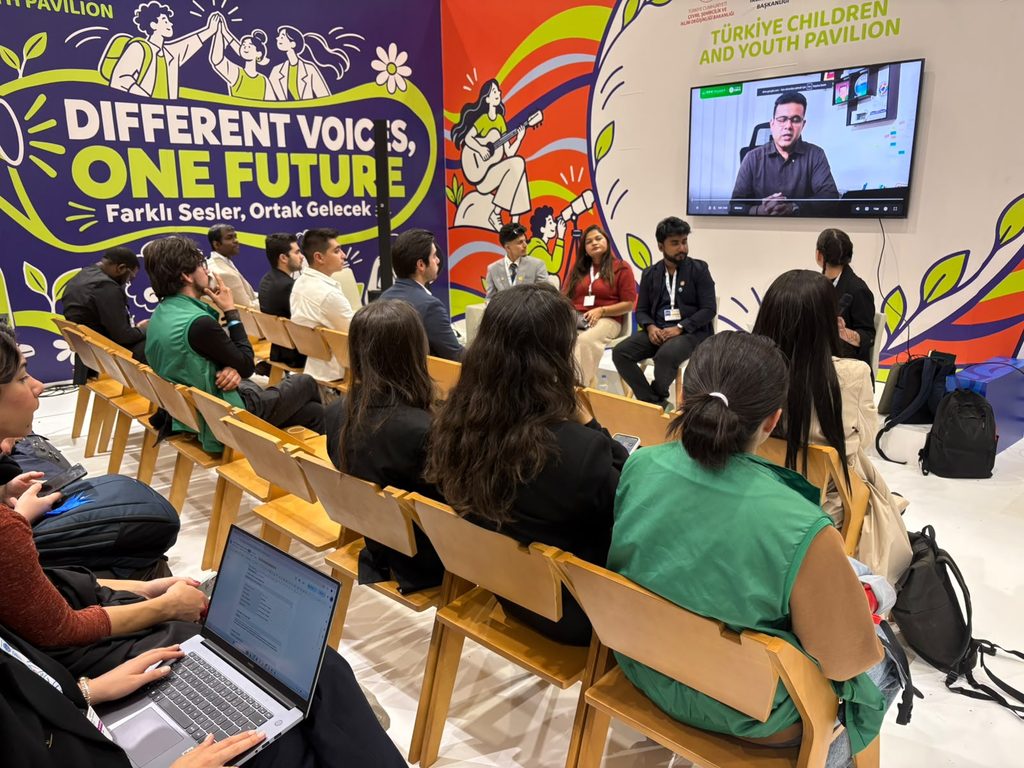
Opening the session, S M Shaikat, Executive Director of SERAC-Bangladesh, emphasized the need to connect climate education with practical skills and livelihood opportunities.
He raised an important question: Can young people actually afford to access training?
For many young people, transport costs, lost income, lack of equipment, and other barriers can limit access to training opportunities. Stipends, transport support, tools, and other resources are therefore essential to making green skills development inclusive and accessible.
Connecting Education with Opportunity
The discussion highlighted the importance of integrating climate literacy and green skills into education and technical and vocational training.
Skills in areas such as waste management, recycling, renewable energy, sustainable agriculture, resource efficiency, and climate-smart technologies can help young people respond to local climate challenges while creating pathways into emerging green sectors.
The session also emphasized that training should lead beyond certificates to internships, apprenticeships, entrepreneurship, employment, and opportunities to apply skills in real communities.
Youth as Innovators and Leaders
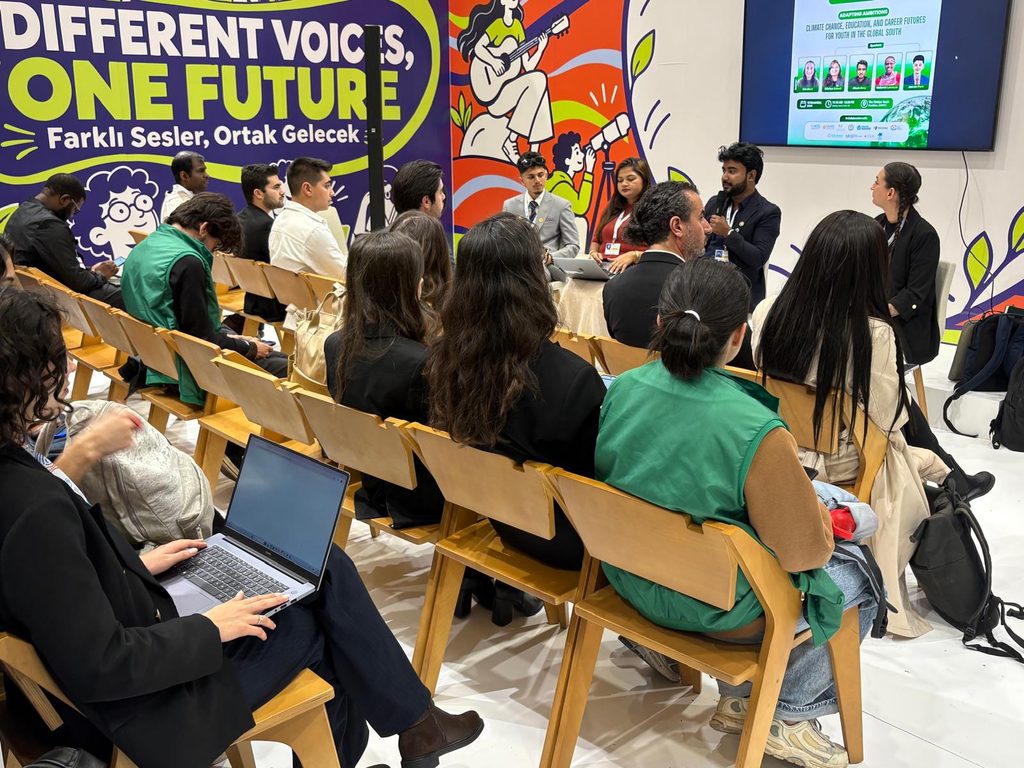
The experiences shared by Ahsan Rony, Founder & Executive Director of Mission Green Bangladesh; Dikshya Subedi, Founder of Youth Action for Sustainable and Eco Nepal (YASEN); and Jeevan Pant, Board Member of Bagmati UNESCO Club, highlighted the role of youth-led initiatives and community-based solutions.
The discussion was moderated by Erin Black, Programming Coordinator at The Mustard Seed Street Church.
Young people are already developing solutions to environmental and climate challenges in their communities. To scale these efforts, they need stronger access to mentorship, networks, financing, technical knowledge, and decision-makers.
From COP31 Dialogue to Action

The session reinforced a clear message: climate ambition must translate into opportunities for young people.
National climate strategies and NDCs should recognize youth as partners in implementation, while climate education, green skills, employment, entrepreneurship, and community resilience should be connected within climate action.
The Action for Climate Empowerment (ACE) agenda also requires more than awareness. Young people need access to education, information, participation, skills, and resources that enable them to take meaningful action.
The conversation at COP31 provided an important platform to share experiences and identify practical pathways for preparing young people for climate-resilient careers and communities.
Investing in young people’s skills, resources, and opportunities is an investment in resilient communities, sustainable economies, and the future of our planet.
Co-organizing Partners
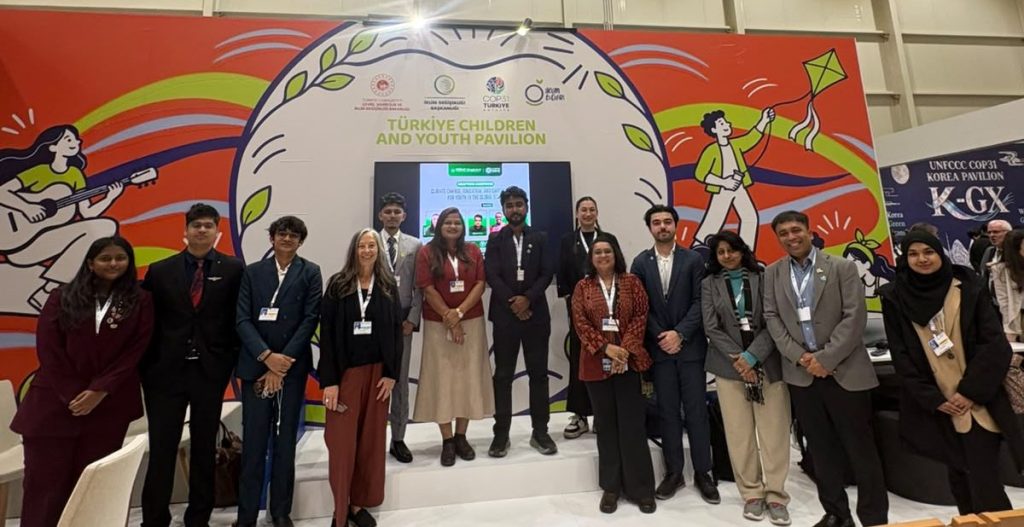
The session was co-organized by the Major Group for Children and Youth (MGCY), SAARC Youth Platform (SYP), Youth Coalition for Climate Justice (YCCJ), Youth Advocacy Network (Pakistan), Youth for Environment Education and Development Foundation (Nepal), Youth Zero Waste and Climate Action, Green Future Foundation (India), Institute of Himalayan Risk Reduction (Nepal), Bagmati UNESCO Club, Ideas International, Youth Action for Sustainable and Eco Nepal (YASEN), among others.
SERAC-Bangladesh thanks all speakers, partners, youth participants, and the Türkiye Youth Pavilion for contributing to this important conversation at COP31.