
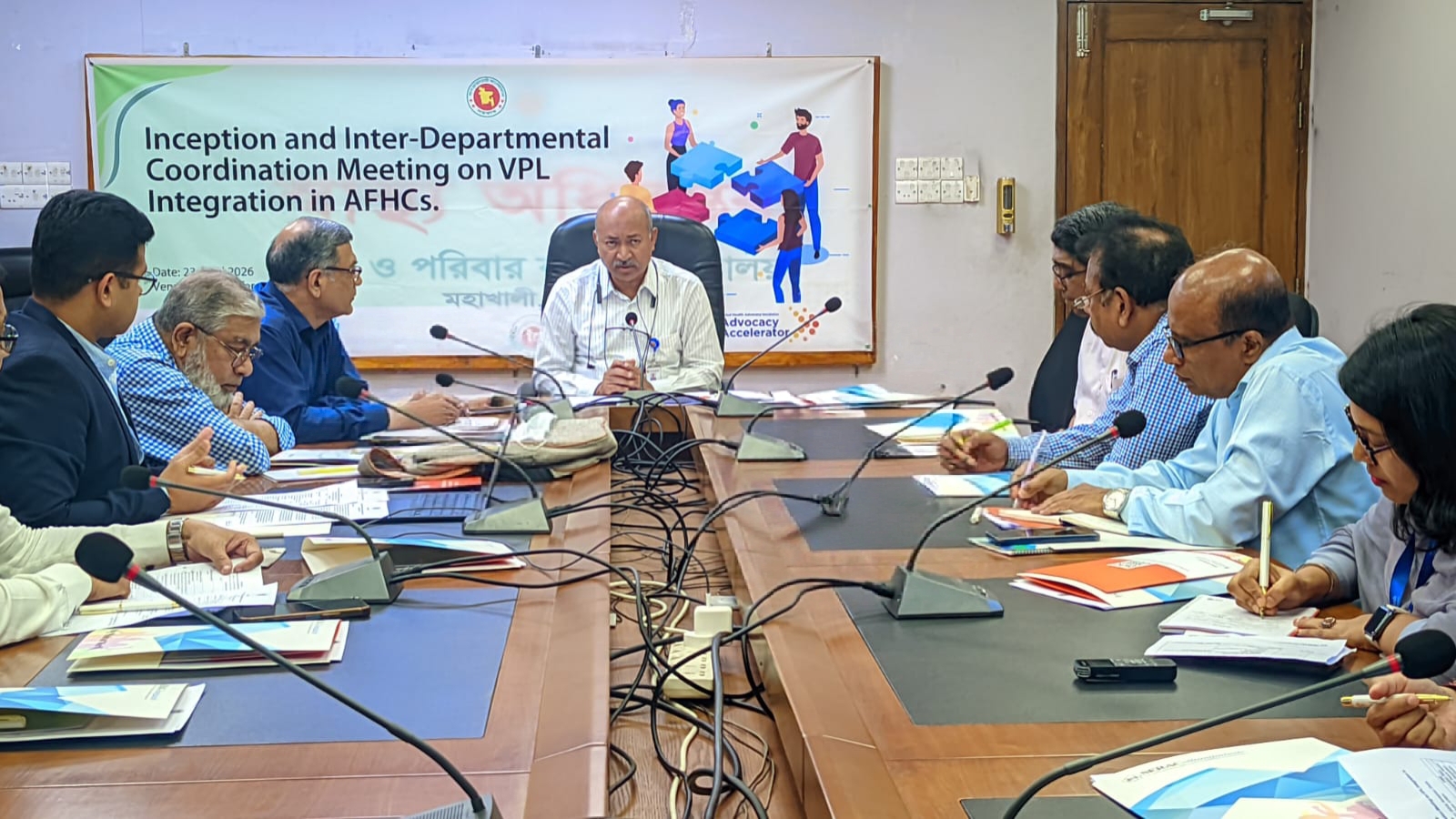
On 23 April 2026, a significant milestone was achieved in strengthening adolescent mental health programming in Bangladesh through the successful convening of the Inception and Inter-departmental Coordination Meeting on VPL Integration into Adolescent Friendly Health Centres (AFHCs) at the Directorate General of Health Services (DGHS).
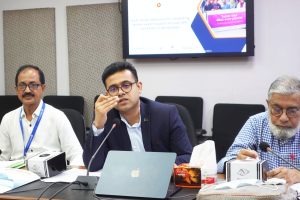 The meeting was organized by SERAC-Bangladesh with support from the GHAI Advocacy Accelerator under the capstone initiative titled
“Youth-Driven Advocacy for Integrating Mental Health Support through Volunteer Peer Leaders (VPL) into AFHCs in Bangladesh.” It brought together senior government officials, technical experts, development partners, civil society representatives, mental health professionals, and youth leaders, including Volunteer Peer Leaders (VPLs), to discuss pathways for institutionalizing the VPL model within the national adolescent health system.
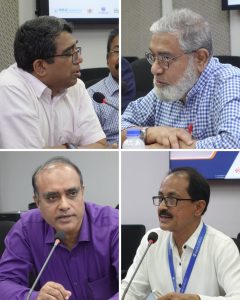 The core objective of the meeting was to strengthen coordination between DGHS and DGFP and to develop a structured framework for integrating the VPL model into Adolescent Friendly Health Centres. Key priorities included establishing a Technical Working Group (TWG), preparing a formal VPL Integration Proposal, and ensuring system-level alignment for sustainable implementation.
The meeting began with a brief but strategic address from S.M. Shaikat, Executive Director of SERAC-Bangladesh, who also serves as Advisory Member of the World Urban Forum and Youth Council Representative to WHO SEARO. He emphasized that health is the most critical sector for any nation, as a strong health system underpins overall survival and well-being. He reiterated SERAC-Bangladesh’s commitment to strengthening the health system, with adolescents identified as the most important and promising population group. He described SERAC-Bangladesh as a “stapler pin” connecting DGHS and DGFP to ensure effective coordination. He further noted that the VPL model has gained international recognition and has been selected as a highlighted abstract for the upcoming SBCC Summit in Panama, reflecting its global relevance. He stressed that while resources exist within the system, the key challenge is strengthening connectivity and coordination for effective implementation.
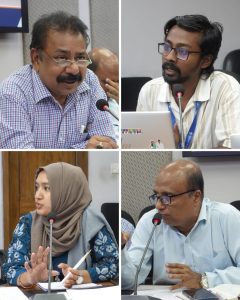 Following this, Md. Nazmul Hasan, Project Manager, presented the technical framework of the VPL model, including its operational design, integration approach within AFHCs, financing considerations, and expected outcomes. A video showcasing the previous VPL pilot added practical insights from adolescents and frontline service providers.
The meeting was chaired by Dr. Syed Kamrul Islam, Director (PHC & ITHC), who strongly supported the initiative and emphasized the need
for establishing a Technical Working Group to guide implementation. He also highlighted the importance of clearly defined job descriptions for VPLs and ensuring coordinated documentation between DGHS and DGFP for submission to the Ministry.
Several important technical and policy recommendations were shared during the discussion. Dr. Md. Sekandar Ali Molla, Deputy Director
(Primary Health Care), emphasized the need for structured adolescent guidance systems where VPLs can play a supportive role. He also recommended developing a comprehensive Concept Note for Ministry-level approval and strengthening policy advocacy to ensure institutional support.
Dr. Abu Jamil Faysal, Public Health Expert and CSO Focal Point (FP2030), stressed the importance of securing high-level government endorsement for the VPL model and ensuring that funding sources are clearly documented within policy frameworks to guarantee sustainability and transparency.
Dr. Md. Monjur Hossain, Assistant Director (MCH Services Unit), highlighted the need to shift greater focus toward mental health, noting that past efforts have been largely centered on physical health. He emphasized that VPLs can serve as a critical referral linkage, helping manage and utilize health-related information effectively. He further noted that VPLs will play an essential role in guiding adolescents who often do not know where to seek appropriate healthcare services.
Dr. Asif Iqbal, Assistant Director (School Health), emphasized that the VPL model must be integrated within the existing government service structure. He noted that it would also strengthen public relations within the health sector. He recommended the development of a well-defined organogram, the establishment of Adolescent Focal Bodies at district level, and formalization of the VPL model within the revenue sector through a structured institutional framework.
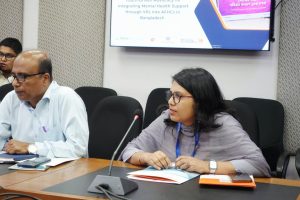 In his concluding remarks, Professor Dr. Pravath Chandra Biswas, Director General (Health), DGHS, highlighted the “psychological gap” between adolescents and health service providers, which often limits access to care. He emphasized that the VPL model offers a practical solution to bridge this gap and improve adolescent-friendly service delivery. He also underscored that Bangladesh, with over 36 million adolescents, holds significant demographic potential, where strategic investment in youth can generate substantial long-term social and economic returns. He called for unified action from all stakeholders to strengthen inclusive and responsive health systems.
The meeting concluded with a shared agreement on next steps, including the formation of a Technical Working Group, development of a formal VPL Integration Proposal, and strengthened coordination between DGHS and DGFP for policy alignment and implementation.
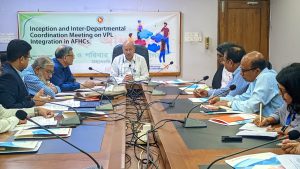 Overall coordination and facilitation were led by Shahina Yasmin (Project Director), Faria Sultana Trina (Program Associate), Md. Najmul Islam (Associate Finance & Admin Officer), and Md. Enamul Haque (IT & Communication Associate), under the moderation of Md. Salim Miah, Deputy Director (Program), SERAC-Bangladesh.
This initiative represents a significant step toward institutionalizing youth-led mental health interventions in Bangladesh, positioning the VPL model as a structured, scalable, and system-integrated approach to strengthening adolescent health services nationwide.