
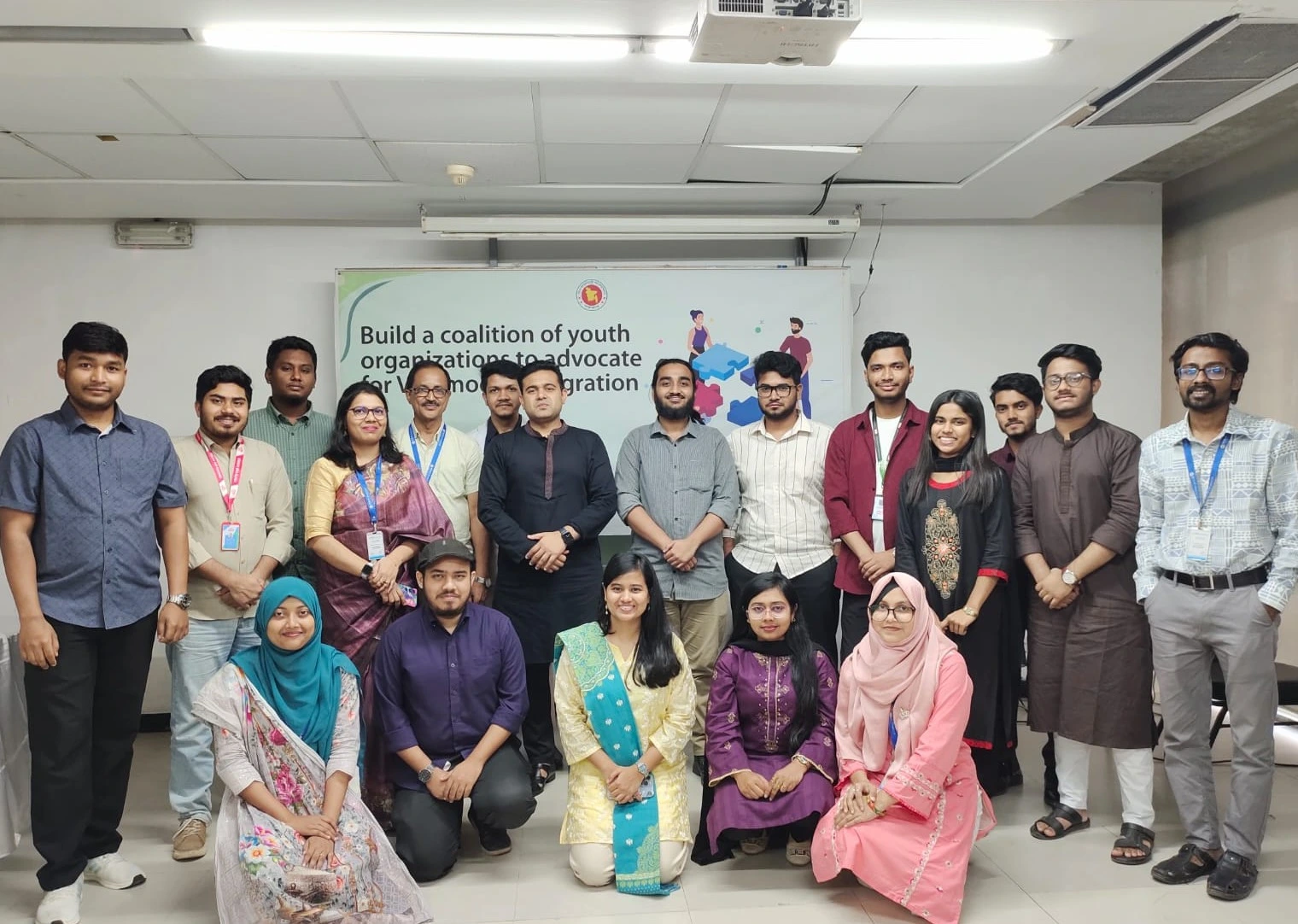
On 12 April 2026, SERAC-Bangladesh, with support from the GHAI Advocacy Accelerator, successfully organized a coalition-building event at the KIB Complex, Dhaka, titled “Building a Coalition of Youth Organizations to Advocate for VPL Model Integration.” The event brought together a diverse group of youth leaders and organizations to strengthen collaboration and foster collective action for advancing adolescent health in Bangladesh.
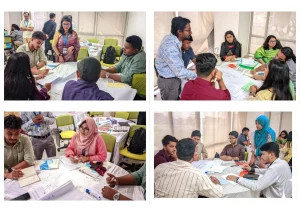 The day featured interactive sessions on networking and introductions, adolescent mental health and service access in Bangladesh, coalition formation (including vision, structure, and communication mechanisms), and advocacy strategy development focused on identifying priority issues and effective tools for action.
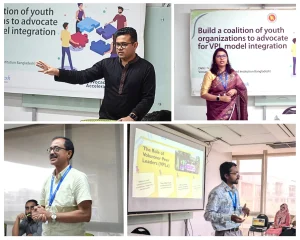 The youth coalition was formally initiated under the leadership of SM Shaikat, Executive Director of SERAC-Bangladesh, who emphasized the urgent need to prioritize preventive healthcare for adolescents and young people. He highlighted that while Bangladesh has 1,253 Adolescent-Friendly Health Corners (AFHCs) and nearly 4,500 union-level health facilities, many AFHCs still require revitalization and improved functionality. He further stressed that a unified youth coalition can play a vital role in advocating for the integration of the Volunteer Peer Leader (VPL) model into AFHCs through evidence-informed and youth-led advocacy approaches.
Youth coalition members actively contributed valuable insights throughout the event, highlighting key challenges, opportunities, and strategic directions for advancing the VPL model and strengthening adolescent mental health support in Bangladesh. They emphasized that although the integration of the VPL model into AFHCs presents a significant opportunity, it is constrained by several challenges, including limited government budget allocation, shifting political priorities, weak availability of evidence and data, and insufficient political commitment, all of which slow policy adoption. Persistent social and religious taboos surrounding adolescent and mental health, along with limited youth participation in decision-making processes, further continue to hinder progress.
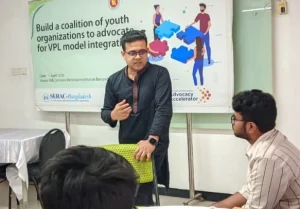 Despite these challenges, participants underscored that youth-led advocacy can serve as a powerful catalyst for change. They highlighted the importance of using evidence-based tools such as research papers, fact sheets, and data analysis, combined with storytelling and collaboration with relevant organizations, to strengthen advocacy efforts. In addition, approaches such as Training of Trainers (ToT), coalition building, community engagement, and awareness campaigns were identified as key strategies to amplify youth voices, challenge stigma, and support the sustainable integration of the VPL model ultimately contributing to improved adolescent mental health services within Bangladesh’s healthcare system.
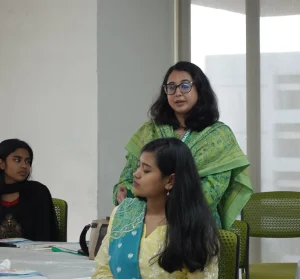 The event was facilitated by Shahina Yasmin, Project Director, and Md. Nazmul Hasan, Project Manager. The SERAC-Bangladesh team, including Lutfa Pathan (Project Manager), Faria Sultana Trina (Program Associate), and Md. Najmul Islam (Associate Finance & Admin Officer), provided dedicated support in facilitation, coordination, and logistics to ensure the smooth implementation of the event.
The session concluded with a synthesis of key discussions, agreement on next steps, and a vote of thanks delivered by Md. Salim Miah, Deputy Director (Program).
Overall, the event marked a significant milestone in strengthening a youth-led advocacy coalition and advancing preventive health systems for adolescents and young people in Bangladesh.