
On April 15, 2026, two important international dialogues brought together youth leaders, development practitioners, and climate advocates to discuss the future of sustainable cities, climate resilience, education, and youth livelihoods in the Global South. Both events highlighted a powerful reality – young people are not only facing the impacts of climate change, but are also leading innovative solutions within their communities.
Representing SERAC-Bangladesh, S M Shaikat, Executive Director, participated in both discussions, sharing experiences from Bangladesh on youth leadership, climate resilience, zero-waste systems, and sustainable urban development.
Reimagining Urban Futures Through Community Innovation
At the ECOSOC Youth Forum 2026 side event titled “Reclaiming the City: Zero Waste and Climate Resilience in Marginalized Urban Communities,” discussions centered on how cities can become more inclusive, resilient, and environmentally sustainable through grassroots action.
 During the session “Bridging Local Innovation and Global Frameworks,” S M Shaikat emphasized that communities in Bangladesh are already leading transformative work around waste management, climate adaptation, and urban resilience. However, despite the growing impact of these initiatives, many remain disconnected from policy frameworks and institutional support systems.
He noted that one of the greatest barriers is not the absence of ideas or local leadership, but rather the lack of recognition, long-term investment, and integration into formal governance structures.
Sharing examples from the work of SERAC-Bangladesh, he explained how the organization collaborates with youth groups, communities, and local authorities to strengthen climate resilience and create pathways for more inclusive urban governance.
A key issue highlighted during the discussion was the role of informal waste workers. In many urban areas, waste pickers contribute significantly to recycling systems and circular economies, yet they are often excluded from policy discussions and city planning processes. Shaikat stressed that recognizing and formally integrating informal waste workers into municipal systems is essential for sustainable urban transformation.
He also called for stronger support for youth-led green enterprises and zero-waste innovations. Across Bangladesh, young people are creating practical solutions that convert waste into economic opportunities while contributing to environmental sustainability. According to him, these initiatives require sustained financial support, mentorship, and institutional backing to scale their impact.
Another important message from the event focused on youth participation in governance. Young people, he argued, should move beyond symbolic participation and become active decision-makers in shaping climate policies and urban development strategies.
As global discussions advance toward COP31 and the achievement of the Sustainable Development Goals, the event reinforced the need to place marginalized urban communities at the center of climate and development conversations rather than treating them as peripheral stakeholders.
Climate Change, Education, and the Future of Youth Livelihoods
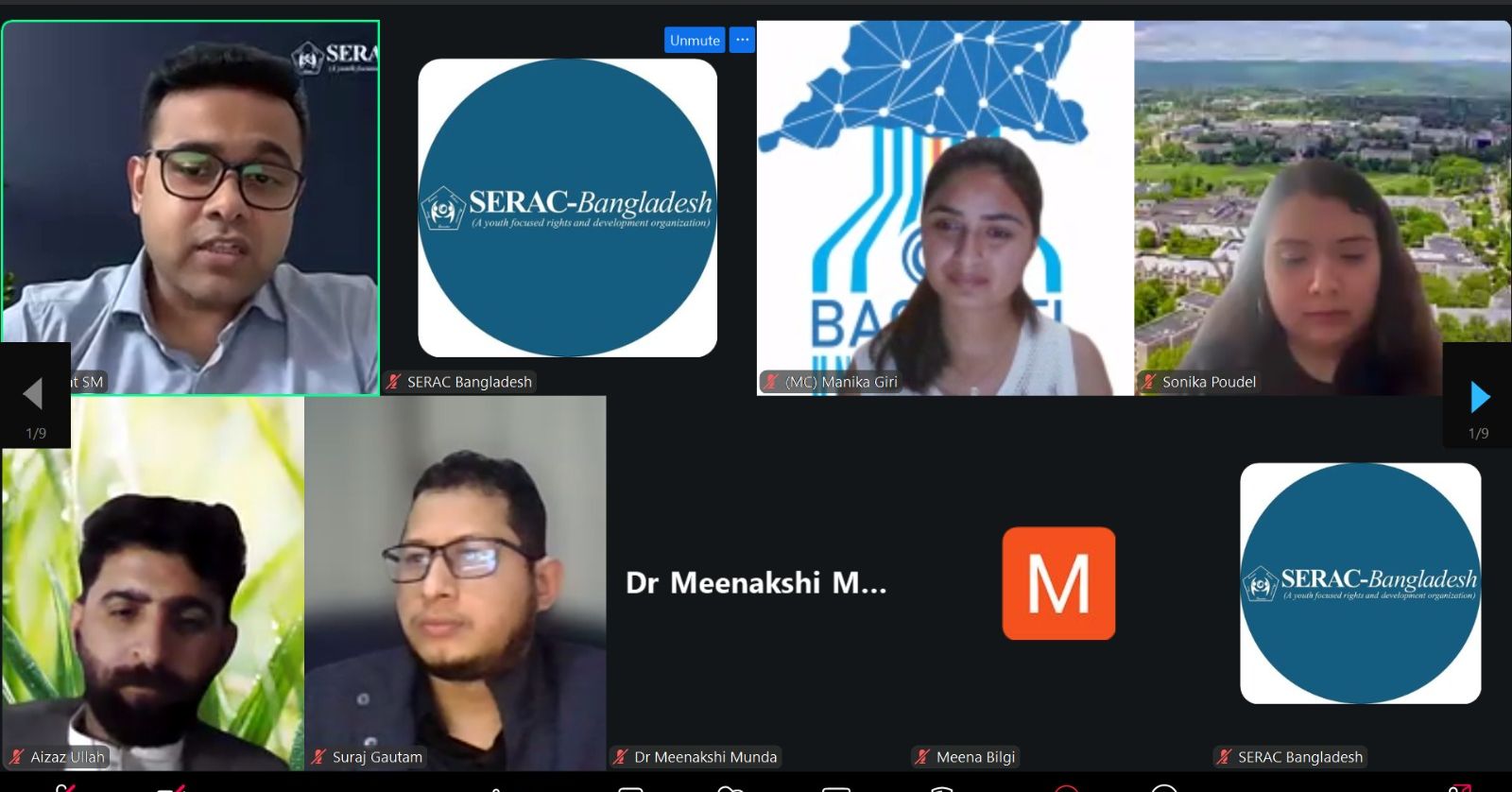
 A second regional dialogue, “Adapting Ambitions: Climate Change, Education, and Career Futures for Youth in the Global South,” focused on another urgent issue – how climate change is affecting education systems, employment opportunities, and future career pathways for young people.
The event was organized by SERAC-Bangladesh alongside regional and international partners including Major Group for Children and Youth, SAARC Youth Platform, Green Future Foundation, Youth Advocacy Network, Chanan Development Association, Youth for Environment Education and Development Foundation, Institute of Himalayan Risk Reduction, Bagmati UNESCO Club, and Youth Action for Sustainable and Eco Nepal.
The discussion explored how climate impacts are already disrupting agriculture, livelihoods, education, and employment opportunities across South Asia. Participants stressed that climate change is influencing not only environmental conditions but also the long-term social and economic futures of young people.
 Speaking during the session, S M Shaikat highlighted the urgent need to rethink education systems so they can better prepare youth for a changing climate reality. He emphasized the importance of climate-responsive education, practical green skills, and stronger investment in climate-resilient livelihoods.
Using examples from youth-led initiatives in Bangladesh, he demonstrated how young people are already contributing to local solutions through climate action, innovation, and community engagement. He emphasized that youth should not be seen merely as recipients of development interventions, but as partners and co-creators capable of leading transformative change.
The discussion also emphasized the growing importance of renewable energy, sustainable agriculture, green entrepreneurship, and climate-smart employment opportunities. Participants agreed that preparing youth for the future requires coordinated investment in skills development, innovation, and inclusive policy processes.
Speakers from Nepal, India, and Pakistan shared similar experiences from their countries, noting how climate-related disasters and environmental changes are already affecting educational continuity, employment opportunities, and migration patterns.
Moving From Dialogue to Action
Both events reflected a common understanding: meaningful climate action cannot happen without the leadership, creativity, and participation of young people.
From climate-resilient cities to green career pathways, youth across the Global South are already creating impactful solutions within their communities. What remains necessary is stronger institutional commitment to support these efforts through inclusive governance, investment, and long-term collaboration.
The discussions also highlighted an important shift in perspective. Marginalized communities and informal urban settlements are not simply vulnerable spaces needing support; they are also spaces of innovation, resilience, and leadership.
As the global community moves closer to the 2030 Agenda and future climate negotiations, ensuring that youth voices and community-driven solutions remain central to policy and action will be critical for building a more sustainable and equitable future.