
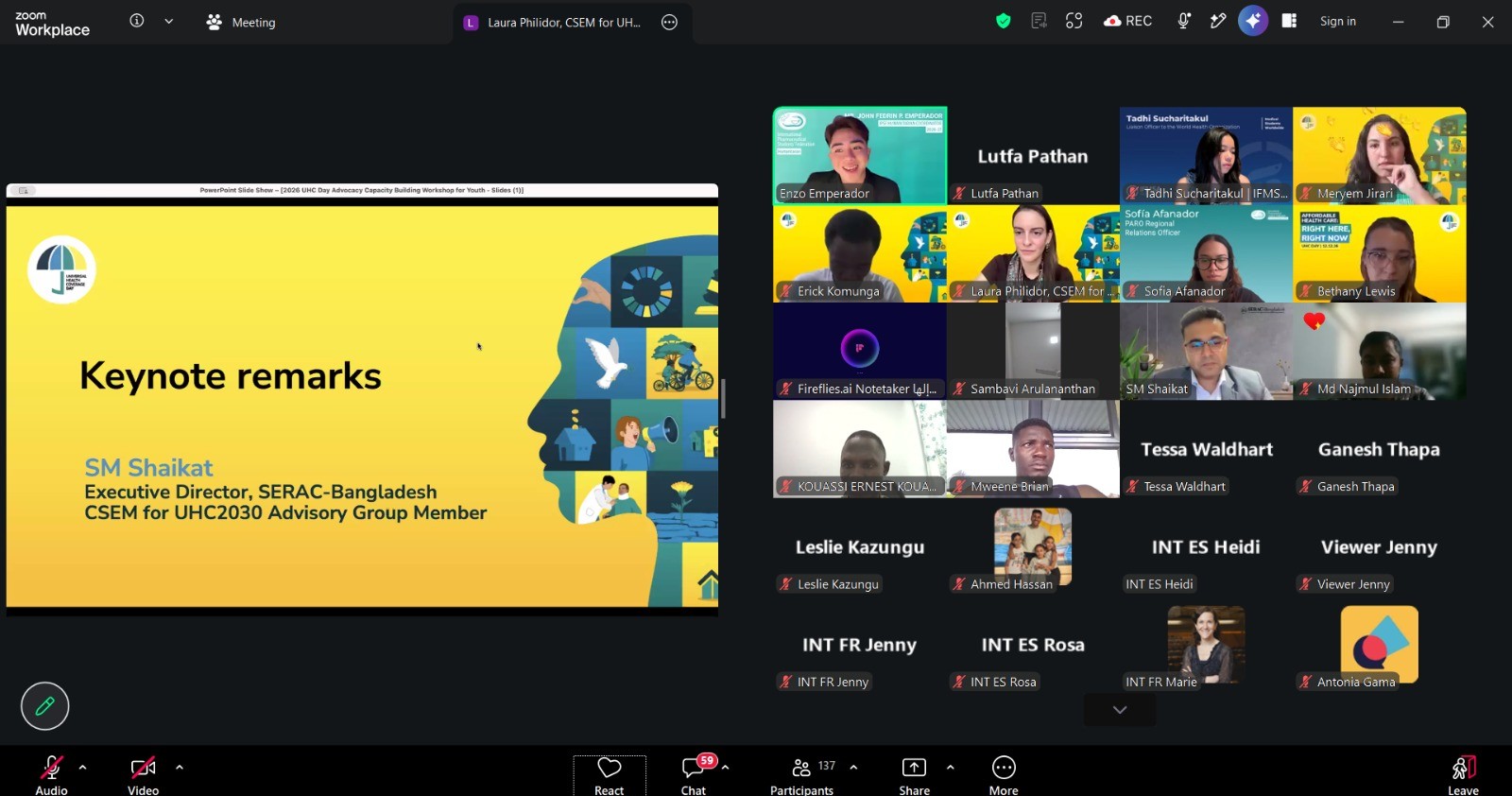
SERAC-Bangladesh Executive Director and CSEM for UHC2030 Advisory Group member SM Shaikat delivered the keynote at the 2026 UHC Day Youth Advocacy Capacity Building Workshop, highlighting how young people can mobilise their communities and influence decisions affecting access to health care.
The online workshop on 27 October brought together young advocates from different countries to explore how they can build local movements for universal health coverage (UHC). Organised by UHC2030, the Civil Society Engagement Mechanism for UHC2030 and their partners, it focused on turning community concerns into practical advocacy.
Drawing on his experience in Bangladesh, Shaikat spoke about the importance of listening to communities, connecting young people with health services and building relationships with decision-makers.
“Leadership begins with listening and grows through working with others,” Shaikat said. “Young people have the experience and ideas to help shape decisions that affect their health.”
Universal health coverage means that everyone can receive the quality health services they need, when and where they need them, without experiencing financial hardship. For many families, however, the cost of medicines, tests, transport and treatment remains an obstacle.
According to the WHO and World Bank’s 2025 UHC monitoring report, an estimated 4.6 billion people were not fully covered by essential health services in 2023. In 2022, 2.1 billion people experienced financial hardship because of out-of-pocket health spending.
In Bangladesh, WHO reported in 2025 that approximately 70 million people experienced financial hardship associated with out-of-pocket health spending.
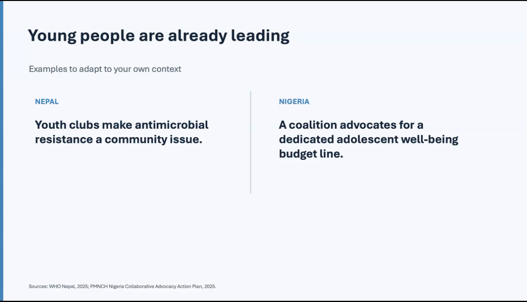
Adolescents and young people can face additional barriers. They may not know where to find reliable information or available services. Concerns about confidentiality, stigma and being judged can also discourage them from seeking care.
One example highlighted during the keynote was the Volunteer Peer Leader model, through which SERAC-Bangladesh has worked with public health institutions under the Ministry of Health and Family Welfare to connect adolescents with health information and services.
The model responds to a challenge in adolescent health: even where services are available, young people may not know about them or may feel uncomfortable seeking advice.
Volunteer peer leaders share information with their peers and help connect adolescents with health facilities. In the model described in SERAC-Bangladesh’s project submission, 40 peer leaders worked with 20 government-run adolescent-friendly health centres across Dhaka, Narayanganj, Mymensingh and Netrokona.
The experience illustrates how young people can help build trust between communities and public health services. It also shows the value of creating opportunities for adolescents to bring their concerns closer to providers and local authorities.
“Young people can help build a bridge between their communities and the health system,” Shaikat noted. “When their experiences are taken seriously, they can contribute to solutions that make services more accessible and responsive.”
The Bangladesh Youth Health Action Network (BYHAN) offers another example of bringing young people together around health advocacy. Founded by Shaikat, the network connects young advocates to share experiences, learn from one another and raise their priorities collectively.
Networks can help individuals recognise that the challenges they face are shared by others. They also provide a way to sustain relationships and advocacy beyond a single event or campaign.
“A movement does not need to begin with a large organisation,” Shaikat said. “It can start with a few people who care about the same issue and are willing to take the next step together.”
Community voices can contribute to change when they reach the people responsible for decisions about services and resources. This requires advocates to understand the issue, gather evidence and build relationships with health workers, local authorities and other partners.
It also means asking practical questions: Who is responsible for the service? What resources are available? What action is needed? How will the community know whether a commitment has been fulfilled?
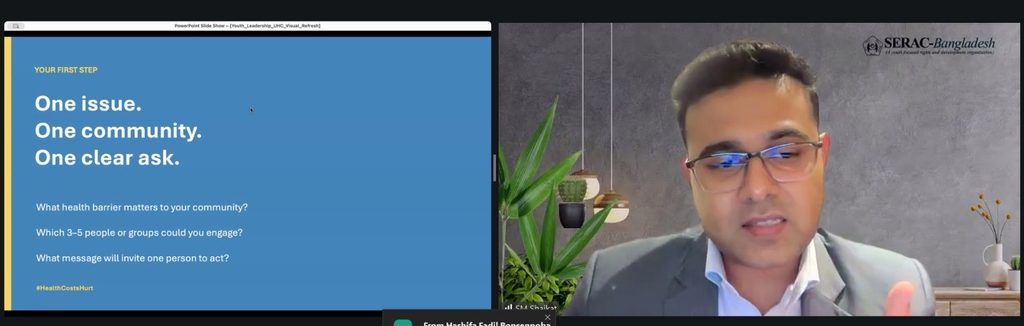
During the workshop, participants were encouraged to begin developing their own outreach and mobilisation plans. The exercise invited them to identify a UHC issue in their country, list people or groups they could engage, and prepare a message inviting someone to take action.
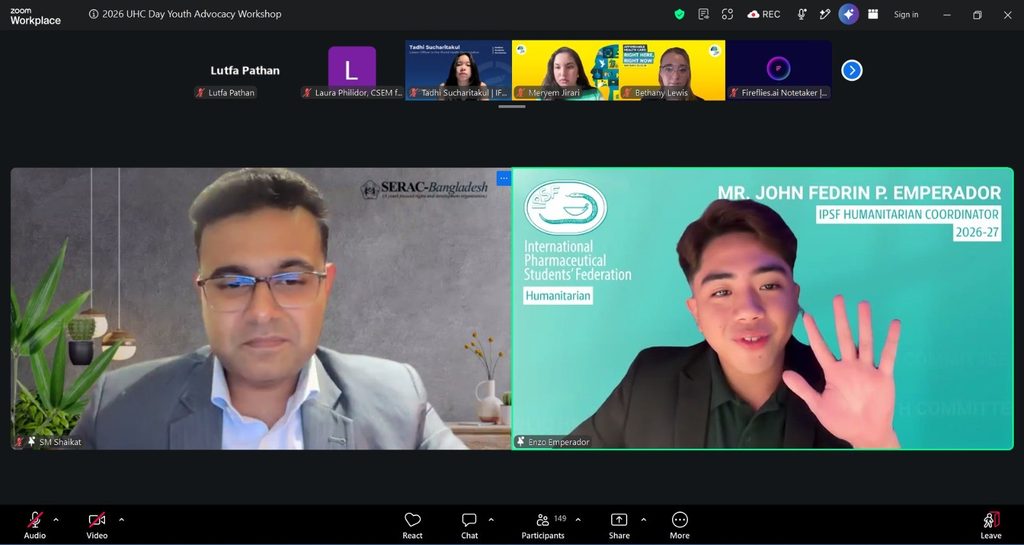
Shaikat encouraged young advocates to start with a manageable issue and remain involved as their work develops.
“Listen to your community. Bring people together. Make a clear ask. And stay involved until you see progress,” he said.
The workshop formed part of the 2026 UHC Day campaign, “Affordable health care, right here, right now,” which calls for action to reduce barriers to care and protect people from unaffordable health costs.
Through his work with SERAC-Bangladesh, BYHAN and the CSEM for UHC2030 Advisory Group, Shaikat continues to advocate for meaningful youth participation in the decisions that shape health systems and access to care.