
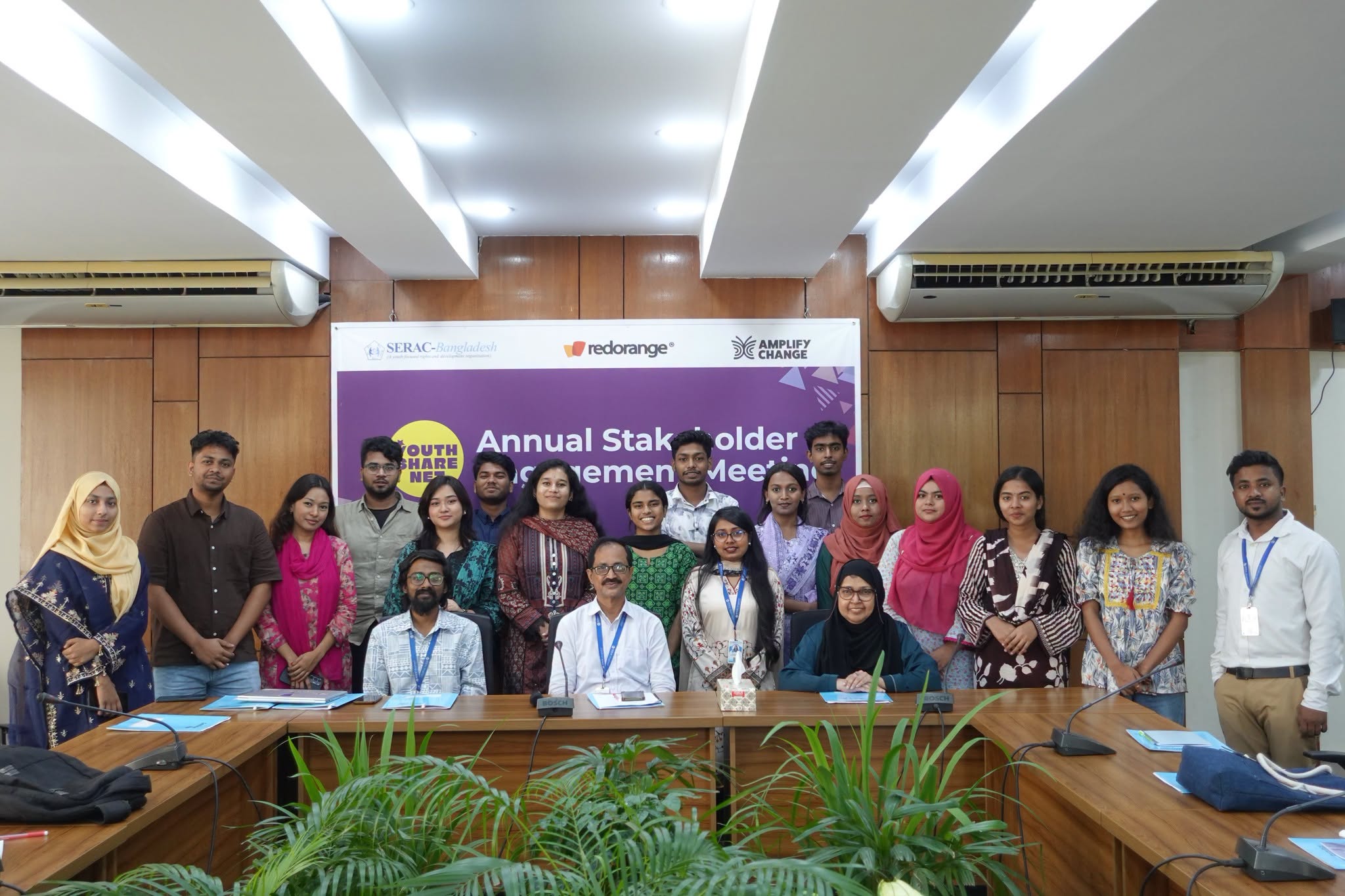
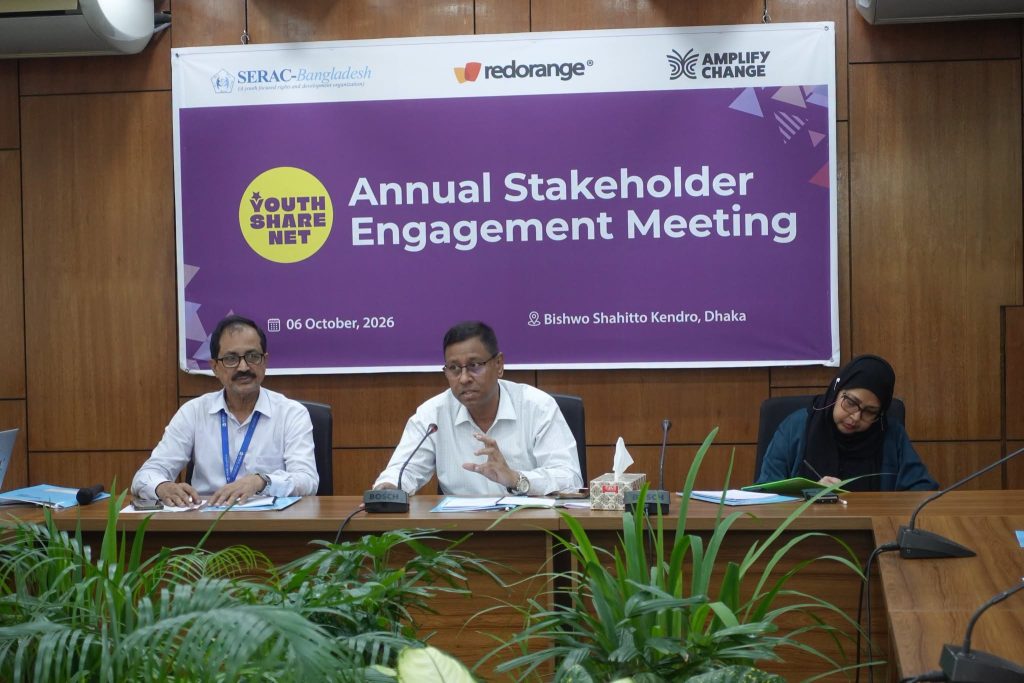
SERAC-Bangladesh successfully convened the Annual Stakeholder Engagement Meeting under the Youth ShareNet Project, funded by Amplify Change and supported by RedOrange, bringing together senior government officials, academics, and youth leaders to strengthen multi-stakeholder collaboration for advancing adolescent and youth Sexual and Reproductive Health and Rights (SRHR), preventing child marriage, and addressing Technology-Facilitated Gender-Based Violence (TFGBV) in Bangladesh.
The meeting commenced with welcome remarks and an overview of the meeting objectives delivered by Md. Salim Miah, Director (Program), SERAC-Bangladesh, setting the stage for meaningful dialogue and collaboration among stakeholders.
The meeting served as an important platform for evidence-based dialogue, knowledge sharing, and collective reflection on emerging issues affecting adolescents and young people. Discussions highlighted recent national evidence, including findings from MICS 2025, the increasing concern of Technology-Facilitated Gender-Based Violence, and the need for coordinated, gender-responsive approaches to strengthen adolescent wellbeing, digital safety, and access to quality SRHR information and services.
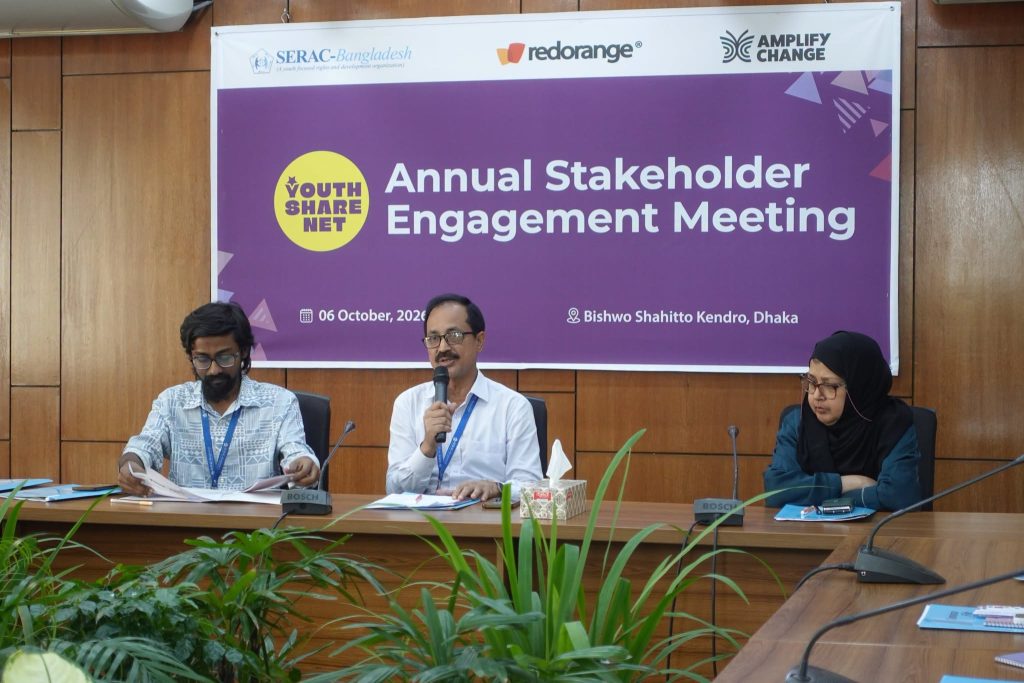
Project progress, key achievements, and priority advocacy initiatives were presented by MD. Nazmul Hasan, Project Manager, SERAC-Bangladesh, provided participants with an overview of the Youth ShareNet Project’s implementation, key milestones, evidence generation efforts, and strategic priorities for strengthening policy advocacy and multi-sectoral collaboration.
The meeting was graced by distinguished guests, including Md. Taslim Uddin Khan, Director (IEM), Directorate General of Family Planning (DGFP), and Professor Dr. Fariha Haseen, Chairman, Department of Public Health and Informatics, Bangladesh Medical University, alongside and youth representatives.
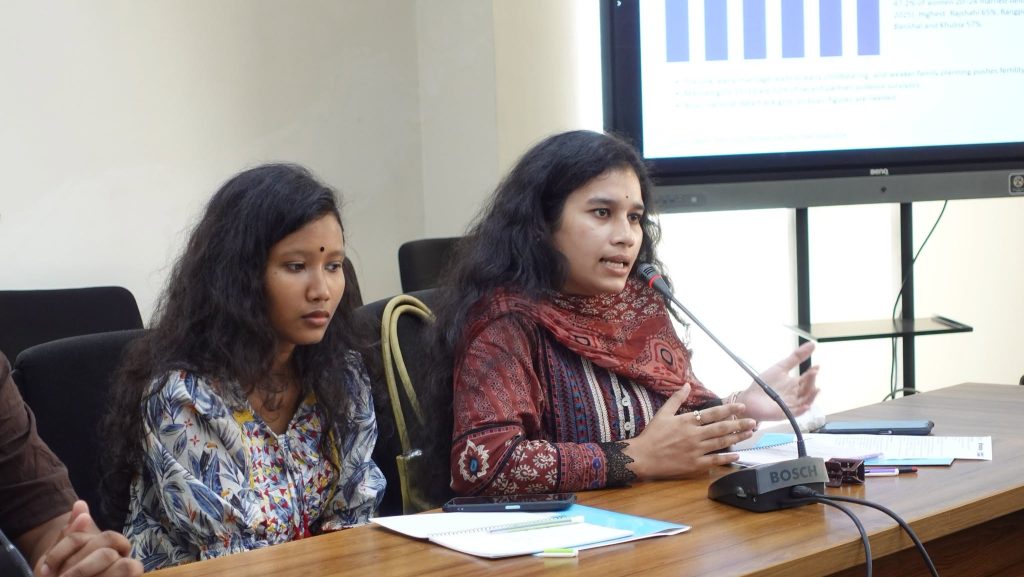
The interactive discussions and stakeholder reflections reaffirmed the importance of sustained collaboration among government, civil society, development partners, and youth networks to strengthen evidence-informed policies and programs. Participants collectively emphasized the need to accelerate efforts to prevent child marriage, address Technology-Facilitated Gender-Based Violence, Mental Health and ensure that every adolescent and young person in Bangladesh can access accurate information, quality services, safe digital spaces, and meaningful opportunities to thrive.
The programme concluded with closing remarks and a vote of thanks delivered by Md. Salim Miah, Director (Program), SERAC-Bangladesh, who expressed appreciation to all participants for their valuable contributions and reaffirmed SERAC-Bangladesh’s commitment to advancing collaborative, youth-centered advocacy for adolescent wellbeing in Bangladesh.