
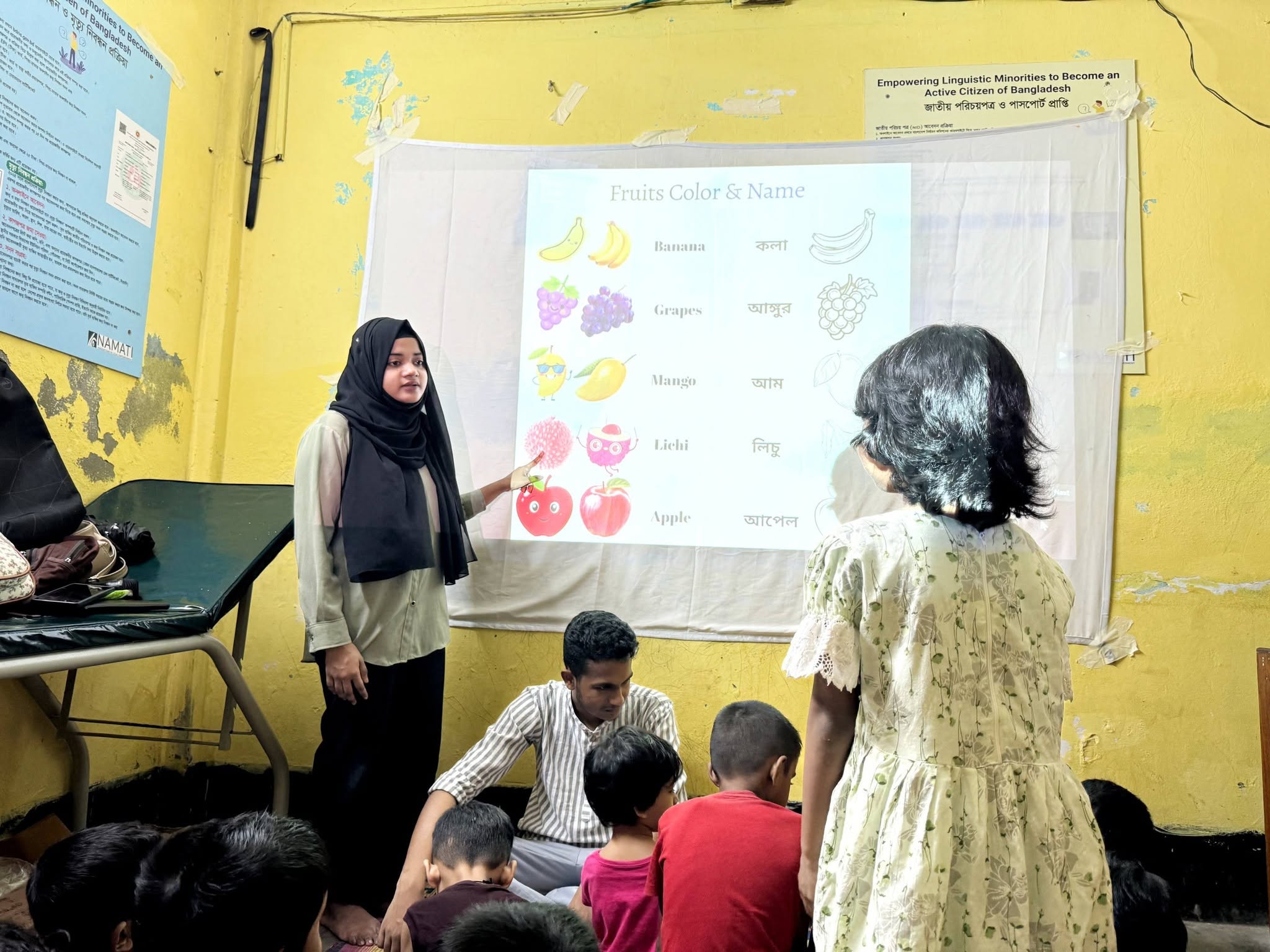
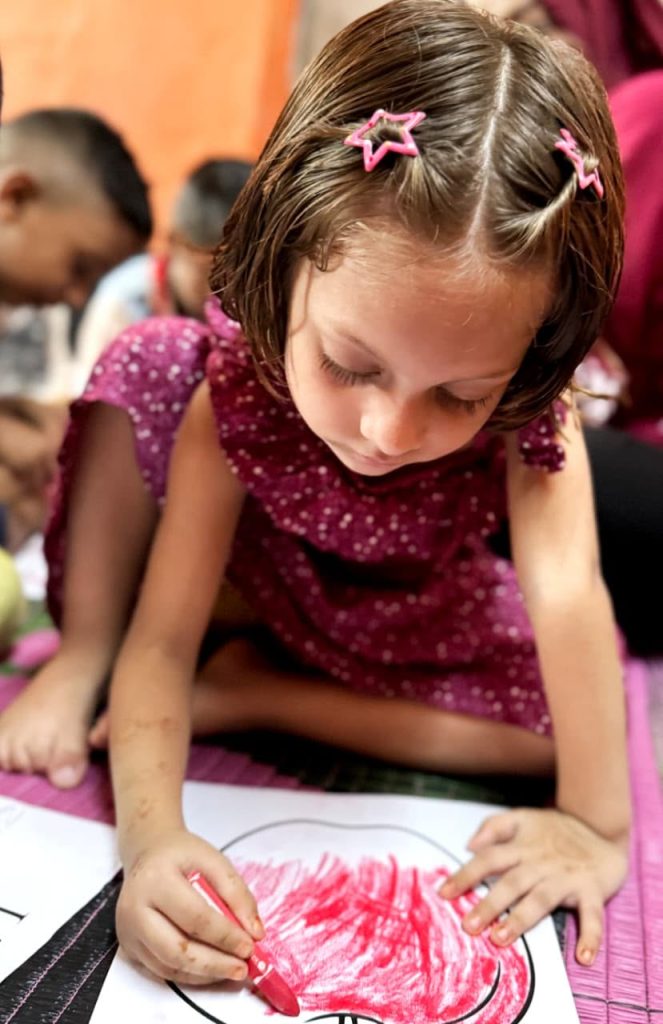
Sensory experiences play an important role in early childhood development, as children naturally learn by exploring and interacting with the world around them. Through touching, observing, listening, comparing and manipulating objects, children develop a better understanding of their surroundings. In Montessori education, sensorial activities give children hands-on opportunities to explore qualities such as color, shape, size, texture, weight, and sound. These experiences strengthen children’s observation, concentration, coordination, and early cognitive skills while encouraging curiosity, active participation, and independent learning.
Throughout September, the DreamWings Project of SERAC-Bangladesh continued its learning sessions across partner schools in Mirpur, focusing on foundational learning, sensory exploration, creativity, health and safety awareness, storytelling, and joyful learning. The sessions included a range of age-appropriate activities, songs, animations, stories, and hands-on experiences to keep children engaged in support of their learning and development.
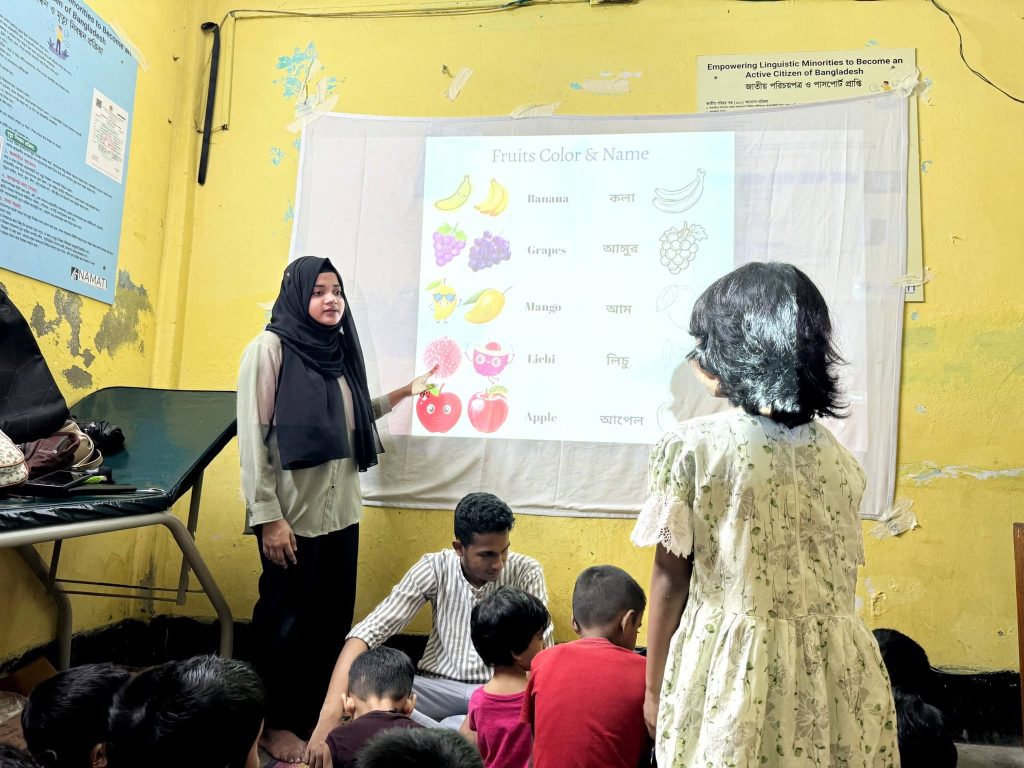
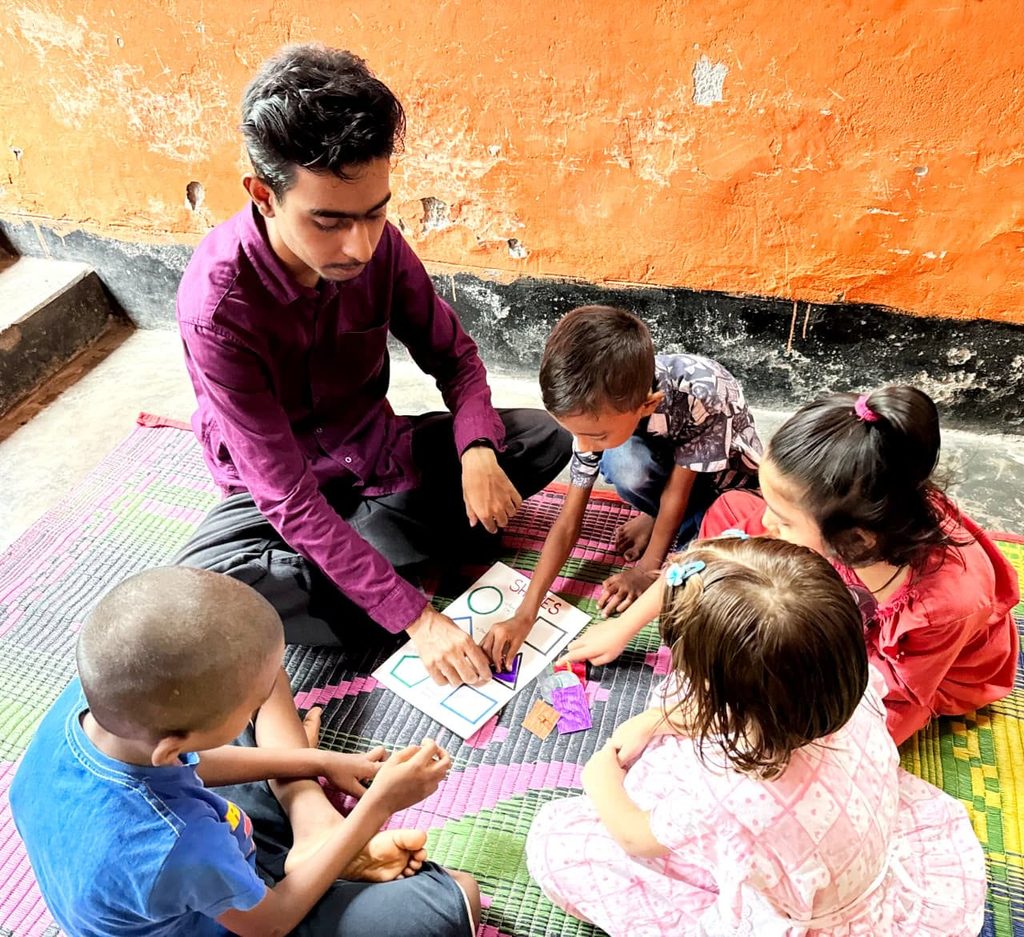
8th Session held at Al Aqsa Model Academy (Paris Road, Mirpur-11), Amader Pathshala and Nizamuddin Memorial Pre-School (11 No. Millat Camp). The session included The Fruit Song, Montessori Sensorial Activity, Tom & Jerry: Cat-Astrophe in the Kitchen and The Lion and the Mouse. The Fruit Song taught children about different fruits and developed their listening skills and recognition skills. The Montessori Sensorial Activity involved children in hands-on exploration to identify and differentiate shapes and colors, supporting observation, concentration, coordination and early cognitive skills. Tom & Jerry: Cat-Astrophe in the Kitchen allowed children to interact with visual elements and narratives and The Lion and the Mouse encouraged values such as kindness, cooperation and assistance to others. Together these activities supported children’s observation, participation, imagination and social development.
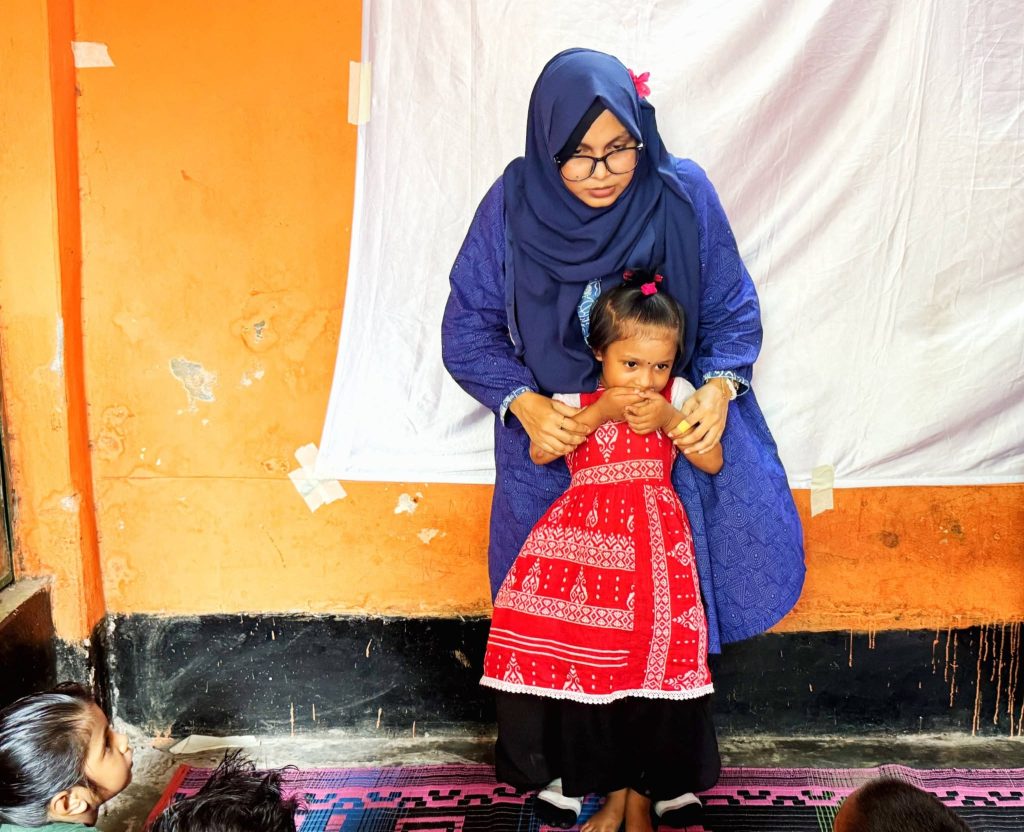
Session 9 was held at Amader Pathshala, Nizamuddin Memorial Pre-School (12 Kurmitola Camp, Chandu Nehari) The session included Balanced Food from Sisimpur, If You’re Happy and You Know It by Ms Mun, The Hare and the Tortoise, and a Monitoring Session on Shape Identification. The Balanced Food session introduced children to different aspects of balanced and nutritious food, and If You’re Happy and You Know It encouraged children to participate through movement and expression. The story of The Hare and the Tortoise engaged children through storytelling and encouraged things like patience and persistence. The Shape Identification Monitoring Session gave the chance to observe the children’s ability to recognize different shapes, as well as to reinforce previous learning, supporting visual recognition, concentration, and memory.
Session 10 was conducted at Nizamuddin Memorial Pre-School (12 Kurmitola Camp, Chandu Nehari) and included Good Touch and Bad Touch using a short film by BRAC, and The Thirsty Crow. The Good Touch and Bad Touch session focused on body safety, personal boundaries, and recognising safe and unsafe or uncomfortable touch. Children were encouraged to understand the importance of saying no and seeking support from trusted adults when needed. The Thirsty Crow encouraged children to engage with storytelling while developing observation, creative thinking and problem-solving skills.
Each September session brought a different learning experience for the children, allowing them to engage with new topics in ways that were familiar, enjoyable and meaningful to them. The combination of sensory activities, stories, songs, visual content and discussions created opportunities for children to express themselves, participate actively and connect learning with their everyday experiences. These continued sessions are helping build a stronger foundation for children’s learning and development through experiences that go beyond traditional classroom practices.