
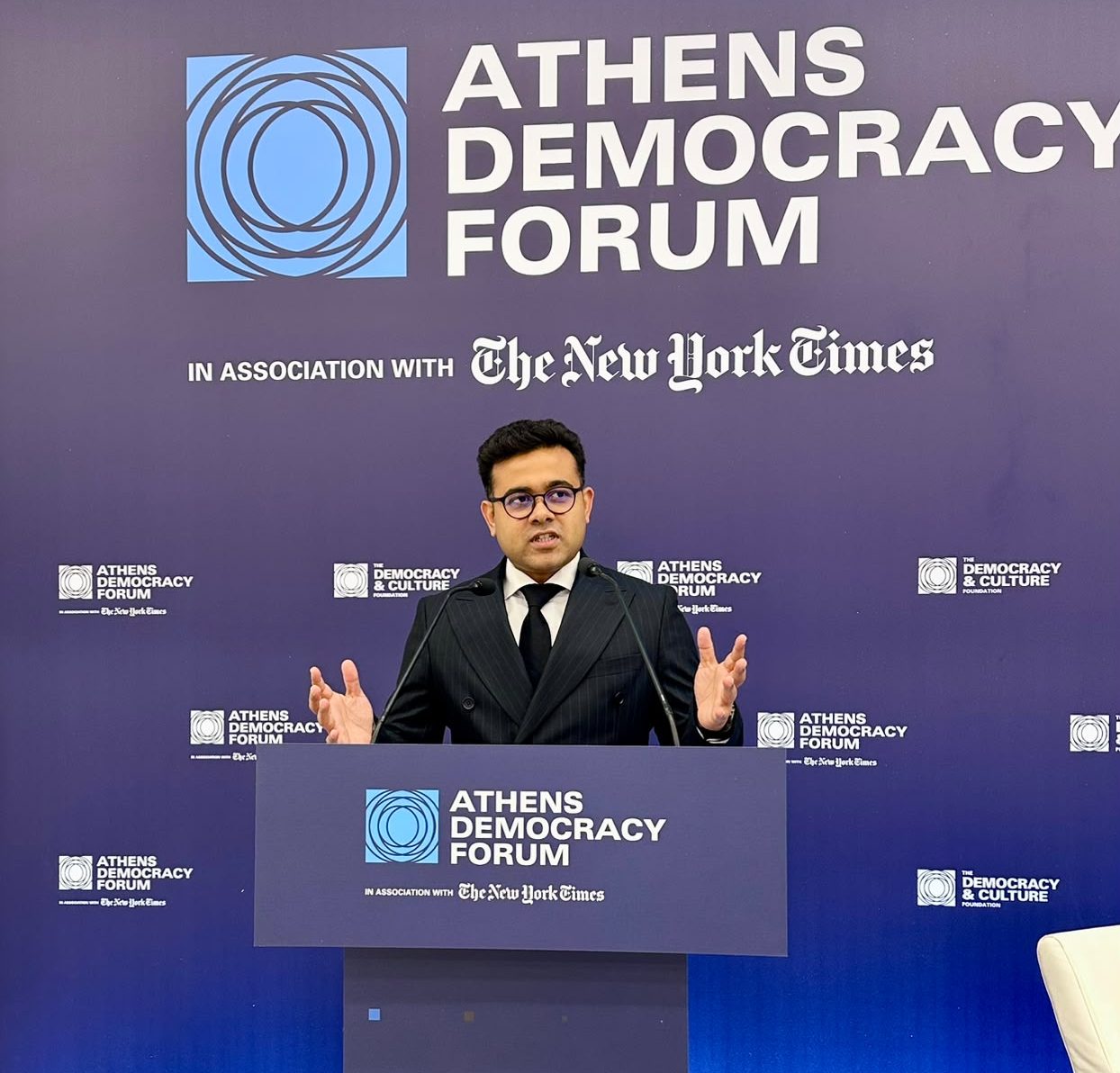
SERAC Bangladesh, alongside Cornell University and the European Democracy Youth Network (EDYN), co-hosted the “Trust and Algocracy” Deep Listening session this afternoon at the GDC Global Forum, held alongside the Athens Democracy Forum 2026.
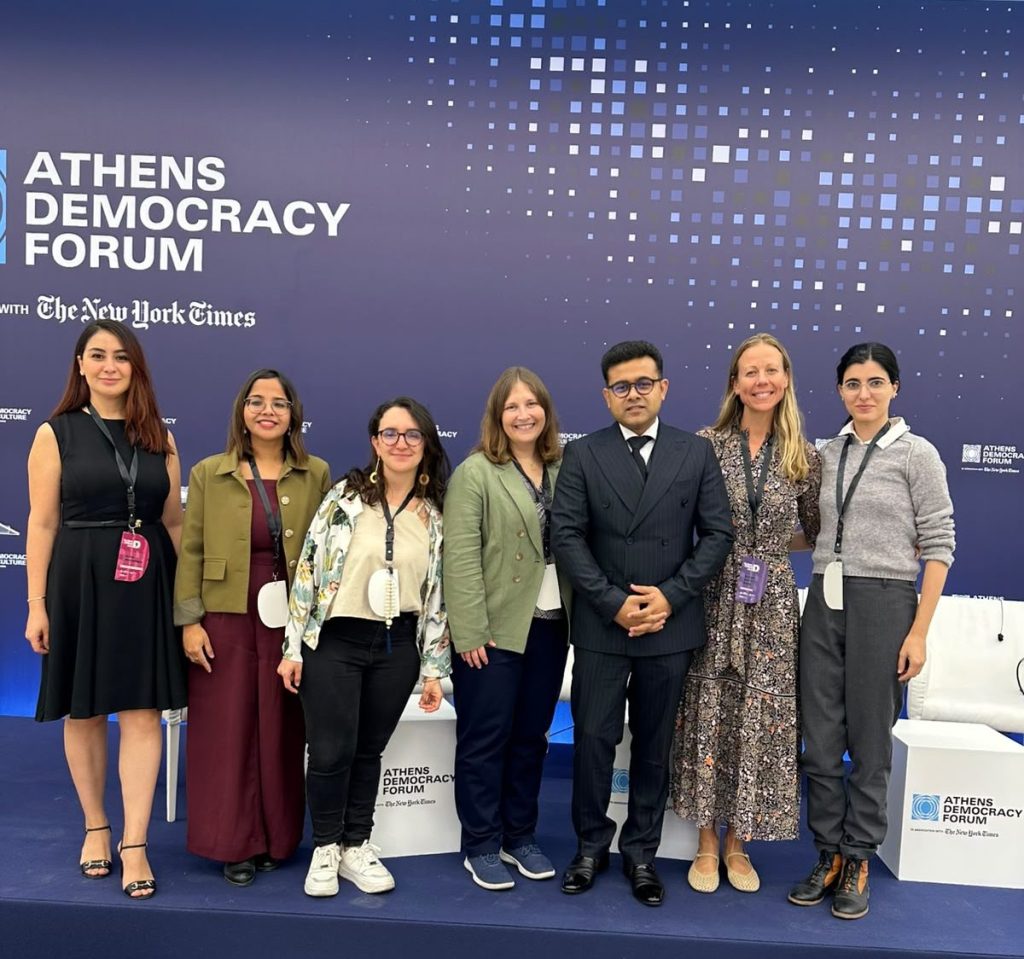
As the session’s knowledge partner, SERAC Bangladesh contributed practical evidence on how control over digital infrastructure shapes civic participation, public trust and democratic accountability.
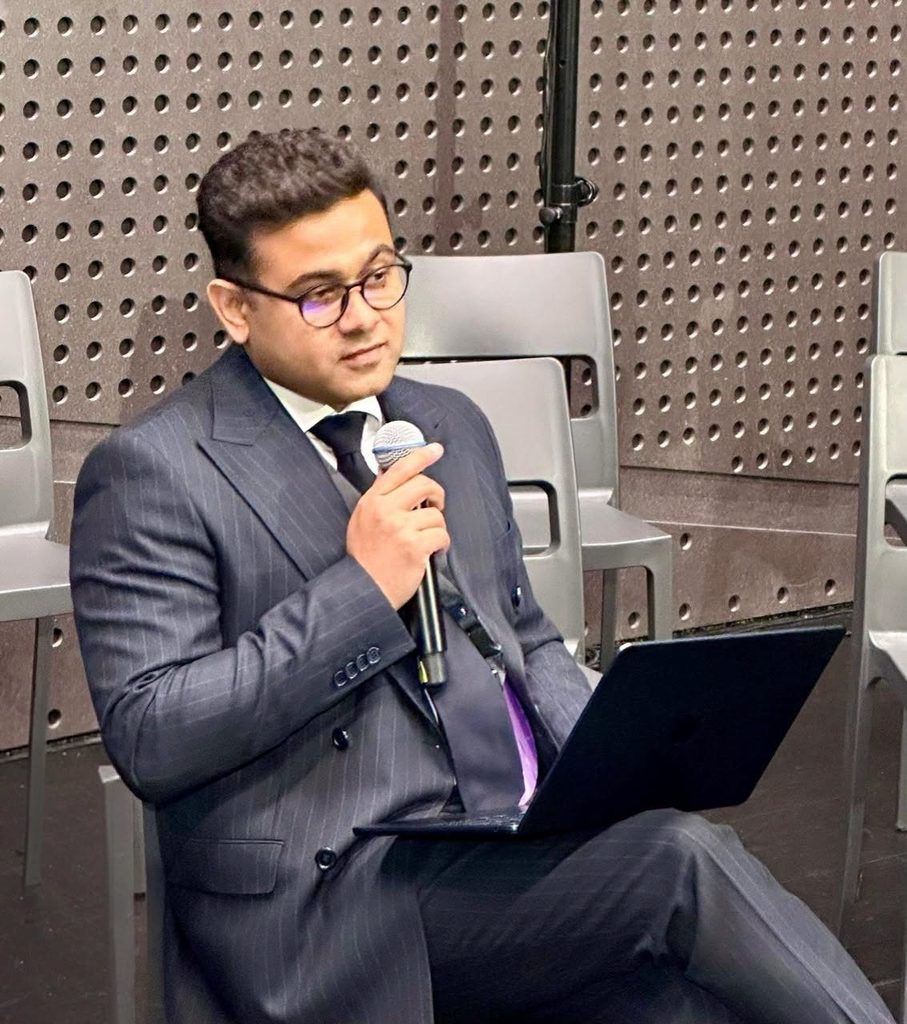
Our Executive Director SM Shaikat presented a case study drawing on evidence and his personal participation in Bangladesh’s 2024 student and civic uprising. His presentation examined how digital platforms enabled a broad civic movement and how restrictions on those platforms undermined citizens’ ability to communicate, organize and exercise their rights.
During the movement, social media and messaging platforms became an essential digital public square. Young people used them to coordinate demonstrations, document violence, locate injured people, exchange information and challenge official narratives. Nationwide internet shutdowns abruptly disrupted this space.
Shaikat explained how the blackout created an information vacuum, made verification difficult, fuelled misinformation and deepened distrust. It also made violence and civic-rights violations harder to document, weakening citizens’ capacity to demand accountability.
Sharing his own experience, he described deleting social-media content as police searched people’s cellphones for signs of involvement in the movement. Photographs, messages and expressions of solidarity could leave digital footprints that exposed citizens to intimidation and risk.
The account revealed a troubling power asymmetry: citizens became less visible to one another and the outside world while remaining traceable to those exercising coercive power.
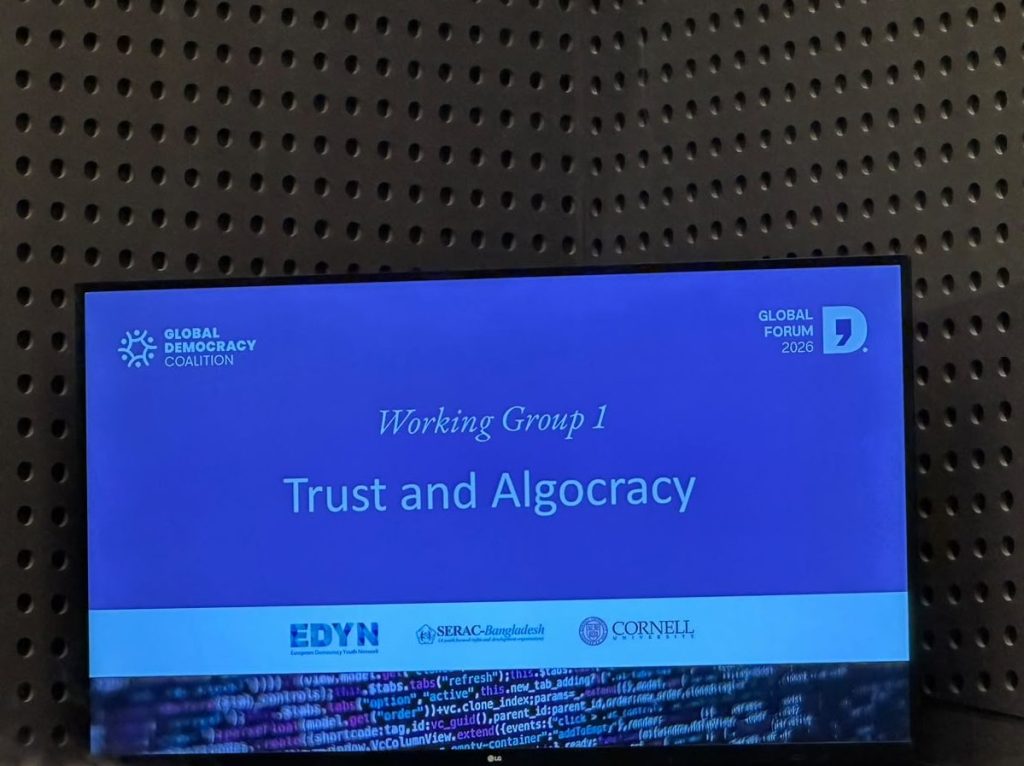
Connecting the case to trust and algocracy, the presentation explored citizens’ dependence on digital systems whose rules and decisions they often cannot understand, influence or contest. Bangladesh’s experience exposed the wider concentration of power over the infrastructure that democratic participation depends on.
Young people responded by rebuilding information flows through telephone calls, trusted personal networks and face-to-face communication. These efforts demonstrated civic resilience, but access remained uneven and reliable verification was difficult.
The presentation introduced “civic immunity” as the capacity to critically navigate information, verify claims, engage across differences and remain active in democratic life. It emphasized that citizens’ resilience must be supported by rights, institutional accountability and meaningful democratic influence.
SERAC Bangladesh’s contribution brought the experience of Bangladesh’s civic movement into a global conversation about democracy: how can public trust be sustained when citizens lack meaningful influence over the systems governing their information and participation?