
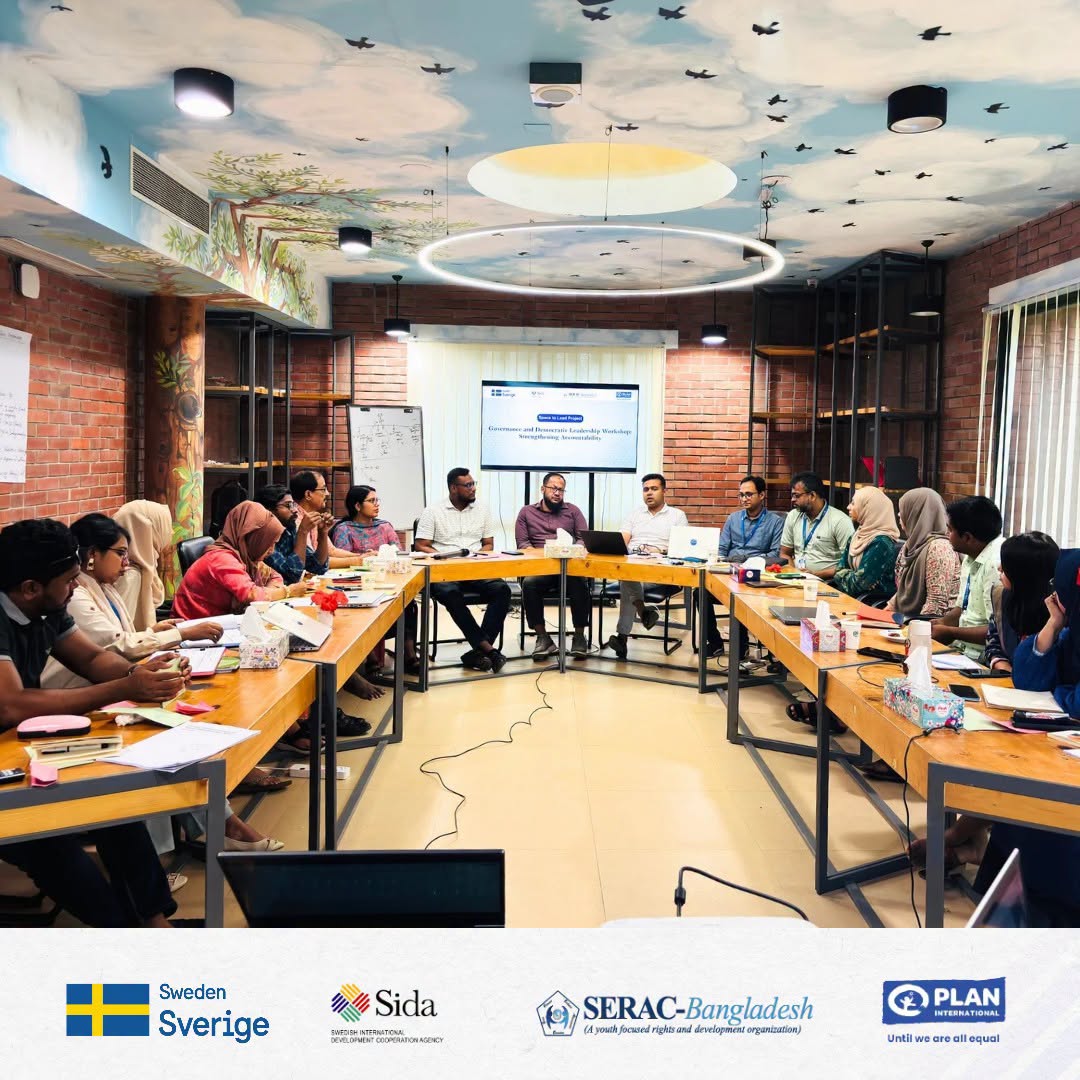
Under the Space to Lead Project, funded by the Swedish International Development Cooperation Agency (Sida) with technical support from Plan International Bangladesh, SERAC-Bangladesh conducted a two-day residential training titled “Governance and Democratic Leadership Workshop: Strengthening Accountability, Transparency, Representation, and Internal Democracy.” The training aimed to strengthen organizational governance, accountability, transparency, representation, internal democracy, safeguarding, communication, and overall institutional effectiveness. The two-day residential training was attended by the Chairman, Executive Director, senior management officials, Executive Committee members, and other staff members of SERAC-Bangladesh.
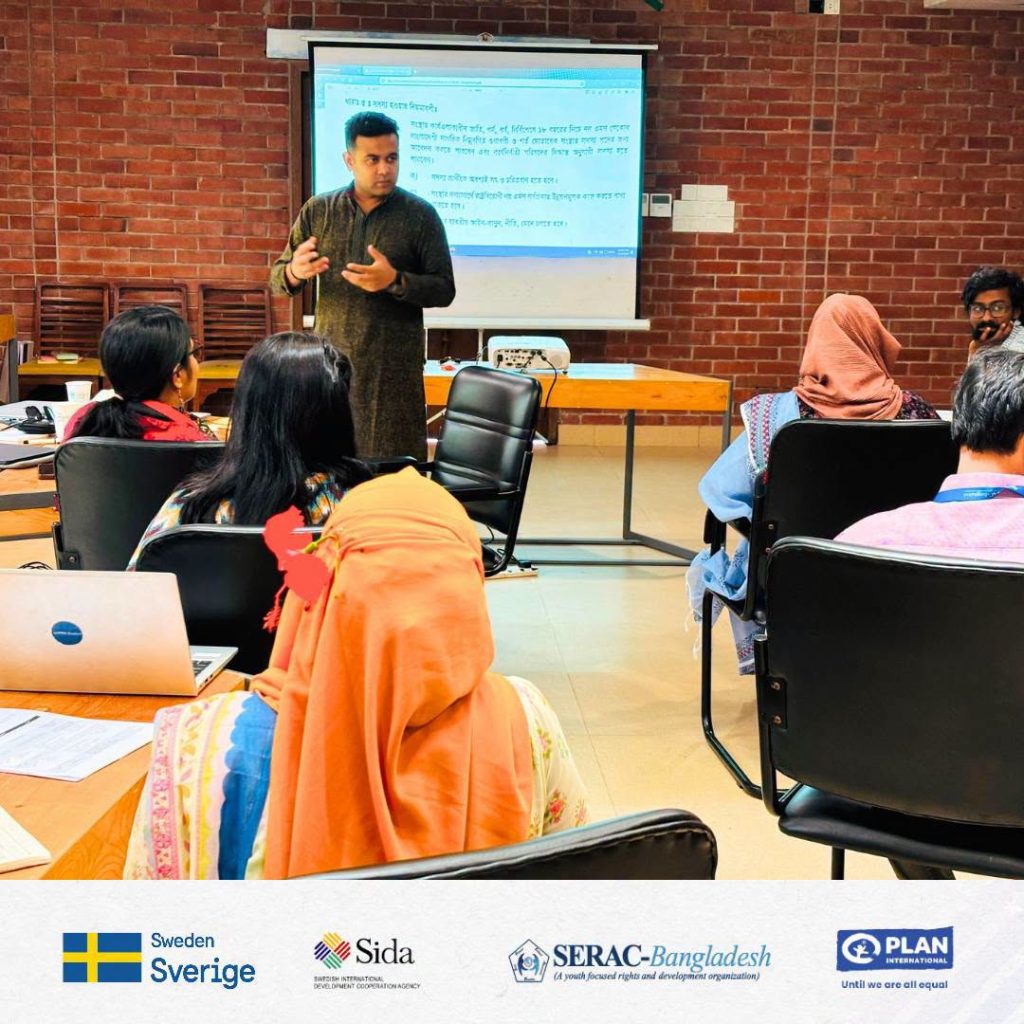
Through participatory discussions, group exercises, self-assessment, policy review, and practical reflection, participants reviewed SERAC-Bangladesh’s existing governance practices, internal systems, organizational procedures, and decision-making processes. The training covered organizational legitimacy and representation, mission and vision, membership eligibility and classification, members’ rights and participation, organizational structure, roles and responsibilities, election provisions, internal democracy, and decision-making. Participants also compared formal constitutional provisions with existing practices to identify areas where stronger alignment, clarification, or revision may be needed.
The training also focused on board accountability, financial and administrative procedures, financial oversight, income and expenditure processes, bank account and signatory controls, annual auditing, requisition and approval procedures, documentation, and internal accountability. Human resource policies and grievance-handling mechanisms were also discussed, with emphasis on fair procedures, proper documentation, review of concerns, resolution processes, and appropriate mechanisms for addressing staff and member grievances.
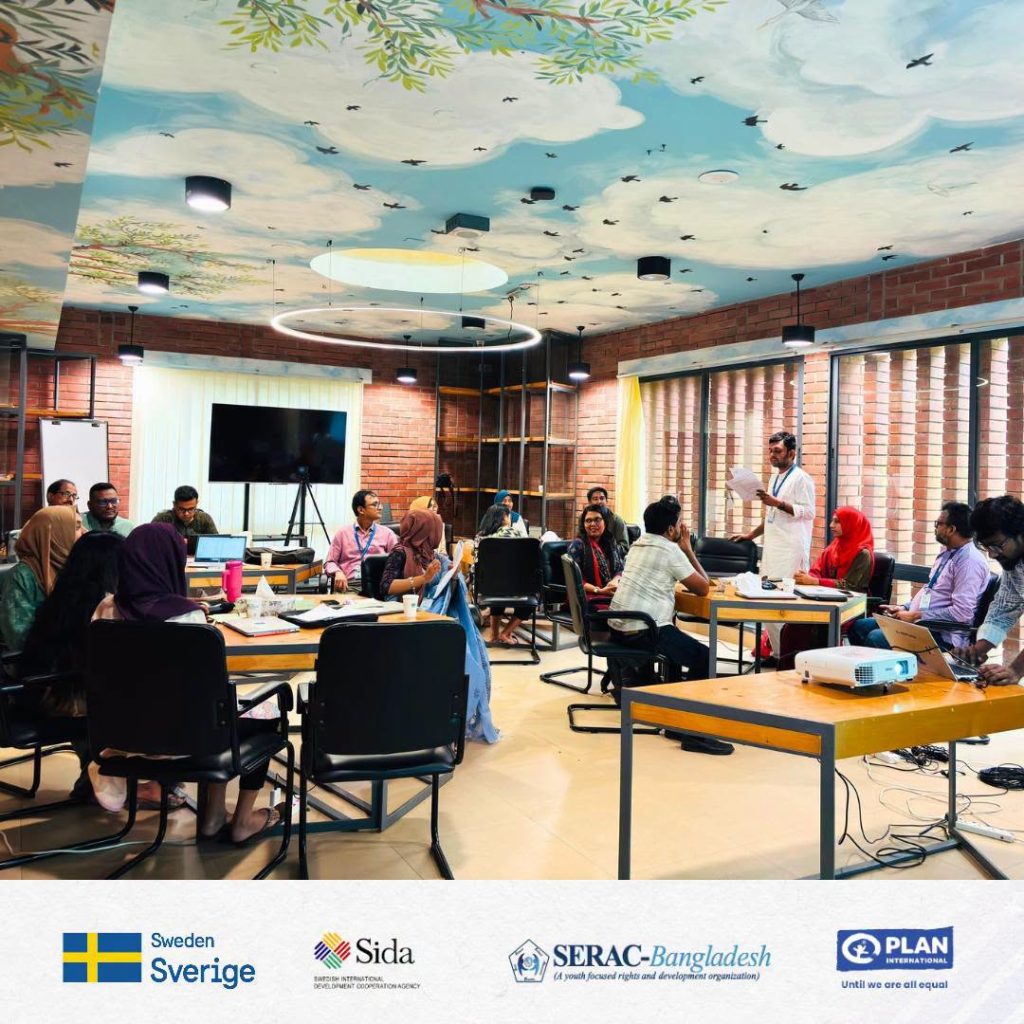
Risk management, safeguarding, and organizational integrity formed another important part of the training. Participants discussed governance and safeguarding risks, whistleblowing, reputational risk management, crisis response, and organizational resilience. Through practical exercises, participants identified key organizational risks, assessed their possible impact, and discussed appropriate mitigation measures. As part of the institutional strengthening process, participants agreed to establish a PSEA and Safeguarding Policy Committee and a separate committee to support the review and upgrading of SERAC-Bangladesh’s Human Resource Policy.
The training further addressed governance leadership and effective governance systems, including principles of good governance, ethical and democratic leadership, accountability, participation, transparency, and effective decision-making. Discussions also focused on strengthening coordination and communication among the Executive Committee, management, staff, members, and external stakeholders. Participants reflected on the importance of clear communication channels, regular information-sharing, shared responsibility, feedback mechanisms, and stronger coordination to improve organizational governance and effectiveness.
Participants were also provided with an overview of SERAC-Bangladesh’s ongoing projects and programmes to strengthen understanding of the organization’s current portfolio, key activities, implementation progress, and areas of work. This contributed to stronger organizational oversight and improved coordination between governance and management structures.
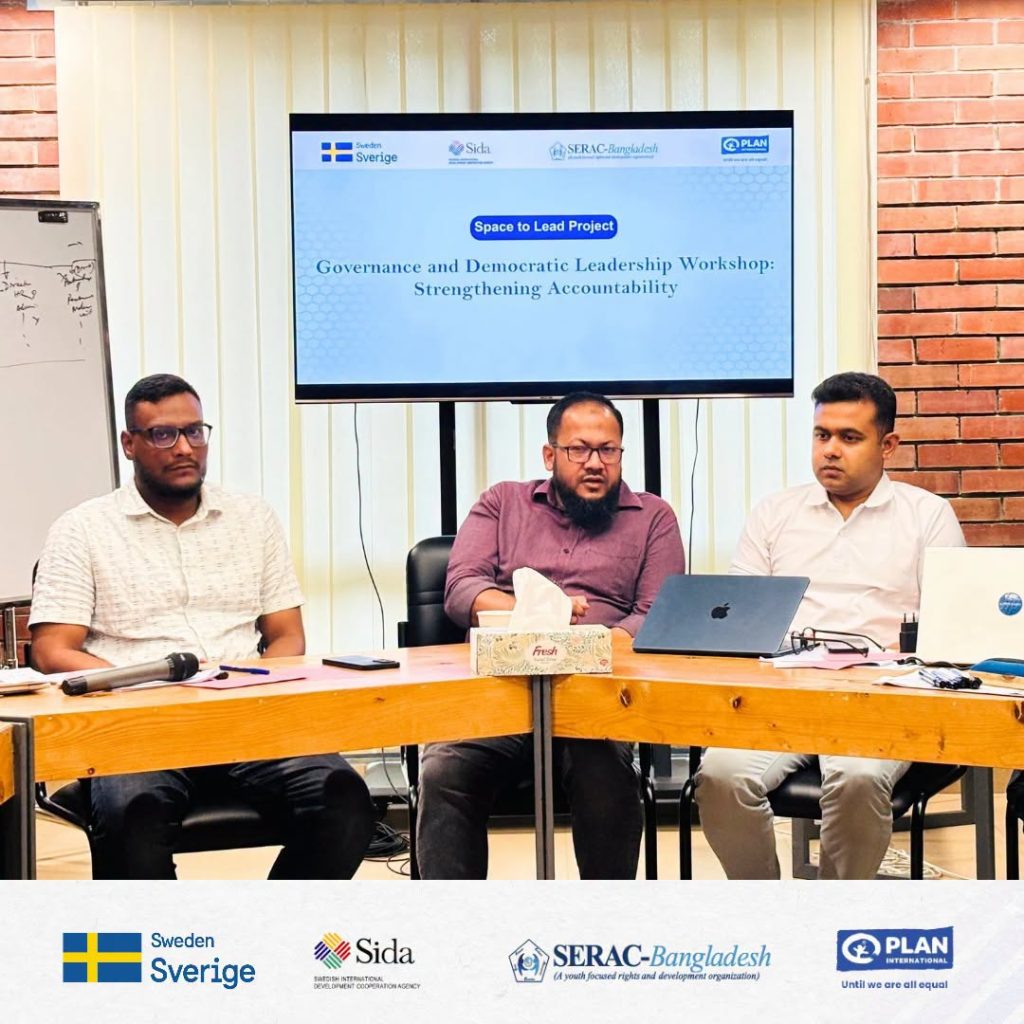
The training also introduced the Organizational Capacity Self-Assessment Tool (OCSA) as a structured approach for assessing organizational capacity, identifying institutional strengths and gaps, and prioritizing areas for further development. Discussions also covered SERAC-Bangladesh’s Monitoring, Evaluation, Accountability and Learning (MEAL) system and highlighted the importance of systematic monitoring, organizational learning, evidence-based decision-making, and accountability.
The two-day residential training concluded with the development of a Governance Improvement Roadmap. Based on the findings and discussions, participants jointly identified priority governance actions, responsibilities, timelines, and monitoring mechanisms aligned with SERAC-Bangladesh’s Strategic Plan and broader governance priorities. Overall, the training strengthened participants’ understanding of governance, accountability, transparency, safeguarding, communication, leadership, and organizational capacity, while reinforcing SERAC-Bangladesh’s commitment to continuous institutional improvement and accountable, inclusive, and transparent governance.