
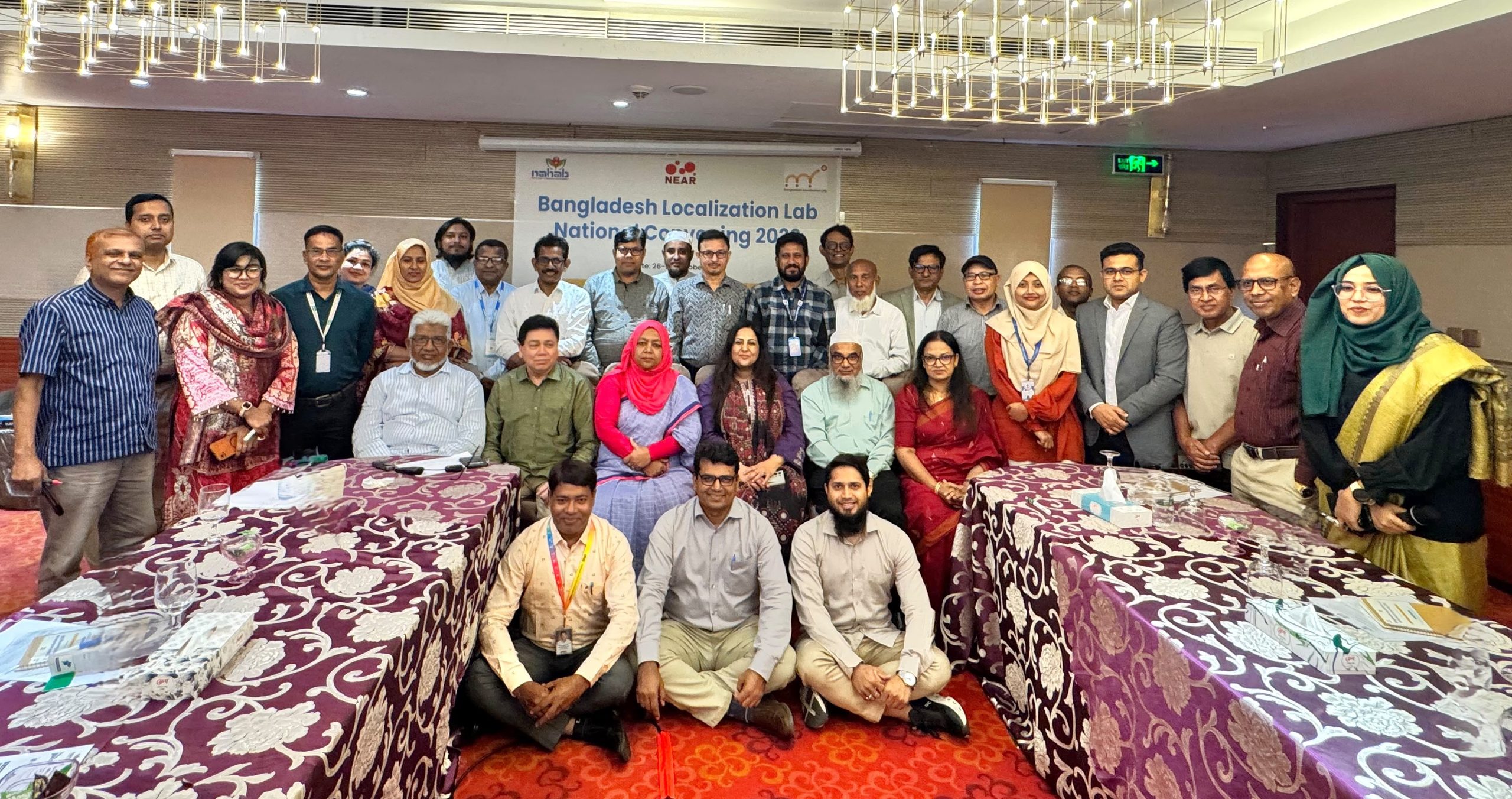
Local organisations are at the heart of humanitarian action. They are often the first to respond to crises, closest to affected communities, and deeply connected to local realities. Their knowledge, relationships, and presence within communities make them essential actors in building effective, accountable, and sustainable humanitarian responses. Strengthening their leadership, voice, access to resources, and decision-making power is therefore essential to achieving meaningful localisation.
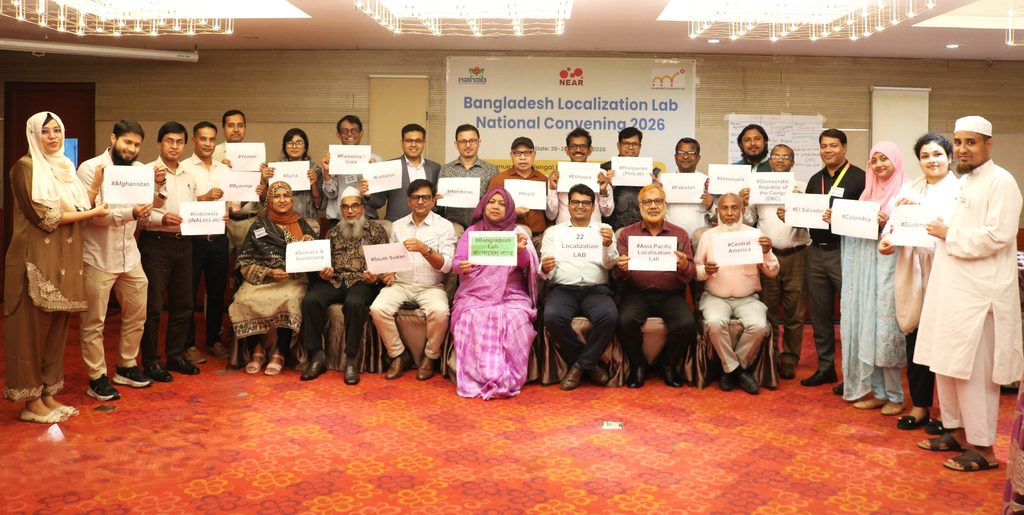
With this vision, SERAC-Bangladesh, as a member of the NEAR Network, actively participated in the Bangladesh Localisation Lab (BLL) National Convening 2026, held from 26–28 October 2026 at Hotel Bengal Blueberry, Dhaka. The three-day convening brought together representatives from 21 NEAR member organisations, creating an important space for collective learning, exchange, collaboration, reflection, and strategic planning around the future of locally led humanitarian action in Bangladesh.
The convening was organised through the collective efforts of NAHAB and NEAR core members, whose coordination and facilitation played an important role in bringing NEAR members and wider humanitarian stakeholders together. Their efforts created a platform where participants could openly exchange experiences, reflect on the progress and challenges of localisation, work collectively on the Bangladesh Localisation Lab, and develop a shared vision for strengthening locally led humanitarian action.
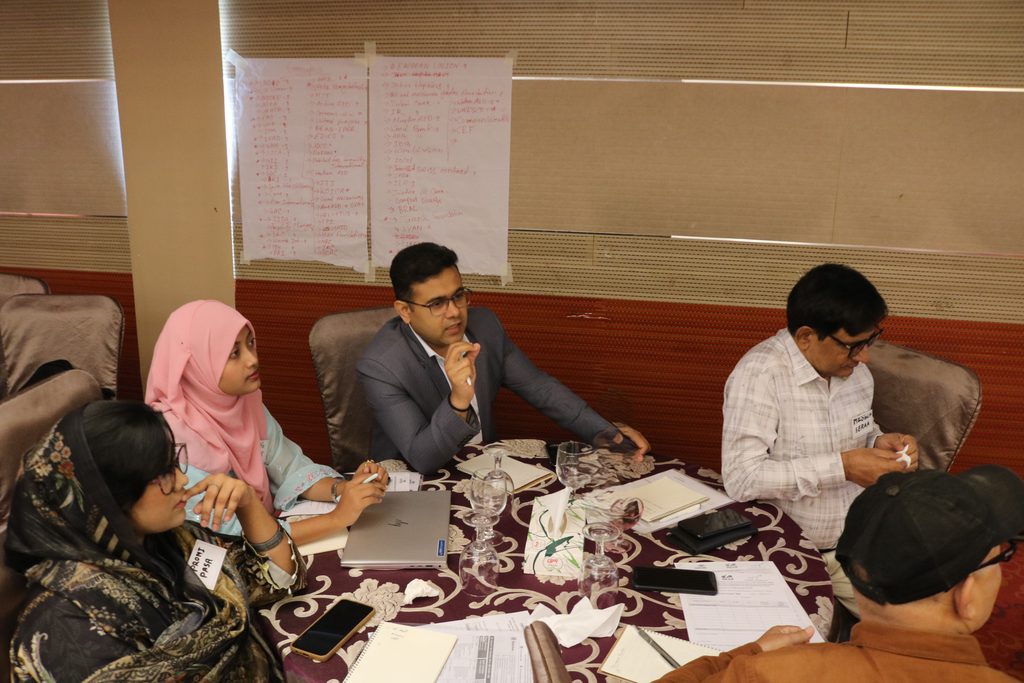
Representing SERAC-Bangladesh, SM Shaikat, Executive Director, and Lutfa Pathan, Project Manager, actively participated throughout the three-day convening. They engaged in discussions, group work, presentations, recommendations, strategic planning, and the development of the Bangladesh Localisation Lab action framework. Their participation reflected SERAC-Bangladesh’s continued commitment to strengthening local leadership and promoting more equitable and meaningful partnerships within the humanitarian sector.
A central question throughout the convening was not simply how to strengthen localisation within Bangladesh, but how Bangladesh can position itself as a stronger contributor to the wider regional and global localisation movement. The discussion therefore looked at localisation through three interconnected dimensions: national, regional, and global and explored how the Bangladesh Localisation Lab can evolve into a platform that can influence, connect, learn, and contribute beyond national boundaries.
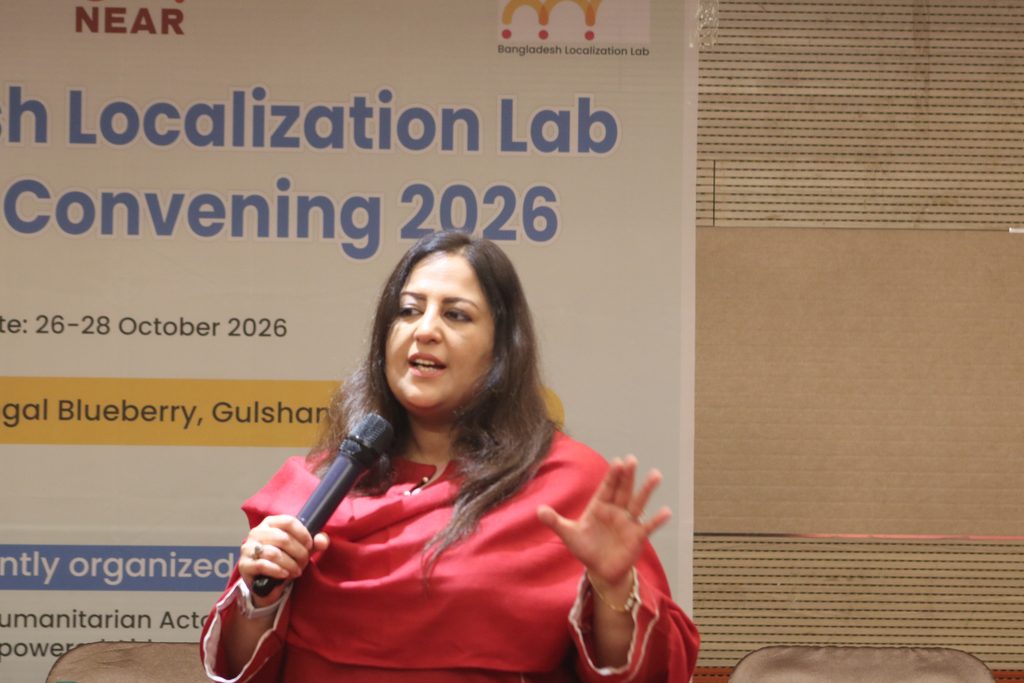
An important part of this learning came through the participation of Ms. Shahida Arif, Regional Representative for Asia and the Pacific at NEAR. Her contribution helped participants develop a clearer and broader understanding of the NEAR Network, its objectives, approach, priorities, and overall work towards advancing locally led humanitarian action. She provided valuable insights into what NEAR stands for, how the network works, the role of its members, and how local organisations can work collectively to influence the humanitarian system.
Through her discussions and engagement, Ms. Shahida also helped participants understand that localisation is not simply about involving local organisations in humanitarian programmes. Meaningful localisation requires local actors to have genuine opportunities for leadership, shared decision-making, equitable partnerships, access to resources, influence, and accountability. Her contribution helped connect the different elements of the discussions and provided participants with a clearer understanding of how local action in Bangladesh can connect with wider regional and global efforts.
The first two days of the convening were dedicated to NEAR Bangladesh members, with a particular focus on strengthening the Bangladesh Localisation Lab and developing its action framework. Participants collectively reflected on the current localisation landscape, identified challenges and opportunities, and discussed how the Lab can become a stronger and more inclusive platform for local humanitarian actors.
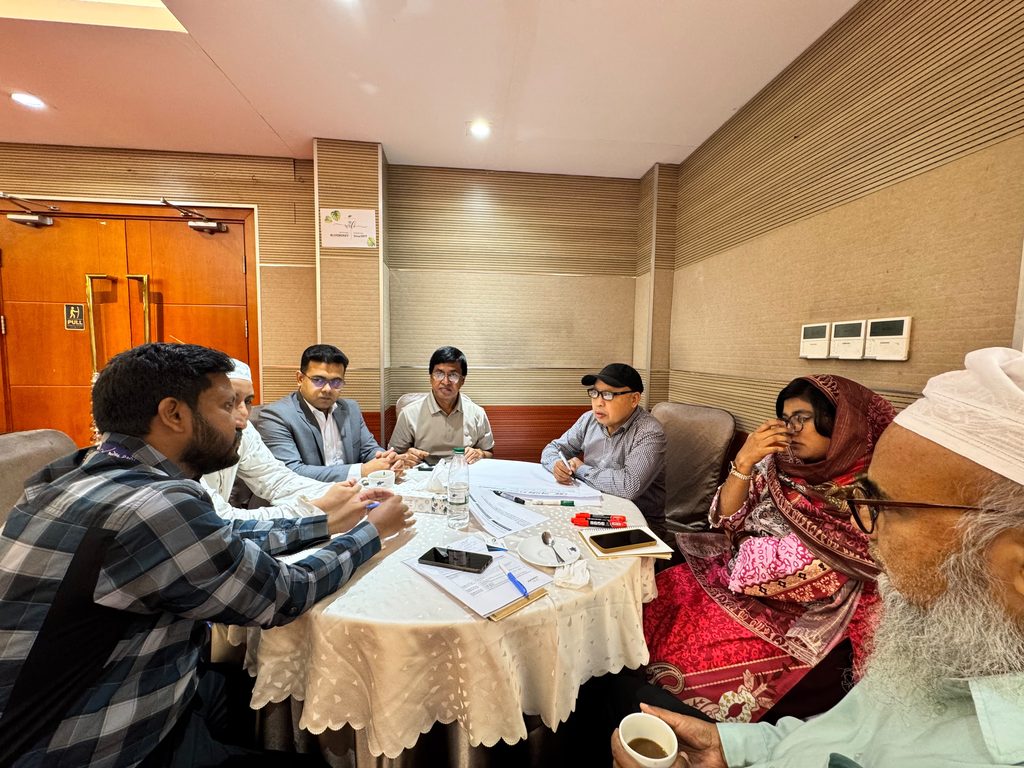
The discussions covered the Lab’s 2027–2029 strategic direction, governance, partnerships, visibility, resource mobilisation, member engagement, and collective action. Through group work, presentations, and collaborative exercises, participants explored practical approaches for strengthening the Lab and ensuring that it can effectively support local organisations and contribute to broader localisation efforts.
SERAC-Bangladesh actively contributed to this process by sharing ideas, recommendations, experiences, and practical perspectives. The organisation emphasised the importance of local leadership, equitable partnerships, South-to-South solidarity, meaningful participation, knowledge sharing, and stronger connections among humanitarian actors. The group work and framework development process demonstrated the importance of collective thinking and shared ownership in building a stronger localisation platform.
At the national level, the Bangladesh Localisation Lab has the potential to become a stronger platform for local organisations to come together, identify common priorities, share experiences, advocate for change, strengthen partnerships, and influence humanitarian policies and decisions. A strong national platform can help ensure that the voices and priorities of local actors are reflected in humanitarian strategies and that localisation becomes a practical process rather than simply a policy commitment.
The discussion then moved towards the regional level, exploring how the Bangladesh Localisation Lab can connect with localisation initiatives across South Asia, Asia and the Pacific, and beyond. Bangladesh has valuable experience in community-based disaster response, climate resilience, humanitarian action, and civil society engagement. Sharing these experiences through regional platforms can contribute to wider learning, while peer-to-peer exchange and South-to-South collaboration can bring new ideas and approaches back to Bangladesh.
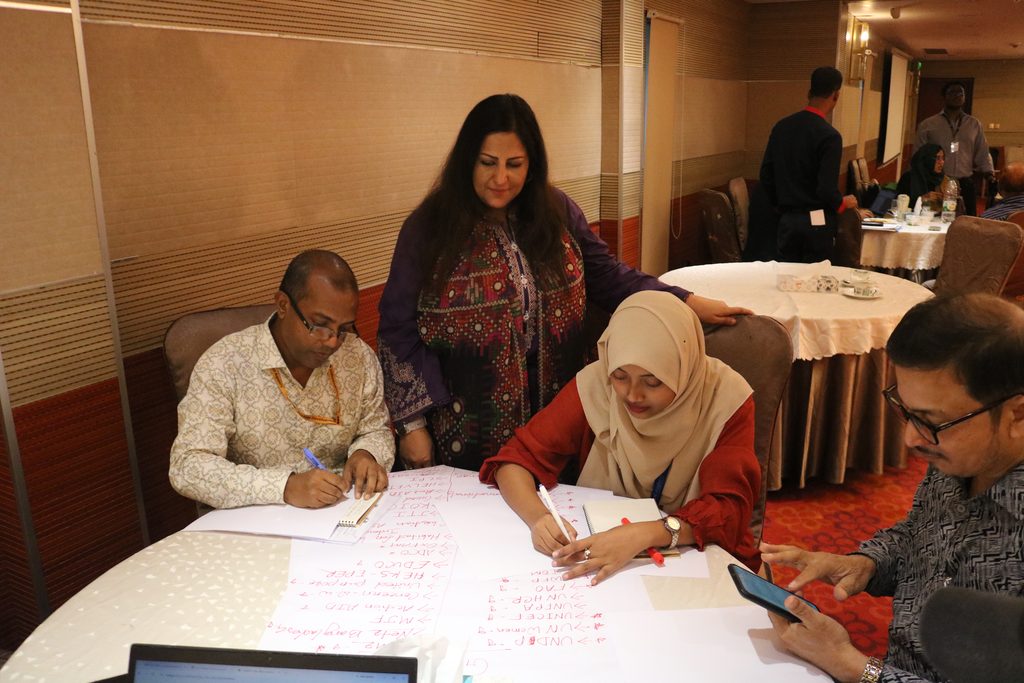
At the global level, the ambition is to ensure that the experiences and voices of Bangladeshi local organisations are represented in international localisation discussions. Through the NEAR Network and other platforms, the Bangladesh Localisation Lab can contribute evidence, learning, recommendations, and advocacy around issues such as equitable partnerships, humanitarian financing, local leadership, accountability, and shifting power and resources closer to communities.
This creates an important cycle of learning and influence: National → Regional → Global → National. Experiences, innovations, and lessons from Bangladesh can contribute to regional and global discussions, while regional and global learning can be brought back and adapted to strengthen locally led humanitarian action within Bangladesh.
The third day of the convening expanded the conversation through a Partnership and External Engagement programme, bringing together donors, UN agencies, INGOs, academia, and local humanitarian actors. This provided an important opportunity for different stakeholders to engage in dialogue about the future of localisation and explore how partnerships can become more equitable, complementary, and accountable.
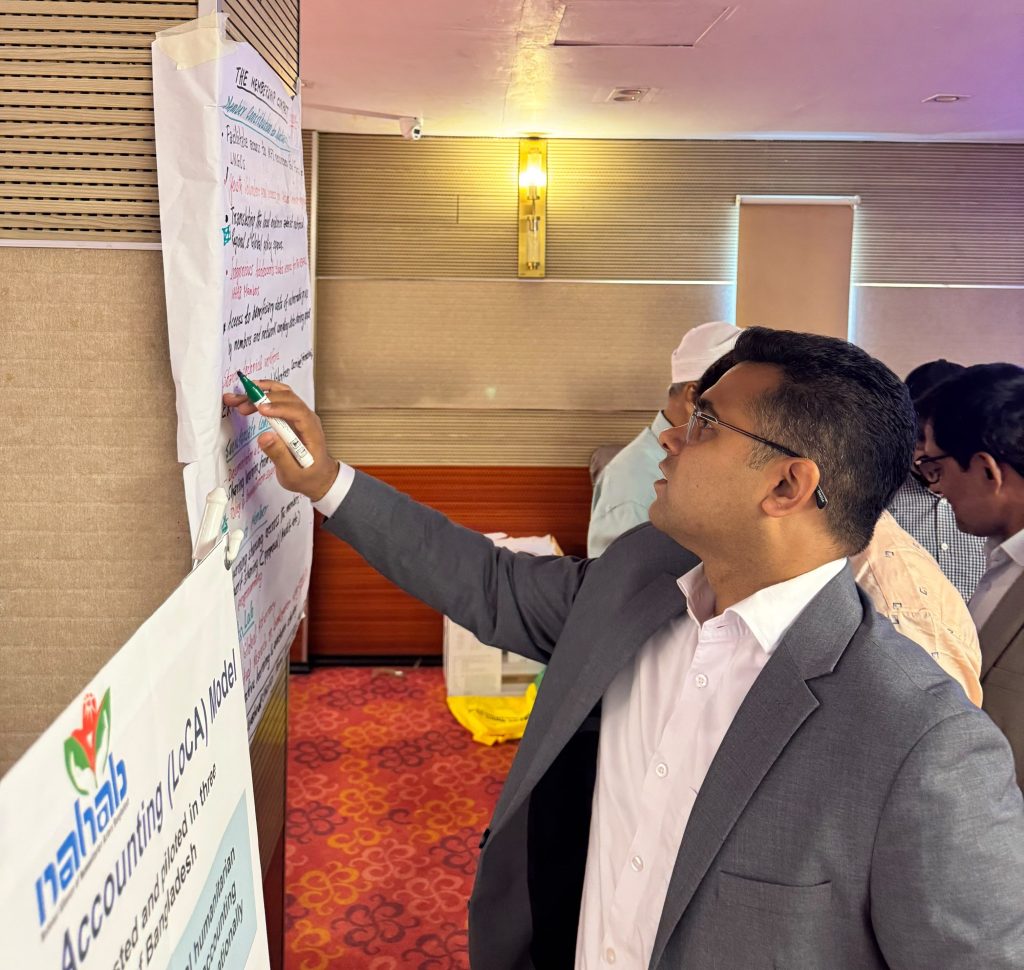
The discussions highlighted the need to move beyond traditional relationships where local organisations are primarily viewed as implementing partners. Meaningful partnership requires local actors to have a stronger role in priority-setting, programme design, resource allocation, decision-making, learning, and accountability. Creating such partnerships is essential if the humanitarian system is to become more locally led and responsive to the realities of affected communities.
The convening itself demonstrated the value of collective action. The participation of 21 NEAR member organisations, together with the active involvement of NAHAB and NEAR core members and other humanitarian stakeholders, created an environment where diverse experiences and perspectives could come together. The organising and facilitation efforts of NAHAB and NEAR core members were instrumental in creating this shared space for dialogue, learning, collaboration, and framework development.
For SERAC-Bangladesh, the convening was more than an opportunity to participate in a meeting. It was an opportunity to learn, contribute, connect, and collectively shape the future of localisation in Bangladesh. The active participation of SM Shaikat and Lutfa Pathan reflected the organisation’s commitment to supporting a humanitarian system where local actors have greater leadership, influence, and ownership.
Looking ahead, SERAC-Bangladesh remains committed to contributing to the Bangladesh Localisation Lab, promoting equitable partnerships, sharing knowledge and learning, engaging in collective advocacy, and strengthening connections between local humanitarian action and regional and global localisation movements.
The vision is not simply to make the Bangladesh Localisation Lab stronger. It is to build a Lab that can influence, connect, learn, and lead– rooted in Bangladesh, connected to the region, and contributing to the global localisation movement.
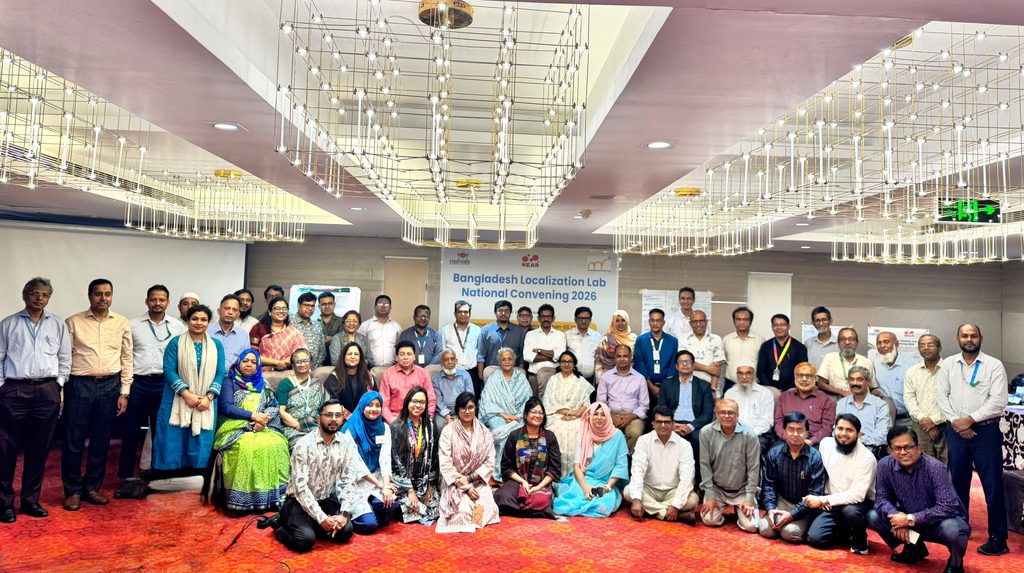
When local knowledge is connected with regional solidarity and global influence, localisation can become more than a commitment on paper. It can become a practical pathway towards stronger local leadership, more accountable humanitarian action, more equitable partnerships, and ultimately, a more resilient Bangladesh.