
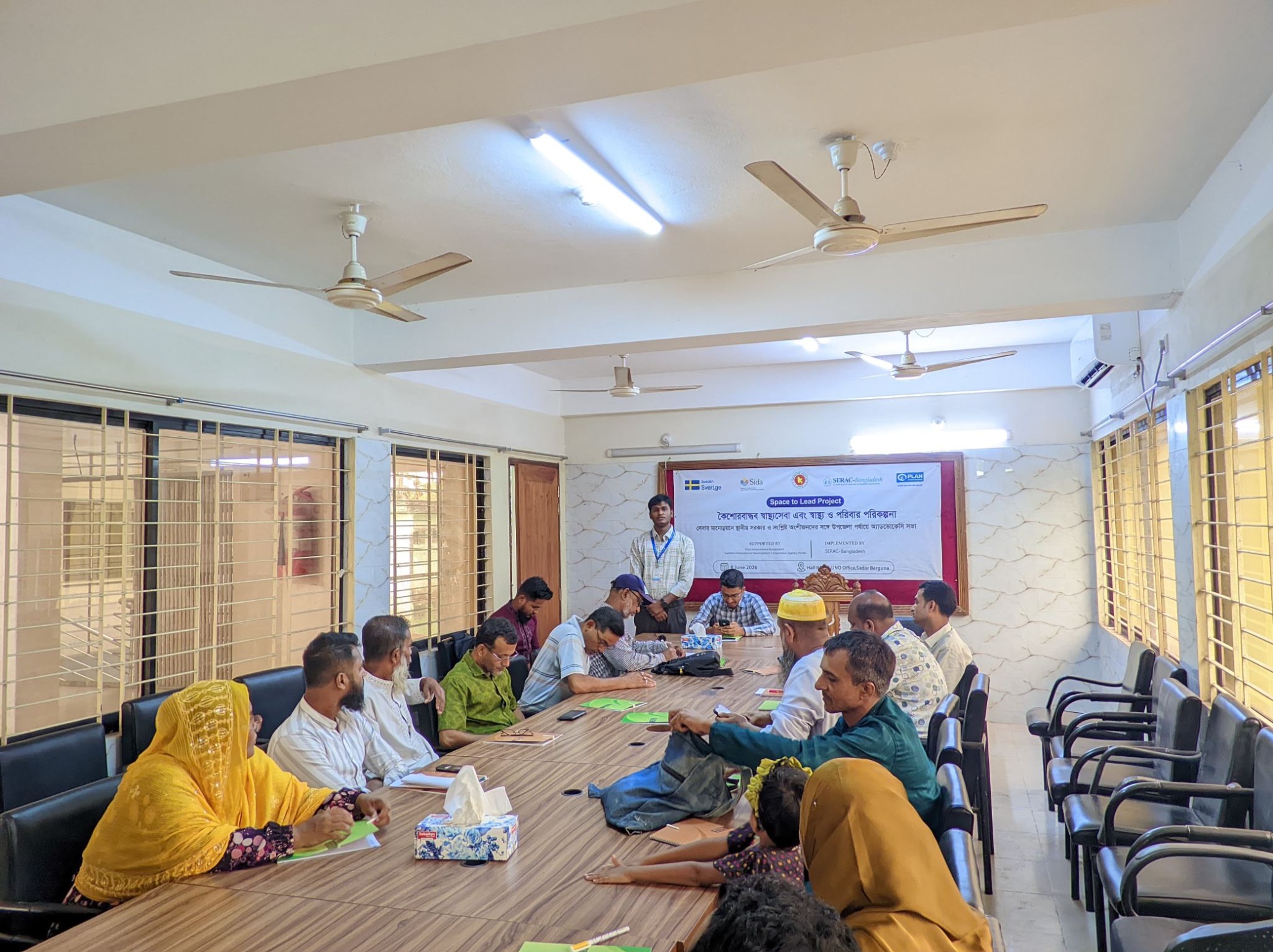
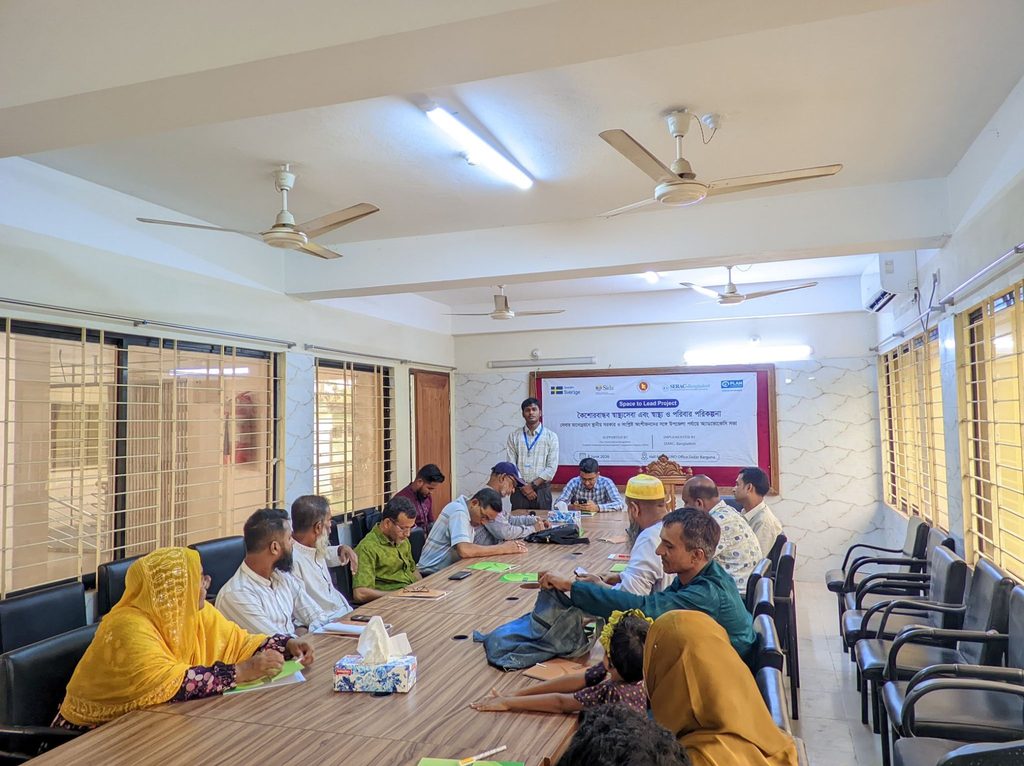
To ensure quality adolescent-friendly health services for adolescents, improve and strengthen the effective engagement of local stakeholders, SERAC-Bangladesh organized an Upazila-level advocacy meeting in Barguna Sadar under the “Space to Lead” project on 8th June ‘2026 with funding from the Swedish International Development Cooperation Agency (SIDA) and technical support from Plan International Bangladesh,The meeting was held at the conference room of the Barguna Sadar Upazila Parishad, with the participation of government officials, the chairman and the Union Secretary from seven unions of the upazila, service providers, adolescents, Volunteer Peer Leaders (VPLs) and other relevant stakeholders. The meeting provided an important platform for reviewing the current status of health and family planning services at the local level, identifying opportunities for service improvement and discussing how to ensure more effective and adolescent-friendly health services for adolescents.
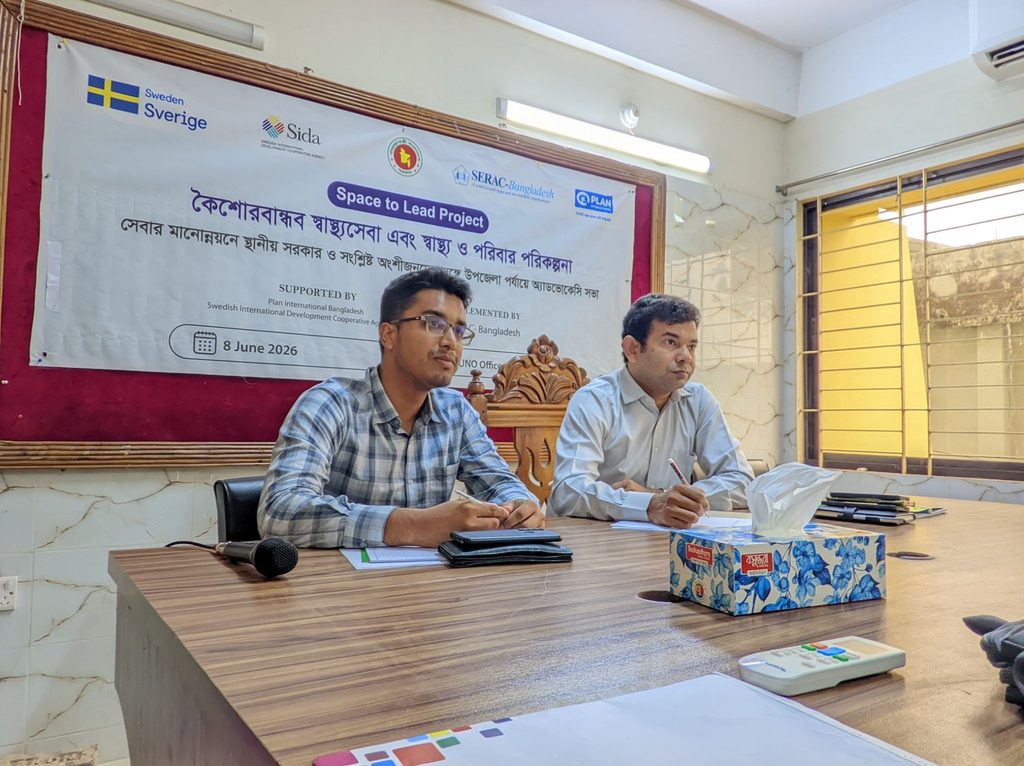
The meeting was attended by Mr. Shah Aziz, Upazila Nirbahi Officer (UNO), Barguna Sadar, Barguna, as the chief guest and chaired by Mr. Niyaz Makhdum, Upazila Family Planning Officer, Barguna Sadar. The speakers emphasized the importance of coordinated efforts at the local level to ensure the health and rights of adolescents.
In his remarks, Mr. Shah Aziz, Upazila Nirbahi Officer (UNO), Barguna Sadar, reflected on the importance of creating more opportunities for adolescents to openly discuss the physical and emotional changes and experiences during adolescence. He noted that, in the past, these issues were often not discussed openly, leaving many adolescents without access to the information and support they needed. He observed that the situation is gradually changing with adolescents becoming more comfortable seeking information and talking about their health and well-being. He emphasized the importance of continuing and expanding awareness-raising initiatives and ensuring the active involvement of relevant stakeholders to sustain and further strengthen this positive change.
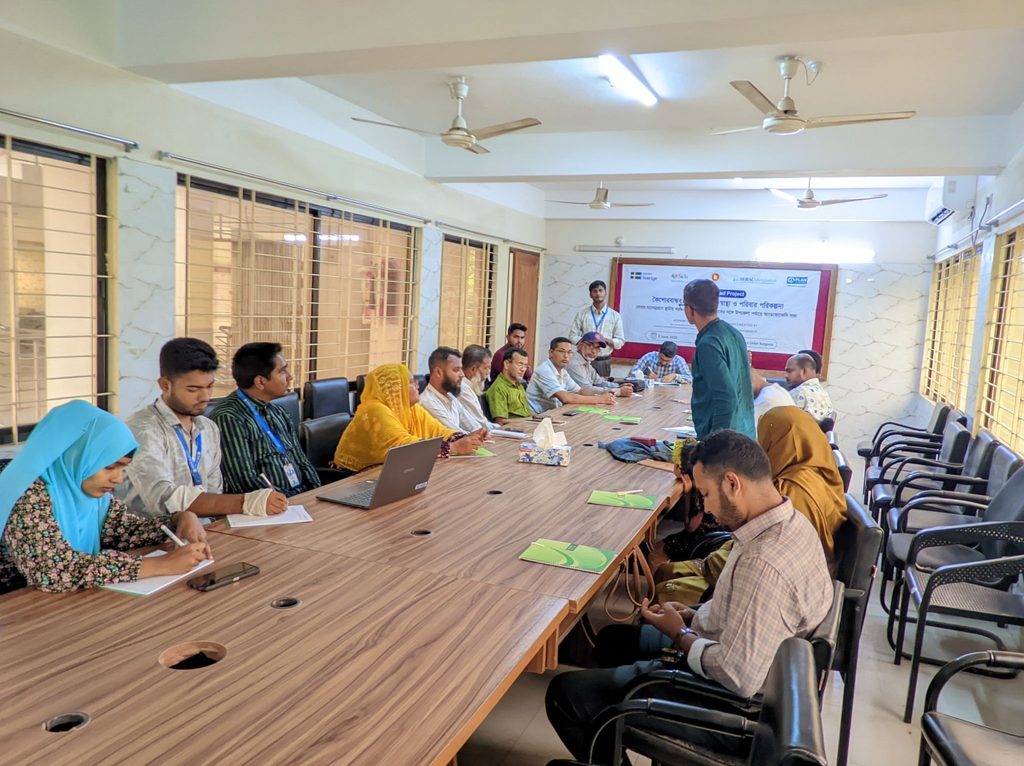
The meeting included discussions on the current status of health and family planning services in Barguna Sadar, existing opportunities and challenges, quality improvement of services and the expansion of adolescent-friendly health services. Participants shared their observations, recommendations and suggestions on how to ensure accessible, safe, acceptable, and quality health services for adolescents.
The discussion highlighted that ensuring adolescents’ health and rights cannot be the only responsibility of health service providers. It requires coordinated efforts among local government, health and family planning departments, administration, educational institutions, families, communities and youth representatives. Participants also highlighted that listening to adolescents and considering their needs and experiences when planning and providing health services can make those services more relevant, accessible, and acceptable to them.
Under the “Space to Lead” project, various activities are being implemented to increase adolescents’ awareness of Sexual and Reproductive Health and Rights (SRHR), adolescent-friendly health services and other important issues, while also strengthening youth leadership capacities. Trained Volunteer Peer Leaders (VPLs) are working directly with adolescents at the community level, providing essential information and guidance and supporting them in accessing appropriate health services. The participation of VPLs and adolescents in the meeting also created an opportunity to bring forward their experiences, needs and expectations regarding local health services.
The meeting was also attended by Md. Shafiullah, Project Coordinator, SERAC-Bangladesh, and Rabiul Islam, Advocacy and Capacity Development Officer, Space to Lead Project, SERAC-Bangladesh. They highlighted the objectives and ongoing activities of the project and emphasized the importance of coordinated stakeholder engagement at the local level to promote adolescents’ health and rights.
The Chief Guest, Chair, and other participants appreciated the initiatives of the “Space to Lead” project and expressed their commitment to continued cooperation and coordination for the effective implementation of activities aimed at promoting adolescents’ health, rights, leadership development, and overall well-being.