
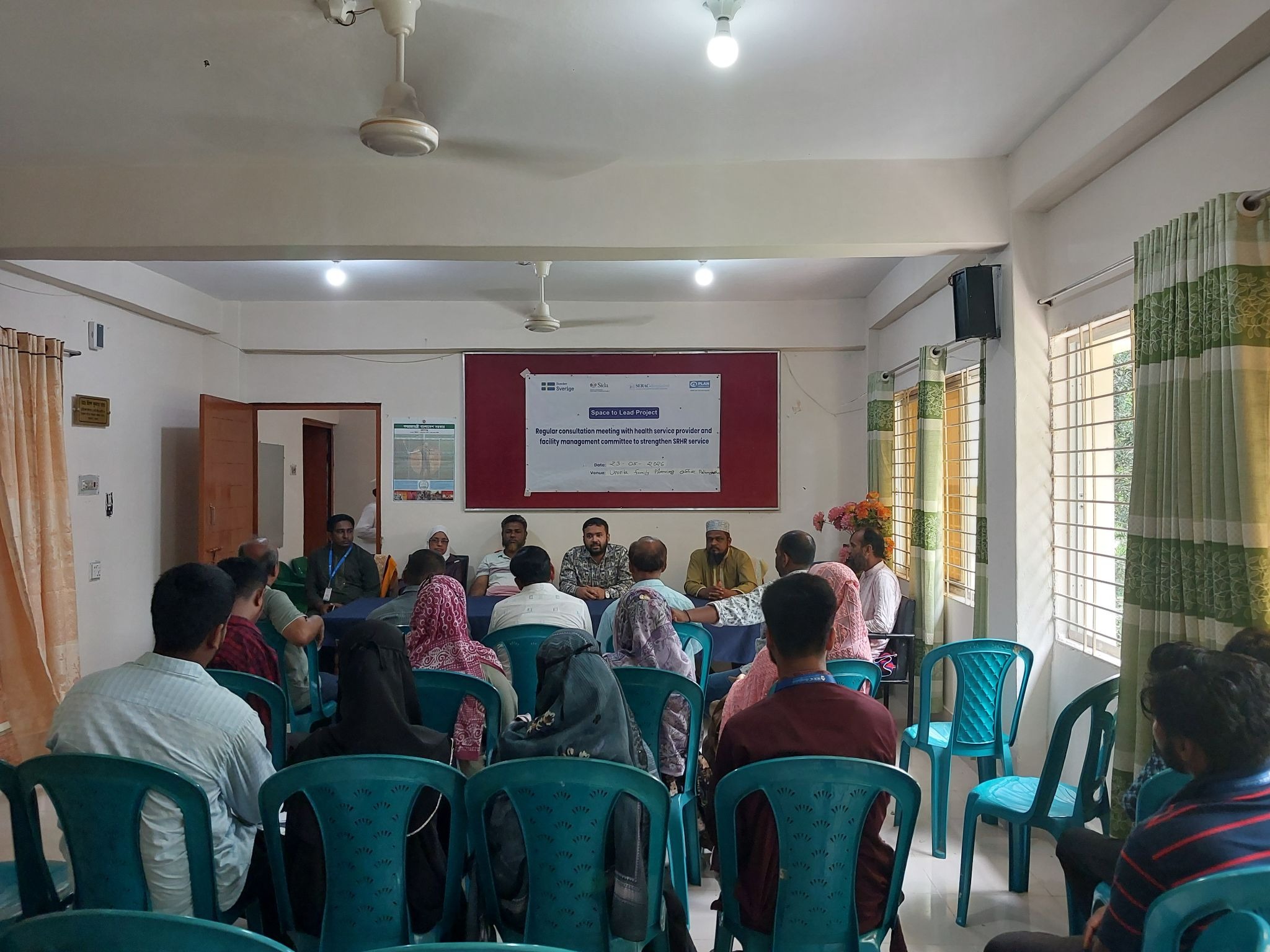
On May 23, 2026, to strengthen Adolescent-Friendly Sexual and Reproductive Health and Rights (SRHR) services and foster coordinated action among government authorities, service providers, and community stakeholders, SERAC-Bangladesh organized a consultation meeting under the “Space to Lead” Project, funded by the Swedish International Development Cooperation Agency (SIDA) and technically supported by Plan International Bangladesh. The consultation was held at the Upazila Family Planning Office in Patharghata, Barguna, bringing together service providers and members of Union Health and Family Welfare Center (UH&FWC) management committees to discuss strategies for improving adolescent-friendly health services.
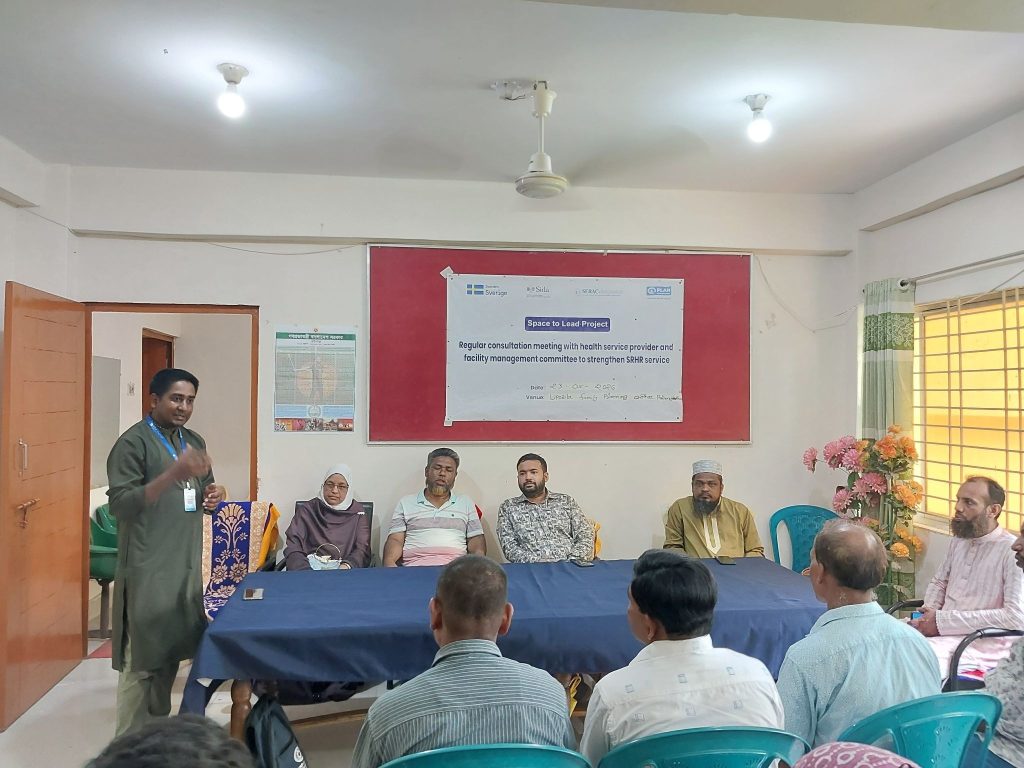
The consultation aimed to review the current status of the seven Union Health and Family Welfare Centers (UH&FWCs) in Patharghata Upazila, identify opportunities to improve the quality, accessibility and responsiveness of adolescent-friendly health services, strengthen coordination among key stakeholders and advocate for the integration of health service priorities into Union Parishad annual planning and budgetary processes. The meeting also served as a strategic platform for exchanging experiences, identifying operational challenges, and exploring practical approaches to ensuring sustainable, inclusive, and equitable SRHR services for adolescents and young people.
The event brought together members of UH&FWC management committees, service providers, teachers, representatives of persons with disabilities, adolescents and Volunteer Peer Leaders (VPLs). Participants shared field-level experiences regarding the current condition of union-level health facilities, highlighting existing service gaps, infrastructural challenges and opportunities for improving healthcare delivery. The interactive discussions enabled participants to collectively identify practical solutions to strengthen adolescent-friendly service provision and enhance community engagement.
A significant focus of the consultation was improving the quality and accessibility of healthcare services for adolescents. Participants emphasized that ensuring effective adolescent-friendly health services requires stronger collaboration among local government institutions, service providers, community leaders and young people themselves. The discussion also highlighted the importance of creating safe, inclusive, and youth-responsive health facilities where adolescents can access information and services without fear of stigma or discrimination.
The meeting was chaired by Dr. Prince Kumar Roy, Acting Upazila Family Planning Officer of Patharghata. In his remarks, he acknowledged the infrastructural challenges faced by several Union Health and Family Welfare Centers and reaffirmed the Family Planning Department’s commitment to improving service quality. He also emphasized the importance of strengthening local government support, ensuring the supply of essential medicines and enhancing coordination to improve overall healthcare service delivery.
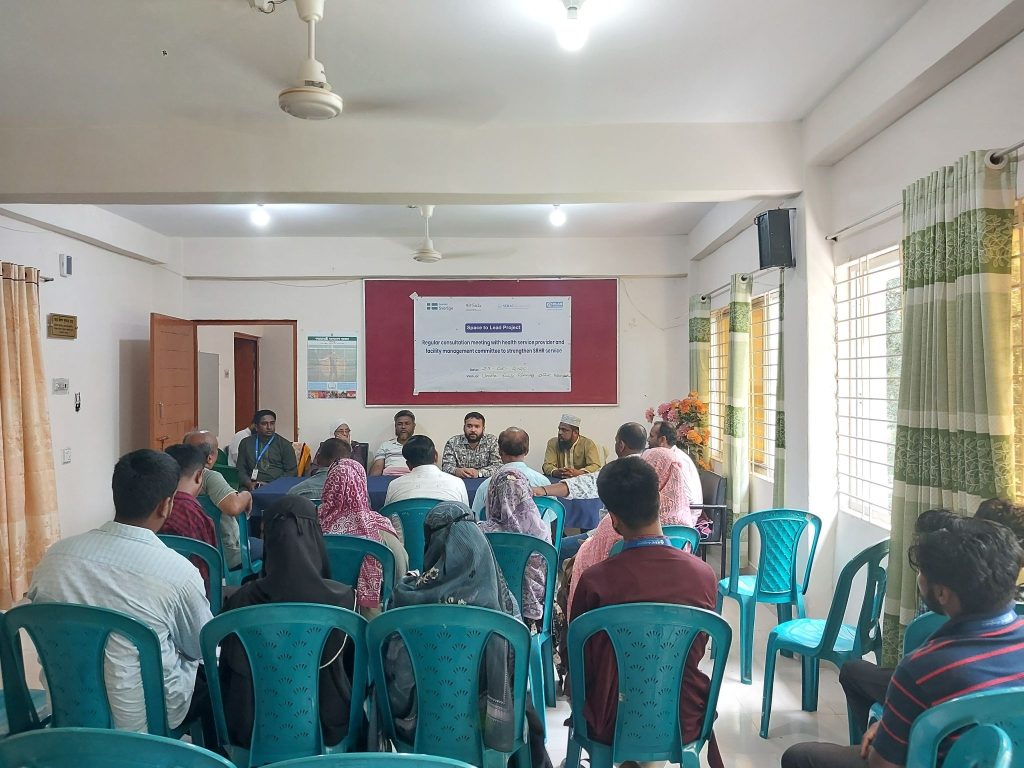
Local government representatives participating in the consultation expressed their commitment to strengthening healthcare services at the union level. They recognized the importance of incorporating health-related priorities into Union Parishad budget allocations and reaffirmed their willingness to maintain close coordination with healthcare providers to ensure sustainable and effective service delivery within their respective communities.
Speaking on behalf of SERAC-Bangladesh, Md. Shafiullah Lemon, Project Coordinator of the Space to Lead Project, reaffirmed the organization’s commitment to supporting the continuous improvement of adolescent-friendly health services. He emphasized SERAC-Bangladesh’s ongoing advocacy efforts to promote the inclusion of health service initiatives within Union Parishad budgets and reiterated the organization’s commitment to working collaboratively with local government institutions, health authorities, and community stakeholders to strengthen healthcare systems at the local level.
Participants concluded that regular consultation and coordination meetings are essential for improving the quality, accessibility, and sustainability of adolescent-friendly health services. They noted that such collaborative platforms facilitate stronger communication among stakeholders, promote joint problem-solving, and contribute to building more inclusive, accountable, and youth-responsive healthcare systems.
The consultation was also attended by Rabiul Islam, Advocacy and Capacity Development Officer of the Space to Lead Project, along with Volunteer Peer Leaders Md. Shahin, Shahriar Hasan, Md. Mehedi, and Afifa Sultana, who actively contributed to the discussions by sharing community-level perspectives and experiences on adolescent health and engagement