
Rangpur, October 9, 2025
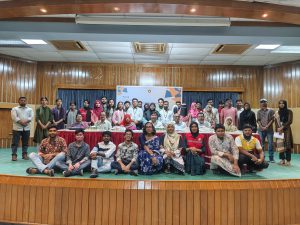
To strengthen youth leadership and policy dialogue around sexual and reproductive health and rights (SRHR) in the face of climate change, SERAC-Bangladesh organized the Rangpur Divisional Youth Forum on Climate Change and SRHR under the Youth Catalyst Project. The event was supported by UNFPA Bangladesh and funded by the Swedish International Development Cooperation Agency (Sida).
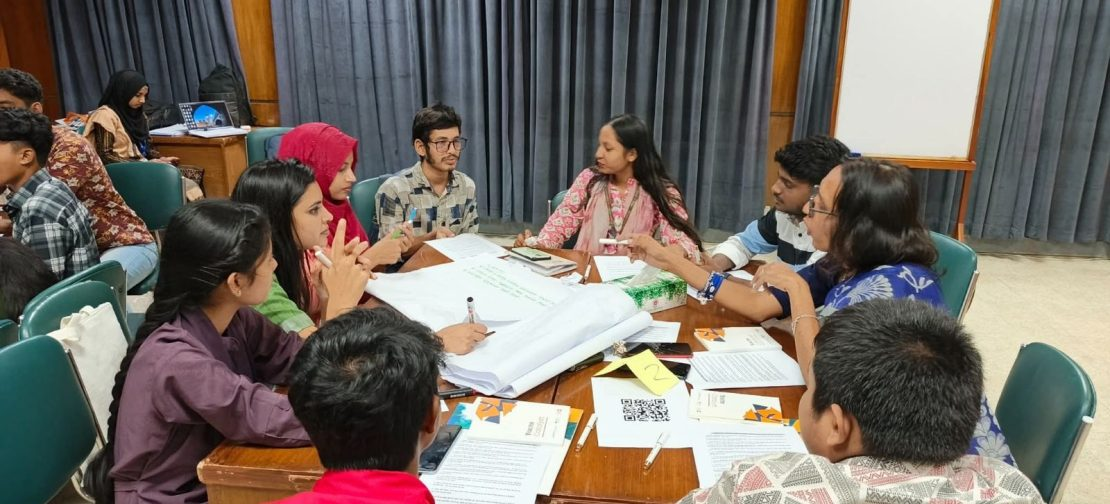
The day-long forum brought together around 50 youth representatives from different districts and marginalized communities across Rangpur Division. It served as an open space for young people to share how environmental and climate challenges continue to affect their access to essential SRHR services. Participants identified issues such as distance to health facilities, lack of awareness, and inadequate infrastructure—barriers that are often intensified by climate impacts like flooding and displacement.
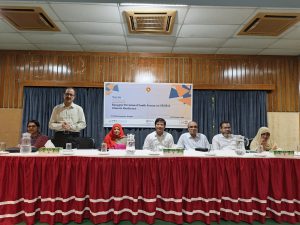
The session was chaired by Mr. Dewan Morshed Kamal, Director of the Family Planning Office, Rangpur Division, and moderated by Mr. Salim Miah, Deputy Director (Programs) of SERAC-Bangladesh.
Distinguished guests joined the discussion, including:
- Dr. Shain Sultana, Civil Surgeon, Rangpur
- Md. Saiful Islam, Deputy Director, Rangpur District Family Planning Office
- Nur Alam, Director, Rangpur Division Environmental Office
- Mst. Saloara Begum, Deputy Director, Rangpur Division Women’s Affairs Office
In his remarks, Dewan Morshed Kamal emphasized: “This forum is extremely important for both adolescents and us. When the concerns raised by youth from marginalized areas reach the policy level, they can shape more equitable and inclusive decisions. We are one step closer to realizing the dream of a nation built on equal rights for all.
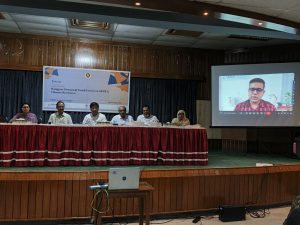 SM Shaikat, Executive Director of SERAC-Bangladesh, emphasized the organization’s commitment to amplifying youth voices in policymaking:
“Through this project, we aim to bring forward the experiences and ideas of young people to government and policymakers so that awareness and action around SRHR, climate change, and gender-based violence can grow stronger,” he said.
“Rangpur is full of promise. When the insights of youth here are valued, they can lead to new opportunities in health awareness, climate adaptation, and social change.”
The forum featured engaging group discussions led by Shahina Yasmin, Program Lead; Mizanur Rahman Akanda, Advocacy Specialist; Rabeya Akter Munmun, Finance and Admin Officer; and Enamul Haque Rony, Communication Officer from SERAC-Bangladesh.
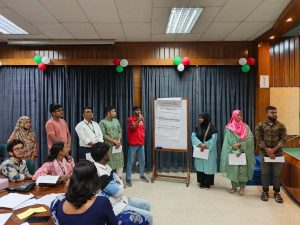 Youth participants shared their experiences and perspectives through structured questionnaires, which helped identify real-world challenges and solutions. Experts then translated these insights into policy recommendations that will inform future national dialogues and development planning.
This initiative is part of the ongoing Youth Catalyst Project, which ensures that young people’s voices and priorities are reflected in national policies. Insights from the Rangpur Divisional Youth Forum will contribute directly to a National White Paper on Climate-Resilient, Youth-Centered Health Services, shaping a future where health systems are inclusive, adaptive, and responsive to the needs of all young people.