
 Youth Forum in Barishal Engages Young Voices on SRHR and Climate Change
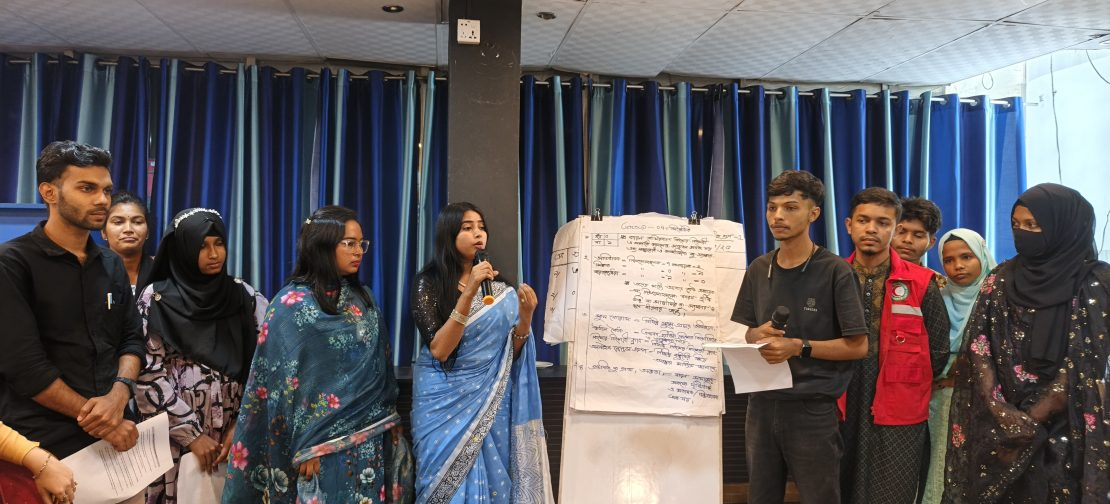
Under the ‘Youth Catalyst’ initiative of SERAC-Bangladesh, a day-long Divisional Youth Forum on Sexual and Reproductive Health and Rights (SRHR) and Climate Change was held in Barishal, engaging 35 young representatives from various districts and climate-vulnerable areas across the division.
Supported by UNFPA Bangladesh and funded by the Swedish International Development Cooperation Agency (Sida), the Youth Catalyst project is being implemented across Bangladesh’s divisional cities and climate-affected regions to amplify youth voices in shaping inclusive, climate-resilient SRHR policies and services.
The key objective of the Barishal forum was to gather insights and recommendations from young people in climate-sensitive regions to develop a National White Paper aimed at driving policy reforms for improved access to SRHR services.
The forum was chaired by Mohammad Abul Kalam, Director, Family Planning Directorate, Barishal Division, and moderated by Md. Salim Mia, Deputy Director (Program), SERAC-Bangladesh.
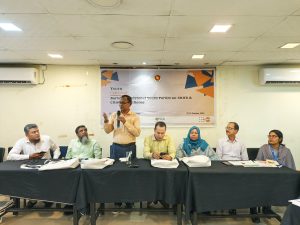 Distinguished guests included Dr. S.M. Manjur Elahi, Civil Surgeon, Barishal; Mohammad Mujahidul Islam, Director, Department of Environment, Barishal Division; Mehbub Morshed, Deputy Director, Family Planning Directorate, Barishal District; and Meherun Nahar Munni, Deputy Director, Department of Women Affairs, Barishal Division.
In his remarks, Mohammad Abul Kalam highlighted several government initiatives—such as the National Strategy for Adolescent Health (2017–2030), home-based family welfare services, MNCH (Maternal, Newborn, and Child Health) programs, and Adolescent-Friendly Health Centers—which are playing a key role in expanding SRHR services for adolescents. He emphasized that parents must also play a supportive role and that young people should engage in open discussions on SRHR without hesitation, as they are the future guardians of society.
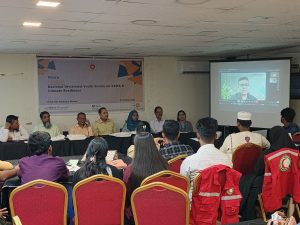 SM Shaikat, Executive Director of SERAC-Bangladesh, stated that Barishal is one of the country’s most climate-vulnerable regions, where the impacts of climate change are increasing health risks—particularly among adolescents. He noted that many current policies do not adequately reflect this reality and stressed the importance of developing an evidence-based national policy that integrates the voices, experiences, and needs of young people from climate-affected areas.
The group discussions were facilitated by Shahina Yasmin, Program Lead, and Mizanur Rahman Akanda, Advocacy Specialist, while Omar Faruk Khan (Finance Coordinator), Ruhiyat Tasnim (PMEL Officer), and Enamul Haque Rony (Communication Officer) were also present at the event.
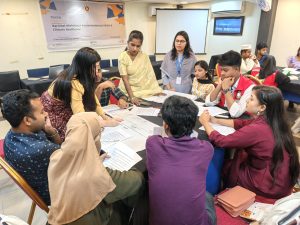
During the workshop, participants provided feedback through structured questionnaires, which experts later analyzed to propose policy recommendations. These insights are expected to significantly contribute to shaping Bangladesh’s future national policies on SRHR in the context of climate change.