
Strengthening Climate-Resilient SRHR Services: SERAC-Bangladesh Hosts Workshop for Health Providers in Sunamganj
 As part of the Youth Catalyst initiative by UNFPA Bangladesh, supported by SIDA, SERAC-Bangladesh successfully hosted a day-long workshop in Sunamganj to strengthen the capacity of frontline health providers in delivering climate-resilient sexual and reproductive health and rights (SRHR) and family planning services. The workshop brought together 20 participants, including SACMOs, Midwives, FWVs, and FPIs from various health centers.
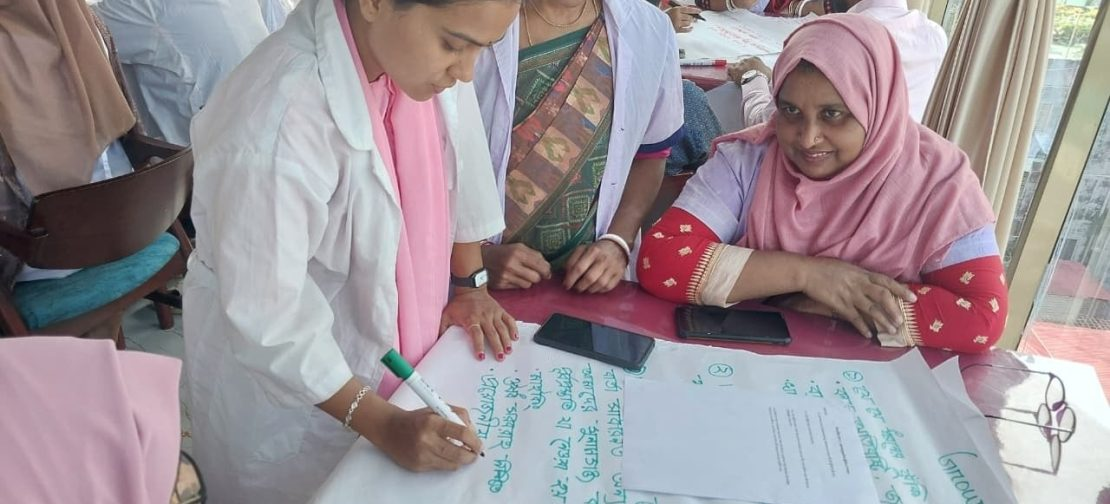
 The workshop aimed to equip healthcare providers with practical strategies to maintain service delivery during climate-induced disruptions. Through interactive group activities, participants mapped how climate stresses impact SRHR and family planning services, identified challenges, and designed actionable solutions tailored to their facilities.
Tapan Kanti Ghosh, Deputy Director, Family Planning Office–Sunamganj, chaired the workshop and emphasized the importance of adolescent-friendly services. He remarked, “We have to function the adolescent-friendly health corners. If we can counsel adolescents at their age, then we can create a significant impact.” He also highlighted the need for adaptive strategies, stating, “We have to learn how to adapt to climate challenges with the existing resources.”
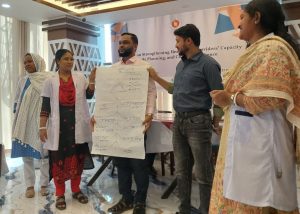
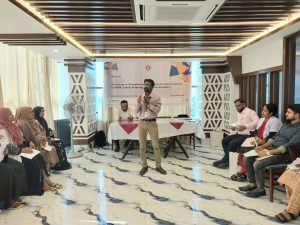 The sessions were facilitated by Md. Nazmul Hasan, Innovation and Youth Specialist, SERAC-Bangladesh, with support from Rabiul Islam, SBCC Officer. Participants engaged in thematic group work, presenting their findings on service delivery challenges and proposing climate-resilient adaptations. The workshop also benefited from reflections and insights from Dr. Puja Saha, SRHR Coordinator, Jhpiego.
The workshop was attended by Mohammad Shamsul Alam, Family Planning Facilitator, UNFPA, and Md. Najmul Islam, Finance and Administration Associate, SERAC-Bangladesh, ensuring collaborative coordination and support throughout the event.
 This initiative reflects a commitment to building climate-resilient health systems while strengthening youth-centered and inclusive SRHR services, ensuring that communities remain supported even amid climate challenges. The insights and outputs from this workshop will contribute to evidence-based advocacy and policy recommendations under the Youth Catalyst Project.