
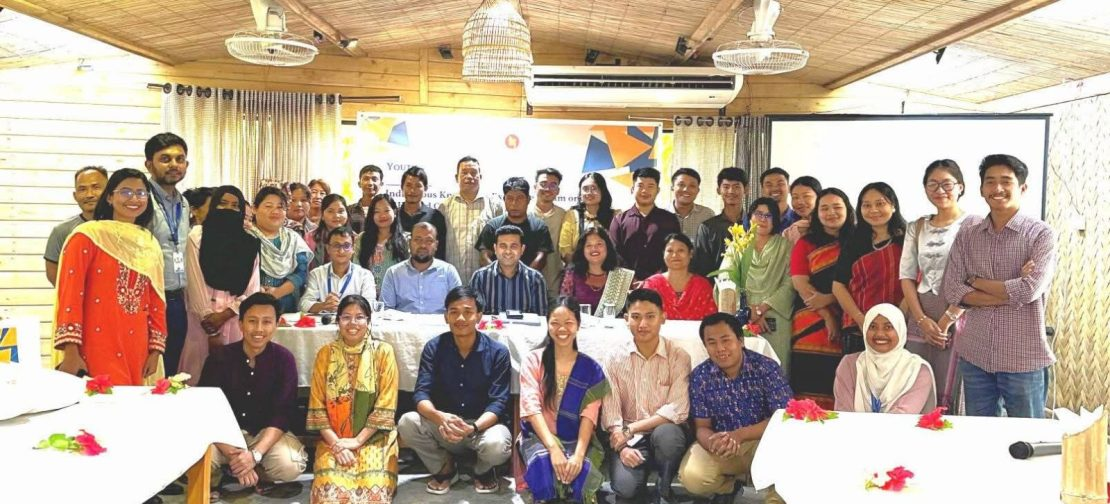
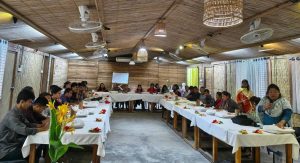
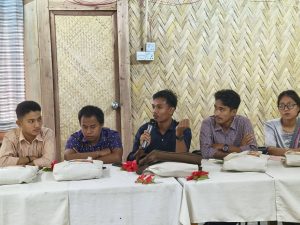
 SERAC-Bangladesh successfully hosted an Indigenous Knowledge Exchange Forum in Bandarban under the Youth Catalyst Initiative, with technical support from UNFPA Bangladesh and funding from Sida. The forum brought together youth leaders, community elders, and health professionals from diverse indigenous communities to engage in meaningful intergenerational dialogue on Sexual and Reproductive Health and Rights (SRHR) and climate resilience.Bridging Traditional Wisdom with Modern Health Practices
The event aimed to bridge indigenous knowledge systems with contemporary health approaches, fostering a platform for mutual learning and collaboration. Participants explored how community-based wisdom and modern SRHR practices can complement each other to enhance climate adaptability and sustainable health outcomes in remote and vulnerable areas of the Chittagong Hill Tracts.
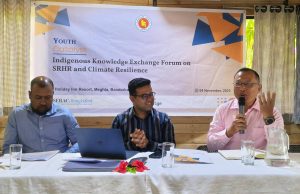 Throughout the sessions, participants shared their lived experiences, cultural practices, and local strategies for promoting well-being amid growing climate challenges. Discussions underscored the importance of indigenous wisdom in shaping inclusive, resilient, and sustainable health systems that leave no one behind.
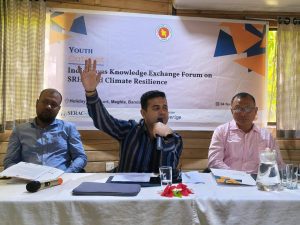 Distinguished Guests and Facilitators
The dialogue was facilitated by SM Shaikat, Executive Director of SERAC-Bangladesh and chaired by Dr. Lelin Talukder, Deputy Director, Family Planning Office, Bandarban.
Dr. Shaheen Hossain Chowdhury, Civil Surgeon, Bandarban graced the occasion as Chief Guest while Md. Rezaul Karim, Assistant Director, Environmental Office, Bandarban attended as Special Guest.
Md. Emran Hossain, Deputy Director (Finance and Admin), SERAC-Bangladesh was also present at the event. A comprehensive project overview was delivered by Mizanur Rahman Akanda, Advocacy Specialist at SERAC-Bangladesh while the opening session was coordinated by Lutfa Pathan, Project Manager, SERAC-Bangladesh.
 A Shared Commitment to Resilient Communities
The forum was attended by local administration representatives, community leaders, and health service providers, reflecting a collective commitment to advancing SRHR and climate resilience in the indigenous communities of the Chittagong Hill Tracts.
By fostering intergenerational dialogue and honoring traditional knowledge, the event reinforced the belief that sustainable development must be inclusive, community-led, and culturally grounded.