
Strengthening Climate-Resilient SRHR and Family Planning Services in Chandpur
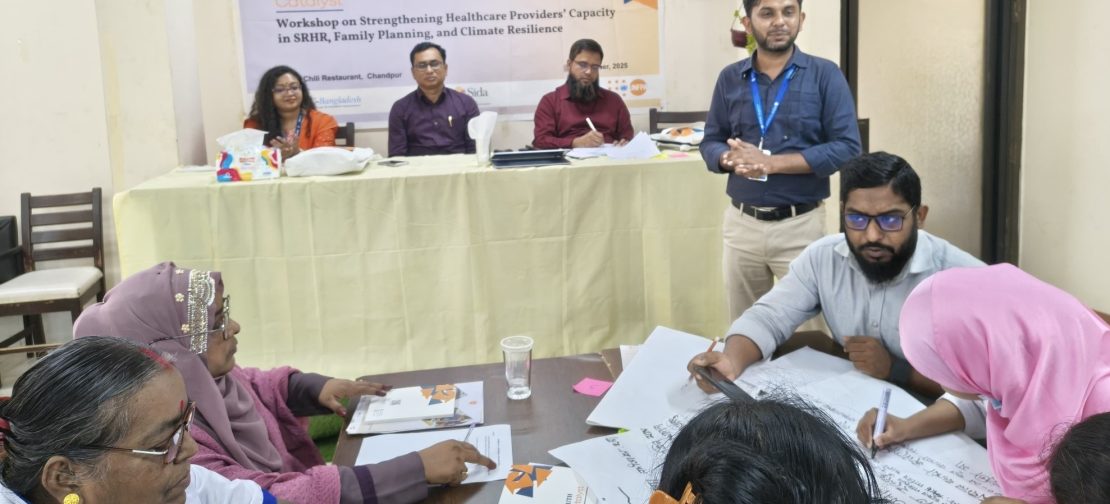
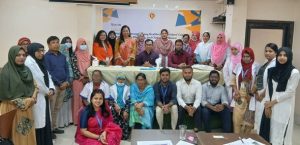 SERAC-Bangladesh successfully organized a capacity-building workshop in Chandpur under the Youth Catalyst Initiative of UNFPA Bangladesh, with support from Sida. The workshop brought together 22 frontline healthcare providers including SACMOs, Midwives, FWVs, and FPIs from various health facilities across the district.
 The primary objective of the workshop was to integrate climate resilience into SRHR and family planning (FP) services, empowering healthcare providers to sustain quality and continuity of care during climate-induced disruptions such as floods, cyclones or heatwaves.
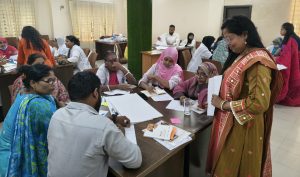
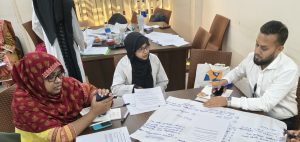
Through a series of interactive group activities and participatory exercises, participants explored how climate challenges directly impact SRHR and FP service delivery in local contexts. Using structured worksheets, they identified key barriers and proposed practical, facility-level solutions to strengthen preparedness and response mechanisms.
 Group presentations led to a rich exchange of ideas and insights, with special reflections shared by Abul Kashen Mohammad Aminul Islam, Deputy Director of Family Planning (DDFP)-Chandpur, and Dr. Muhammad Nur Alam Din, Civil Surgeon-Chandpur. Both emphasized the urgent need to build adaptive and resilient health systems to ensure communities’ well-being amidst growing climate risks.
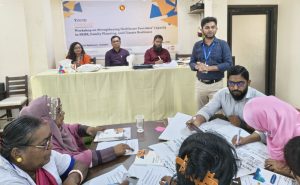 The session was facilitated by Mizanur Rahman Akanda, Advocacy Specialist, SERAC-Bangladesh; Songita Sarker, Program Manager, SERAC-Bangladesh; and attended by Dr. Nushrat Jahan, SRHR Facilitator, Jhepiego; Kane Laskar Rupa, Family Planning Facilitator, UNFPA Bangladesh; and Rabeya Akter Munmun, Finance and Admin Officer, SERAC-Bangladesh.
This initiative reinforces SERAC-Bangladesh’s ongoing commitment to equipping frontline providers with the knowledge, tools, and strategies needed to deliver uninterrupted, climate-smart SRHR and FP services ensuring that no one is left behind in the face of climate change.